In this article
TL;DR: To outsource Android development, hand a clearly scoped app or feature set to an external partner, pick a pricing model that fits your scope risk, and keep a steady review cadence. Most buyers choose fixed price for small, defined builds and time and materials for evolving products. A strong outsourced team has a technical lead, Kotlin engineers, and QA. In 2026, Google Play rules and a wide range of devices make partner experience with releases a key buying factor.
If you want to outsource Android development, start with a written scope, then choose an engagement model, and then pick a partner that proves it can ship releases. Therefore, the process is less about finding the cheapest team and more about handing off the work cleanly. In this model, the partner owns delivery of a defined scope, while you keep control of goals and approvals. For a broader view of the model, read our software development outsourcing guide.
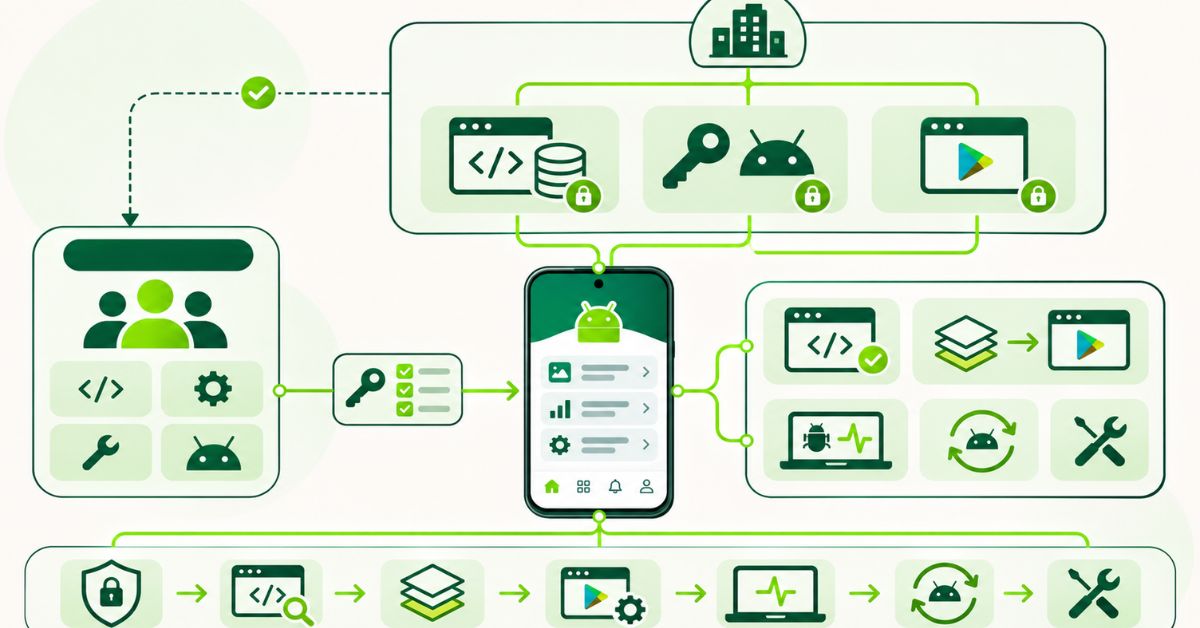
This guide covers five steps. First, you define the scope. Next, you choose the engagement model. Then you design the team structure, set a pricing model, and plan the handoff cadence. Finally, you avoid the mistakes that sink most outsourced mobile projects.
Why Companies Outsource Android Development in 2026
Android remains the largest mobile platform in the world. According to StatCounter Global Stats, Android held about 72 percent of worldwide mobile operating system share in October 2026. As a result, many products need an Android app that runs well on a huge range of phones and tablets.
However, building that app in-house is hard. A Gartner survey of 437 IT organizations found that 64 percent of IT executives named talent availability as the top barrier to adopting emerging technologies. Meanwhile, the U.S. Bureau of Labor Statistics reports that the median pay for computer and IT occupations was $109,470 in May 2025, more than double the median for all occupations.
Outsourcing offers a way around both problems. Skilled talent is one of the leading reasons companies outsource, according to the Deloitte Global Outsourcing Survey 2024, which drew on more than 500 business and technology leaders. In addition, a partner can start a project faster than a hiring cycle allows.
Android also rewards specialists. Google describes Android development as Kotlin-first. Its own data shows that over 60 percent of professional Android developers use Kotlin, and 95 percent of the top 1,000 Android apps contain Kotlin code. Therefore, a good partner should already work in modern Kotlin and Jetpack Compose, not only in older Java code.
Finally, platform rules change every year. Since August 31, 2026, Google Play requires new apps and updates to target Android 16 (API level 36). Consequently, a partner that tracks these deadlines protects your release schedule.
Step 1: Define the Scope Before You Search
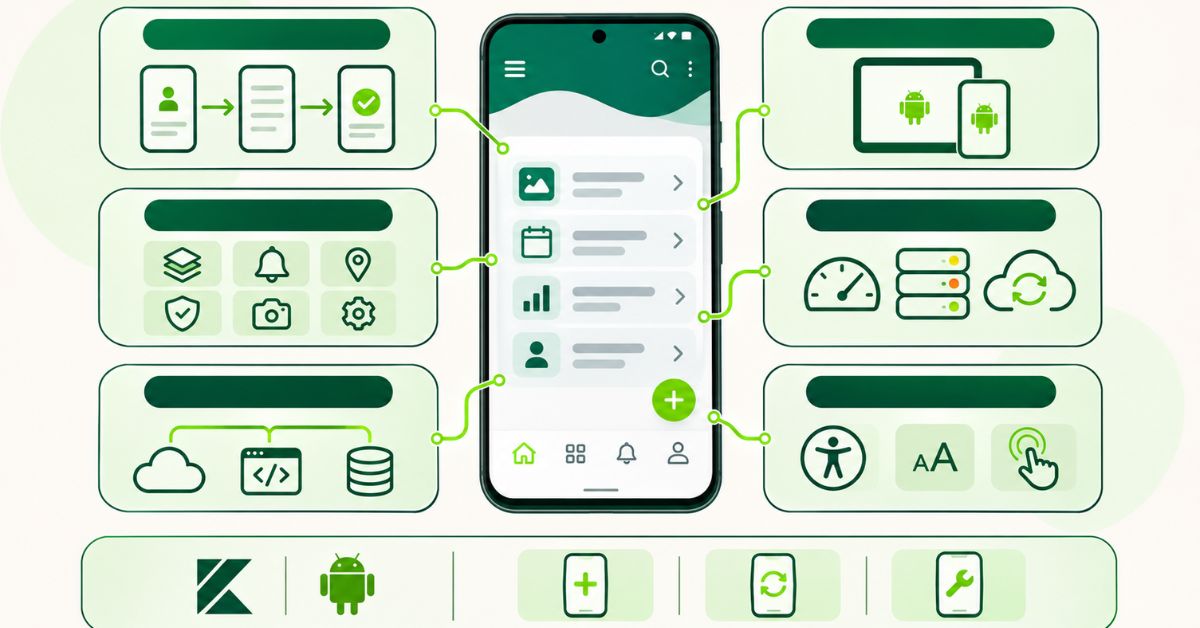
A vague brief produces vague quotes. Because every price you receive depends on the scope, write it down first. Your brief should cover these items:
- The product goal: Describe the users, the core flows, and the outcome you want in the first release.
- The feature list: Separate must-haves from nice-to-haves, so the partner can price the first milestone.
- The integrations: List every back-end service, payment tool, and third-party software development kit the app must use.
- The device targets: State the phone and tablet types, the lowest Android version, and any wearables.
- The quality bar: Define crash-rate goals, performance targets, and accessibility needs.
Decide Between New Build, Rebuild, and Maintenance
Each type of work needs a different partner profile. A new build needs product thinking and design support. A rebuild needs careful reading of old code and a migration plan. Maintenance, on the other hand, needs steady capacity and fast bug fixes. Therefore, say clearly which type of work you are handing off.
Choose Native or Cross-Platform
Native Android work uses Kotlin and the Android toolkit. It suits apps that need deep device access, smooth animation, or top performance. In contrast, a cross-platform build shares code between Android and other systems. It suits teams that value speed to market and a single codebase. However, this choice shapes the whole team, so settle it before you ask for quotes.
Step 2: Choose the Right Engagement Model
You have three common ways to hand off Android work. Each one moves risk and control between you and the partner.
| Model | Best for | Control you keep | Main risk |
|---|---|---|---|
| Project-based outsourcing | A defined app or feature set | Goals and approvals | Change requests add cost |
| Dedicated team | A long roadmap with steady releases | Priorities and sprint goals | Needs ongoing management time |
| Staff augmentation | Filling one gap in your own team | Daily direction | Relies on your own lead |
Project-based outsourcing fits most first-time buyers. The partner owns delivery, so your team stays focused on the product. A dedicated team works better when the roadmap never really ends. For that case, see our guide on how to outsource a dedicated development team. Staff augmentation sits closer to hiring. If you only need to add one person, review our overview of nearshore mobile app developers instead.
Region matters as well. Many U.S. teams pick nearshore partners because working hours overlap with their own. As a result, standups, code reviews, and release calls happen live. Our nearshore outsourcing guide explains how this model works and what it costs.
Step 3: Design the Outsourced Team Structure
A typical outsourced Android team is small and focused. The exact size depends on your scope. Still, most healthy teams share the same core roles:
- A technical lead: This person owns architecture, code quality, and the release plan.
- One or more Kotlin engineers: They build features and fix bugs.
- A QA engineer: They test across devices and automate regression checks.
- A delivery or project lead: This person tracks the plan and reports progress.
- A designer, when needed: Some partners include one; otherwise you supply designs.
Who Reports to Whom
You assign one owner on your side, usually a product manager or engineering manager. That person talks to the partner’s delivery lead every week. Meanwhile, the partner’s technical lead works with your back-end and design teams. Because clear ownership prevents mixed direction, write these names into the contract.
What to Look For in the Android Team
- Shipped apps: Ask for live apps on Google Play and what the team personally built.
- Modern tooling: Look for Kotlin, Jetpack Compose, and an automated build pipeline.
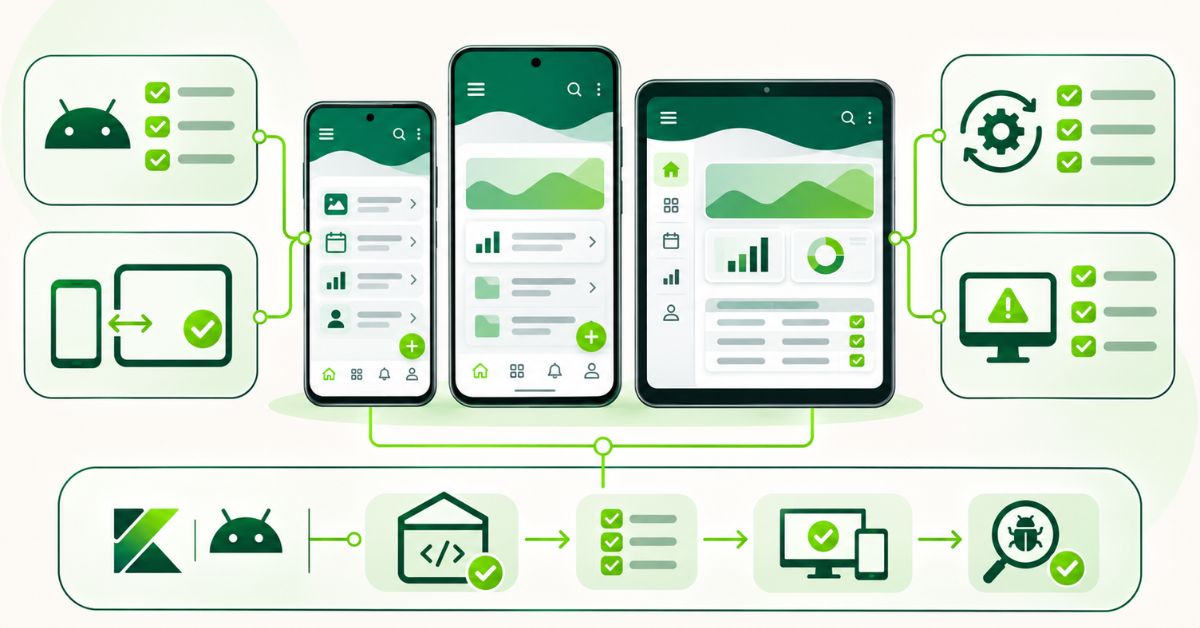
- Release discipline: Check for staged rollouts, crash monitoring, and a rollback plan.
- Device coverage: Ask how the team tests across screen sizes and Android versions.
- Security habits: Expect clear answers on token storage, local data, and secure network calls.
Also, ask how the partner vets its own engineers. Our guide on how to find the right software outsourcing company lists the checks that matter most.
Step 4: Pick a Pricing Model and Budget for the Full Cost
Pricing depends on scope risk. Therefore, match the model to how well you know the requirements.
| Pricing model | How it works | Best for | Watch out for |
|---|---|---|---|
| Fixed price | One price for a defined scope | Small, stable builds | Change requests add cost fast |
| Time and materials | You pay for hours worked | Evolving products | Budget can drift without caps |
| Monthly team rate | A set fee for a defined team | Long-running roadmaps | Pay for idle capacity if work slows |
Fixed price gives certainty, but only when the scope stays put. In contrast, time and materials gives flexibility, so add a monthly cap and a weekly burn report. A monthly team rate is simple to budget and easy to scale up or down.
Cost also depends on region. Nearshore engagements from Latin America commonly run 30 to 60 percent below U.S. domestic rates, while they still support live collaboration. In addition, the Deloitte survey above notes that cost reduction remains a key driver of outsourcing, alongside skilled talent and agility.
Budget for More Than the Hourly Rate
The hourly rate is only part of the picture. A fair comparison should include these items:
- Project management and delivery oversight
- QA time and device testing
- Design and UX work, if the partner provides it
- Google Play Console setup and release support
- Post-launch support and bug fixing
Ask for an itemized quote, because a partner that cannot break down its own price rarely explains its delivery process well. Our guide to software development outsourcing companies shows how to compare quotes line by line.
Step 5: Set the Handoff Cadence and Governance
Outsourcing fails more often from poor communication than from poor code. So, agree on a rhythm before work starts. A simple cadence works well for most Android projects:
- Daily: A short standup or async update in your shared channel.
- Weekly: A planning or review call with the delivery lead and your owner.
- Every sprint: A working build you can install and test, plus a short demo.
- Every release: A checklist covering testing, store listing, staged rollout, and monitoring.
- Every quarter: A review of scope, budget, and team performance.
Protect Your Code and Your Data
First, make sure your company owns the source code, the signing keys, and the Google Play developer account. Next, require access controls and a signed agreement on intellectual property. Finally, ask the partner for security certifications. For example, ISO 27001 shows that a provider follows a documented security system. Our step-by-step guide to outsourcing software development covers contract terms in more detail.
Plan the Release Process Early
Android releases bring their own risks. Google Play reviews apps, devices behave differently, and each year brings a new target API level. Therefore, agree on who owns the release checklist, who monitors crashes after launch, and who handles hotfixes. Likewise, schedule time each year for platform upgrades, so the deadline never becomes an emergency.


Common Mistakes When You Outsource Android Development
- Skipping the written scope. Without one, quotes are guesses, and change requests pile up.
- Choosing on price alone. The cheapest option often costs more, because rework adds up.
- Ignoring device testing. An app that works on one phone can fail on many others.
- Leaving ownership unclear. You should own the code, the keys, and the store account from day one.
- Handing off without a cadence. Without regular demos, problems surface only at launch.
- Forgetting maintenance. Android versions and store rules change every year, so plan support after launch.
Early-stage companies face these risks in a more urgent form. Therefore, startups should also read our guide to software development outsourcing for startups. If your team also builds with web tools, the same logic applies, as shown in our guide to how to outsource Angular development.
How ParallelStaff Helps You Outsource Android Development
ParallelStaff places senior Latin American engineers with U.S. teams, and our proof points are specific and checkable:
- Ranked #502 on the 2025 Inc. 5000 list
- 94 percent engineer retention
- ISO 27001 certified
- 4.8 out of 5 rating on Clutch
- Enterprise clients that have included AT&T, AMD, Google, J.Crew, and Whirlpool
Our process starts with your brief. First, we help you define the scope and pick the engagement model. Then we match a team to your stack and time zone. After that, we run the handoff cadence with you, from the first sprint to the first release. Our software outsourcing services cover the full range, and our dedicated development teams suit long roadmaps. If you want one engineer instead of a full project team, see our guide on how to hire Android app developer talent. Also, our comparison of Android and iOS developers for a remote team helps with platform planning.


For more on how outsourcing services work and what they include, read our buyer’s guide to software development outsourcing services.
Frequently Asked Questions About Outsourcing Android Development
How do I outsource Android development for the first time?
Start with a written scope, then pick an engagement model, and then vet two or three partners. Because a clear brief drives accurate quotes, spend time on it first. Next, run a paid pilot sprint before you sign a long contract.
How much does it cost to outsource Android app development?
Cost depends on scope, team size, and region. For example, a small fixed-scope app costs far less than a long-running product team. However, you should compare total cost, not only the hourly rate, because QA, management, and support add up.
How long does it take to outsource Android development?
Most teams reach a kickoff in a few weeks once the scope is ready. The build itself then depends on features and integrations. Therefore, a defined first milestone helps you judge progress early.
Should I choose fixed price or time and materials?
Choose fixed price when the scope is small and stable. In contrast, choose time and materials when requirements will change. Also, add a monthly cap to time and materials, so the budget cannot drift.
Is it better to outsource Android development or hire in-house?
Outsourcing suits teams that need speed, flexible capacity, or skills they lack. Hiring suits permanent core roles. Many companies, however, combine both, so an in-house lead directs an outsourced team.
Who owns the code when I outsource Android development?
You should. Make sure the contract assigns all intellectual property to your company. In addition, keep control of the source repository, the signing keys, and the Google Play developer account.
What should an outsourced Android team include?
Most teams need a technical lead, one or more Kotlin engineers, and a QA engineer. A delivery lead helps with planning and reporting. Also, a designer joins the team when your own design capacity is limited.
Is Kotlin better than Java for a new Android app?
For new work, Kotlin is the usual choice, because Google treats Android development as Kotlin-first. Java still appears in older codebases, so a good partner should handle both when you have legacy code.
How do I vet an Android outsourcing partner?
First, ask for live apps and references. Then run a short code review of real work instead of a trivia quiz. Finally, check security certifications, retention rates, and how the partner handles releases.
Can a nearshore team outsource Android development well for U.S. companies?
Yes, because nearshore teams share working hours with U.S. teams. As a result, standups and release calls happen live. Nearshore also offers cost savings compared with U.S. domestic rates.
How do I manage an outsourced Android team day to day?
Assign one owner on your side and agree on a clear cadence. Daily updates, weekly reviews, and sprint demos keep everyone aligned. Because working builds prove progress, ask for an installable build every sprint.
What happens when Google Play rules change?
Google raises the required target API level each year. Therefore, ask your partner to plan an annual upgrade sprint. A partner that tracks the deadline keeps your updates flowing without a rush.
What does maintenance cost after the app launches?
Maintenance usually covers bug fixes, platform updates, and small features. Many teams keep a small monthly team on retainer, while others buy hours as needed. Either way, agree on response times in writing.
 Verified Author

Luis Peralta
CEO & Founder
Linkedin Profile