

In this article
TL;DR: Software development outsourcing services let a company hand off part or all of its software work to an external provider. That can mean staff augmentation, a dedicated team, or a full project build. The right model depends on how much control you want to keep in-house versus how fast you need to close a skills gap. In 2026, most buyers judge providers on delivery track record, security certifications, and engineer retention. Hourly rate alone tells you very little, since a cheap contract that turns over every few months costs more than it saves.
Software development outsourcing services are contracted engineering capacity. An external company provides the engineers, the team, or the finished deliverable, instead of you hiring directly. You skip the multi-month internal hiring process. The provider already has vetted engineers ready to join a codebase, a sprint cadence, and a delivery process. The arrangement can be narrow, like one contractor filling a single open role. Or it can be broad, with an outside firm owning a product roadmap end to end.
This guide breaks down what these services cover, the engagement models providers offer, and what they cost in 2026. It also covers how to evaluate a provider before you sign a contract. Our broader software outsourcing guide and our software outsourcing services page cover the topic at a wider level. This piece zooms in on what “services” means in a contract and how to buy them well.
What’s Actually Included in Software Development Outsourcing Services
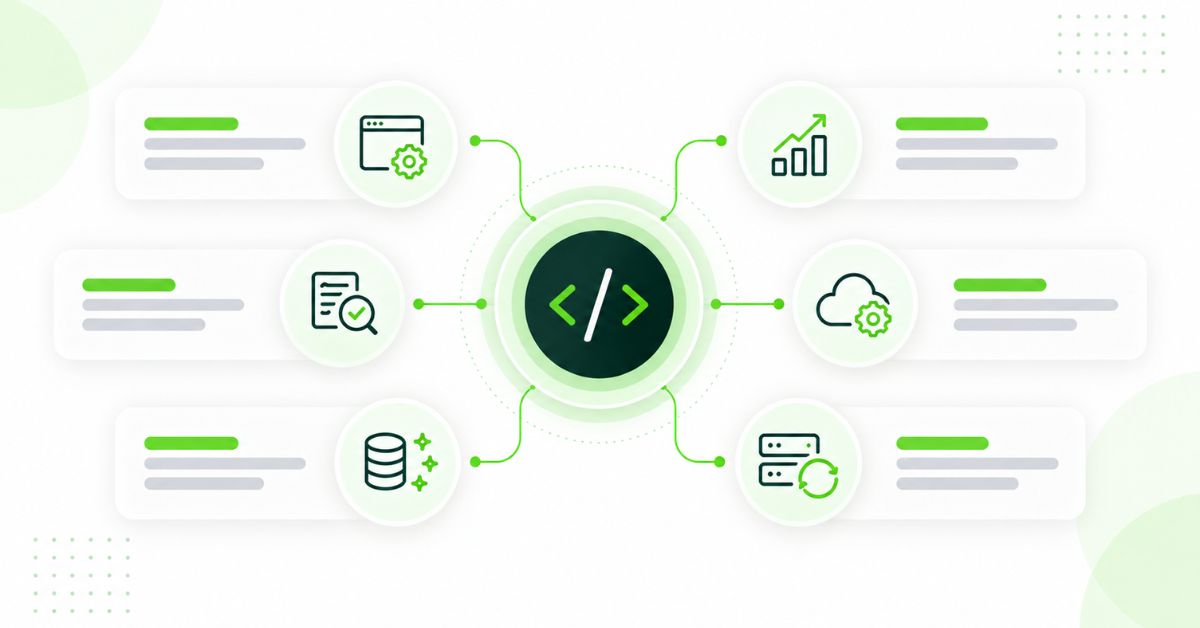
The phrase covers more ground than most buyers expect going in. A software development outsourcing services engagement can include any combination of the work below. Most providers scope this in the statement of work before anyone touches a codebase.
- Custom application development — web, mobile, or platform builds from a stated set of requirements
- Ongoing feature work on an existing product, integrated into your own backlog and sprint process
- Quality assurance and test automation, run either alongside development or as a standalone workstream
- Cloud and DevOps engineering — infrastructure setup, CI/CD pipelines, and platform reliability work
- Legacy modernization, where an outsourced team migrates or rebuilds an aging system
- Data engineering and AI integration work layered onto an existing product
A services engagement differs from a simple staffing placement in one key way: accountability for outcomes, not just headcount. A staffing placement gives you a person. A services engagement gives you a person, or a team, plus a provider that stands behind delivery quality, security practices, and continuity if someone leaves the account.
Why Companies Are Outsourcing Software Development in 2026
Cost still matters, but it’s no longer the whole story. Global IT spending will reach $6.37 trillion in 2026, a 14.2% jump from 2025. IT services alone will account for roughly $1.57 trillion of that total, according to Gartner’s July 2026 IT spending forecast. That’s a clear signal: budgets for contracted technology delivery keep expanding, not shrinking.
That spending growth exists because the underlying talent problem hasn’t gone away. Nearly nine in ten companies worldwide say they already have a skills gap, or expect one within a few years. That’s according to a McKinsey global survey of executives and managers. In the U.S., the Bureau of Labor Statistics projects software developer employment will keep growing 10% from 2025 to 2035. That’s well above the 3% average across all occupations. The median software developer salary already sits at $135,980 as of May 2025. That wage floor makes domestic hiring for every open role prohibitively expensive for many growing companies.
Distributed delivery is also no longer the exception it was a decade ago. In Stack Overflow’s 2025 Developer Survey, 32.4% of professional developers said they work fully remote. Tens of thousands more work in flexible or hybrid arrangements. Today’s workforce runs on teams that don’t all sit in the same building. Put those data points together and the picture is straightforward. Demand for engineering work is rising. In-house supply is constrained. And the working world has already normalized the distributed collaboration that outsourcing depends on. Our nearshore IT services guide covers how U.S. companies structure that distributed collaboration in practice.
Engagement Models Behind Software Development Outsourcing Services
Every provider structures its software development outsourcing services around a handful of core models. Picking the wrong one is the single most common reason an outsourcing relationship underperforms. It’s rarely the provider’s technical skill that’s at fault.
Staff Augmentation
You keep full control over the roadmap, sprint planning, and technical decisions. The provider supplies individual engineers who report into your existing team and process. This model fits companies that already have engineering leadership in place and just need more hands.


Dedicated Development Team
The provider assembles a full team — engineers, a lead, sometimes QA — that works exclusively on your product under a long-term arrangement. You still set priorities, but the provider handles staffing, retention, and team continuity. This model fits a sustained roadmap better than a single project.
Project-Based Outsourcing
You hand over a defined scope with fixed deliverables. The provider’s own project management team handles execution. This suits a one-off build — an MVP, a migration, a discrete feature — where you don’t need a standing relationship afterward. Our breakdown of IT staff augmentation vs. an outsourcing firm covers this trade-off in more detail if you’re still weighing which structure fits.
Most companies don’t stay in one model forever. A team often starts with a single augmented engineer to close an immediate gap. Once the workload proves durable, that team graduates to a dedicated team. Our guide to choosing a software development outsourcing company walks through how to match a provider’s strengths to your current stage. Read it before you commit to a specific structure in a contract.
Nearshore vs. Offshore Software Development Outsourcing Services
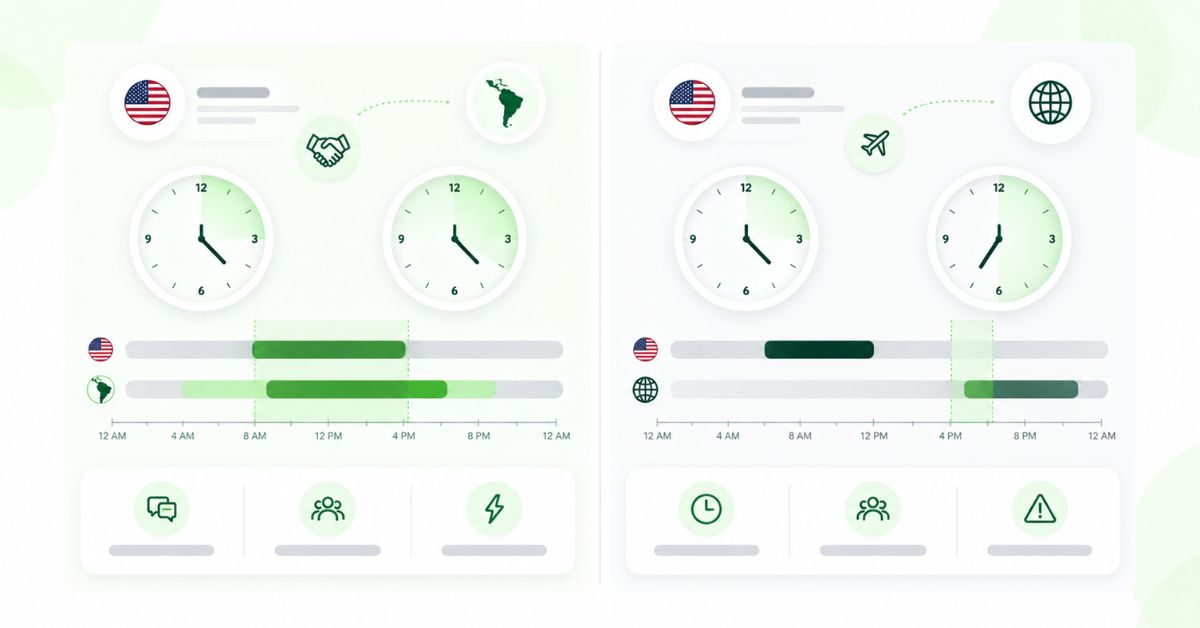
Location shapes the day-to-day experience of an outsourcing engagement more than most buyers expect. Offshore providers, typically in South or Southeast Asia from a U.S. buyer’s view, tend to offer the lowest hourly rates. But they come with an 8-to-12-hour time zone gap. That gap pushes real-time collaboration into a handful of overlap hours, if any. Nearshore providers — Latin America, for U.S. companies — sit within one to three time zones. Daily standups, code reviews, and incident response happen inside a normal workday, not across a calendar flip.
The trade-off isn’t one-size-fits-all. A well-scoped, loosely-coupled project with light communication needs can work fine offshore. A dedicated team embedded in an agile process, iterating daily alongside an in-house product manager, tends to break down without the overlap nearshore provides. Cost per hour is only half the equation. Cost per shipped feature, once you factor in rework and miscommunication, often favors nearshore for anything beyond a narrowly-scoped build. Our nearshore outsourcing services guide goes deeper into how that model works day to day, from time zone overlap to communication standards.
What Software Development Outsourcing Services Cost in 2026
Pricing varies by engagement model, region, and seniority, but a few patterns hold across most contracts. Providers typically bill staff augmentation at an hourly or monthly rate per engineer. They bill dedicated teams as a monthly retainer covering the full team. Project-based work usually comes as a fixed bid tied to defined milestones.
Cost reduction remains the top-cited driver behind outsourcing decisions. Deloitte’s Global Shared Services and Outsourcing Survey found it’s still the number-one objective organizations report. Many are actively relocating work to more cost-efficient locations to hit that goal.
But the cheapest hourly rate on paper rarely produces the cheapest outcome. A provider with high engineer turnover forces you to re-onboard new people repeatedly. That quietly erodes any rate advantage. Weigh the total cost of an outsourcing engagement across the full relationship. Look at onboarding time, average tenure, and rework, not just the invoice line item.
How to Evaluate a Software Development Outsourcing Services Provider
A structured evaluation catches problems before they show up in a missed sprint. Look for the following before you sign:
- Vetting process — ask exactly how the provider technically assesses engineers, not just whether they’re labeled “senior”
- Security posture — a provider working with production data or source code should hold a recognized certification such as ISO 27001
- Retention data — ask for the provider’s average engineer tenure on client accounts, not just company-wide headcount growth (our piece on reducing engineer attrition on nearshore teams covers what to look for here)
- Communication standard — confirm English fluency and real-time overlap hours in writing, not as a verbal assurance
- Reference clients — talk to at least one existing client in a comparable industry or company size, not just the logos on the homepage
- IP and ownership terms — the contract should state plainly that all code and deliverables belong to you, in full, on delivery

Red Flags in Software Development Outsourcing Services Contracts
A few warning signs tend to predict a bad outsourcing relationship before the first sprint ends. Vague statements of work with no named deliverables leave both sides guessing about scope. Pricing well below market for the stated seniority level usually means the “senior” label doesn’t match the actual experience on the team. A provider unwilling to share engineer retention numbers is often hiding a churn problem. Treat any contract that stays silent on data security or IP ownership as a non-starter, no matter how strong the rest of the pitch sounds.
Setting Up an Outsourced Team for a Smooth Start
The first 30 days of an outsourcing engagement determine most of what follows. A provider can hand you technically strong engineers and still produce a rocky first sprint if you treat onboarding as an afterthought. A few practices consistently separate smooth starts from stalled ones:
- Give the outsourced team read access to architecture docs, coding standards, and past incident retrospectives before day one, not during it
- Assign a single internal point of contact for the first few weeks so questions don’t get lost across multiple Slack channels
- Run the outsourced engineers through the same code review process as internal staff from their very first pull request, rather than easing standards temporarily
- Set a 30- and 90-day check-in on delivery pace and communication quality, rather than waiting for a problem to surface on its own
Companies that skip this structure often blame the provider for a slow ramp-up. Missing internal documentation usually causes that slow ramp-up, not the provider. A mature software development services practice will usually push for this structure on its own, since it protects the provider’s own delivery metrics as much as yours. Our guide to nearshore developer onboarding walks through what a well-run first 30 days actually looks like.
Why ParallelStaff for Software Development Outsourcing Services
ParallelStaff is an ISO 27001-certified nearshore provider built around long-term delivery, not one-off placements. The company holds a 94% engineer retention rate. The 2025 Inc. 5000 list ranked ParallelStaff #502 among fastest-growing private companies, and it carries a 4.8-out-of-5 Clutch rating from client reviews. Enterprise clients include AT&T, AMD, Google, J.Crew, and Whirlpool — organizations that need the same security and delivery discipline a growing mid-market company needs, just at a larger scale. Every engineer works in U.S. time zones and passes a multi-stage technical and English-fluency vetting process before joining a client team.


Frequently Asked Questions
What are software development outsourcing services exactly?
They’re contracted engineering work. An external company provides individual engineers, a full dedicated team, or an entire project build, instead of you making direct in-house hires.
Is software development outsourcing still worth it in 2026?
Yes, for most companies facing a skills gap or a hiring timeline that doesn’t match their roadmap. Global IT services spending keeps climbing in 2026, and the underlying talent shortage that drives outsourcing hasn’t closed.
What’s the difference between staff augmentation and a dedicated team?
Staff augmentation adds individual engineers into your existing team and process. A dedicated team is a full, provider-assembled unit that works exclusively on your product under one contract.
How much does software development outsourcing cost per hour?
Rates vary widely by region and seniority. Nearshore Latin American engineers typically cost well below U.S. domestic hires, while offshore rates run lower still. Total cost depends heavily on retention and rework, not just the hourly figure.
What’s the best country for software development outsourcing services?
There’s no single best country. It depends on your time zone, budget, and how much real-time collaboration your project needs. Latin American nearshore providers tend to fit U.S. companies that need daily overlap. Offshore regions can work for narrowly-scoped, loosely-coupled projects.
How do I know if an outsourcing provider’s engineers are actually senior?
Ask for the specifics of the provider’s vetting process — technical assessments, English fluency evaluation, and reference checks. Don’t accept a job title at face value.
Can an outsourced team work inside our existing Agile process?
Yes. In both staff augmentation and dedicated team models, engineers join your existing sprint cadence, standups, and tooling rather than working in isolation.
Who owns the code an outsourced team writes?
In a properly structured contract, you do — in full, on delivery. Confirm this explicitly in the IP ownership clause before signing.
What security certifications should a software outsourcing provider have?
ISO 27001 is the most widely recognized standard for a provider handling client source code, credentials, or production data.
How long does it take to onboard an outsourced engineer?
Providers with an existing vetted talent pool can typically place a matched engineer within 1 to 2 weeks. A from-scratch search takes considerably longer.
Is nearshore or offshore outsourcing better for a startup?
Startups iterating quickly on a live product usually do better with nearshore, given the real-time collaboration a fast-moving roadmap requires. Offshore can work for a well-defined, standalone build.
 Verified Author

Paola Araujo
Account Manager
Linkedin Profile