

In this article
TL;DR: Nearshore software development in Bolivia gives U.S. teams skilled engineers at rates in the lower half of the Latin American range. Bolivia also runs on UTC-4 all year, so it overlaps most of the U.S. workday. The talent pool is small, so Bolivia works best as part of a multi-country team. In 2026, a recession, a currency reset, and road blockades add real risk, so plan for dollar contracts, backup connectivity, and local legal review.
Nearshore software development in Bolivia means hiring engineers who live in Bolivia and work your hours as part of your team. It offers three clear advantages. Rates run lower than in most Latin American markets. The time zone sits one to four hours from every U.S. zone. Most engineers study engineering at a university. It also has clear limits: a small talent pool, a shrinking 2026 economy, and recurring political unrest. This guide covers talent, time zones, English skills, rates, legal basics, and risks, so you can decide whether Bolivia belongs in your hiring plan.
Why Consider Bolivia for Nearshore Software Development?
U.S. companies look at Bolivia for four main reasons.
- Cost: Senior engineer rates sit in the lower half of typical nearshore ranges across Latin America.
- Time zone: Bolivia stays on UTC-4 year-round, so engineers overlap with every U.S. time zone.
- Engineering depth: Industry observers note that most Bolivian developers study engineering at university.
- Quality culture: Trade coverage describes a long tradition of careful testing and maintainable code.
However, the tradeoffs matter just as much. The pool is small next to Brazil or Mexico. The 2026 economy is contracting. Unrest has disrupted travel and supply chains this year. For a wider view of the region, read our guide to the top nearshore software development countries in 2026. Our full nearshore software development guide explains how the model works end to end.
Bolivia’s Engineering Talent Pool at a Glance
Bolivia has roughly 11 to 12 million people. Trade publications have put the software engineering workforce above 10,000. However, estimates vary by source and year, so treat any single figure as a rough guide. By comparison, Brazil and Mexico field far larger pools. That scale gap explains why nearshore software development in Bolivia suits targeted hiring better than large team builds.
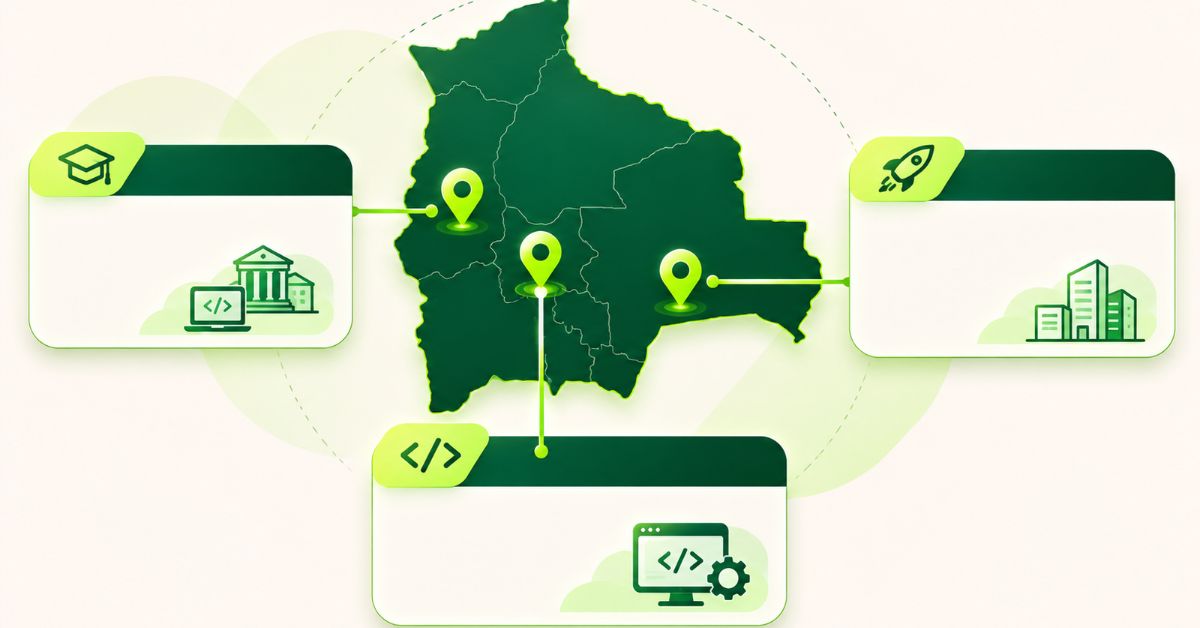
Overall, most talent clusters in three cities.
Cochabamba
Cochabamba is Bolivia’s best-known software hub. Estimates of the technology companies based there range from about 60 to about 100, depending on the source and year. Local universities train the workforce, including Universidad Mayor de San Simón, Universidad Católica Boliviana, Universidad Privada Boliviana, and Univalle. Cochabamba also posts the strongest English scores in the country.
Santa Cruz de la Sierra
Santa Cruz is the country’s largest commercial center. A 2021 ecosystem mapping counted 155 Bolivian startups and placed 54% of them in Santa Cruz. Universities such as Universidad Autónoma Gabriel René Moreno and Universidad Privada Domingo Savio feed a growing product scene.
La Paz
La Paz is the seat of government and home to Universidad Mayor de San Andrés. It also adds a smaller but steady source of engineers. The city also sits at about 3,600 meters, which matters if your leaders plan on-site visits.
Industry commentary also points to experience with major U.S. cloud and enterprise platforms. In addition, analysts note that some Bolivian engineers move to higher-paying markets such as Argentina and Chile. Retention planning therefore matters more here than in larger markets. Our breakdown of nearshore engineer retention shows what works.
Time Zone Overlap With U.S. Teams
Bolivia uses Bolivia Time (UTC-4) all year and does not observe daylight saving time. As a result, only the U.S. clock changes, not Bolivia’s. Time zone fit is one of the strongest cases for nearshore software development in Bolivia. The table shows how far ahead Bolivia runs.
| U.S. time zone | Nov to Mar (U.S. standard time) | Mar to Nov (U.S. daylight time) |
|---|---|---|
| Eastern | Bolivia is 1 hour ahead | Same time |
| Central | Bolivia is 2 hours ahead | Bolivia is 1 hour ahead |
| Mountain | Bolivia is 3 hours ahead | Bolivia is 2 hours ahead |
| Pacific | Bolivia is 4 hours ahead | Bolivia is 3 hours ahead |
Assume an 8 a.m. to 5 p.m. local workday in Bolivia. Eastern teams then share about seven working hours in winter. Pacific teams share about four to five hours. A 9 a.m. Eastern standup in winter lands at 10 a.m. in Cochabamba. Therefore, Pacific teams should plan live collaboration for the Bolivian afternoon. Our guide to nearshore time zone overlap explains how to structure those windows.
English Proficiency in Bolivia
Language is the next question buyers ask about nearshore software development in Bolivia. The EF English Proficiency Index scores Bolivia at 521 and ranks it 49th worldwide in the 2025 edition. The global average is 488. EF’s Bolivia profile also breaks scores down by city. Cochabamba scores 564, La Paz 543, and Santa Cruz 506. Notably, IT professionals score 590, well above the national figure.
Still, test takers choose to take the EF exam, so the index is a signal and not a guarantee. Run a live technical interview in English for every candidate. Check written communication as well, since remote teams depend on clear writing.
Typical Nearshore Rates and Cost in Bolivia
Rates for nearshore software development in Bolivia vary by seniority, skill set, and engagement model. For example, the table below gives a directional comparison for senior engineers.
| Benchmark | Senior engineer |
|---|---|
| U.S. median software developer wage (BLS, 2025) | $135,980 per year, about $65 per hour |
| Typical nearshore rates across Latin America through a managed partner | Roughly $80,000 to $110,000 per year |
| Bolivia contractor marketplace snapshot (2026) | About $31 to $46 per hour for most senior contracts, or roughly $64,000 to $96,000 annualized |
At those contractor rates, a senior Bolivian engineer costs roughly 30% to 50% less per hour than the U.S. median wage. The real U.S. gap runs wider, because BLS wages exclude benefits and recruiting costs. Direct contractor rates also exclude partner fees and compliance work. In short, use the table as a guide, not a quote.
Meanwhile, domestic hiring stays competitive. BLS projects 10% growth in U.S. software developer jobs from 2025 to 2035, which is much faster than average. As a result, that demand pushes many teams to look south. For deeper numbers, see our LATAM software engineer salary comparison and our nearshore software development cost guide.
Bolivia ended its long-running fixed exchange rate in mid-2026, so quotes in bolivianos can move quickly. Therefore, price contracts in U.S. dollars.


What Bolivia’s 2026 Economy Means for Software Teams
Bolivia is in a hard stretch, and that is the biggest caveat for nearshore software development in Bolivia. In October 2026, the World Bank’s Macro Poverty Outlook estimated that the economy shrank 1.6% in 2025. It forecast further contractions of 2.8% in 2026 and 1.4% in 2027. Consumer prices rose 19.5% in 2025.
Policy has shifted fast. On July 29, 2026, IMF staff reached a staff-level agreement with Bolivian officials on a 36-month program of about $1.9 billion. Then, Bolivia’s Congress ratified the program in September. According to Euronews, the government then ended diesel subsidies. The same report says weeks of road blockades in June and July paralyzed much of the country. Congress extended a state of emergency by 90 days, and unions have warned of renewed protests.
Here is what that means in practice for a software team:
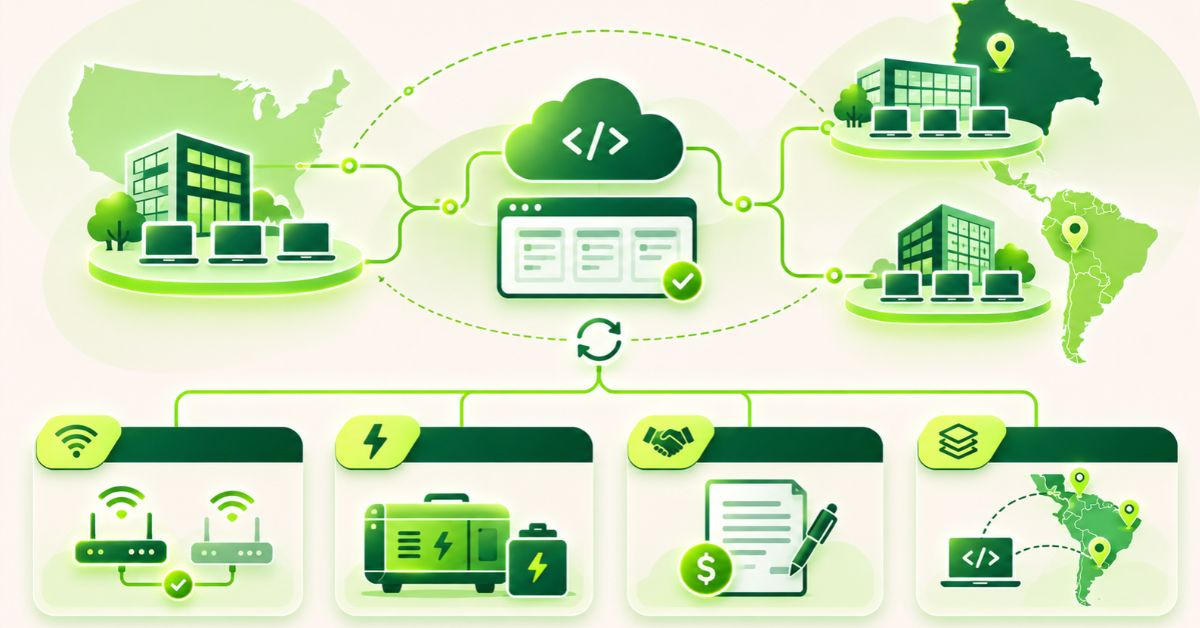
- Connectivity and power: Blockades disrupt transport more than remote work. Even so, give each engineer a backup internet option and a power plan.
- Currency: Price in dollars and confirm how your engineers receive payment.
- Geographic spread: Avoid placing every engineer in one city.
- Continuity: Pair Bolivian engineers with teammates in another country, so one disruption never stops delivery.
These risks do not rule Bolivia out. However, they do mean Bolivia is a poor choice as your only nearshore market in 2026.
Hiring Rules and Legal Basics in Bolivia
Hiring rules shape the real cost of nearshore software development in Bolivia. Bolivian labor law is protective of workers. Employees get legal benefits. Independent contractors do not, and misclassification can trigger back pay, social security contributions, and fines.
- Employer contributions: Payroll providers put employer social security costs at roughly 16.7% of gross salary, and higher in some sectors.
- Aguinaldo: Employers pay a mandatory 13th-month bonus in December. Payroll providers also describe a second bonus in years when GDP growth exceeds 4.5%, which is unlikely in a recession year.
- Contracts: Include intellectual property assignment and confidentiality terms in every agreement, and have Bolivian counsel review them.
- Security: Ask for controls aligned with ISO 27001, whatever local law requires.
This is general information, not legal advice. Confirm the details with local counsel, or work with a partner that manages employment compliance for you.
How Bolivia Compares With Other Nearshore Countries
However, no single country fits every team. This table shows where Bolivia sits next to larger markets.
| Country | Best for | Main tradeoff |
|---|---|---|
| Bolivia | Cost-sensitive work and quality-focused additions to a larger team | Small pool and 2026 economic and political risk |
| Colombia | Balanced depth and strong U.S. time zone fit | Rates above Bolivia |
| Mexico | Large pool and Central time alignment | More competition for talent |
| Argentina | Senior talent and strong English | Economic volatility |
| Brazil | The deepest pool in the region | Portuguese-language business context |
If you are weighing regions and not only countries, read our comparison of nearshore vs. offshore software development.
Engagement Models That Work in Bolivia
Two models fit nearshore software development in Bolivia well. The first is adding one or two engineers to your existing team through nearshore staff augmentation. This suits Bolivia’s smaller pool, because you hire for specific needs and do not try to fill a large roster. The second is a nearshore dedicated team. However, for larger builds, blend Bolivian engineers with colleagues from other countries.
Next, plan the first month carefully. Our guide to nearshore developer onboarding lays out a realistic timeline. When you design a mixed team, our article on nearshore development team structure covers how to split work across locations.
Checklist before you hire in Bolivia
- Define the skills you need and confirm Bolivia’s pool can supply them.
- Interview every candidate live in English.
- Price the contract in U.S. dollars.
- Choose an employment structure with legal review.
- Set backup connectivity and power expectations in writing.
- Spread the team across cities or countries.

How ParallelStaff Approaches Bolivia and Latin America Hiring
ParallelStaff is a Dallas-based nearshore firm that places senior Latin American engineers with U.S. technology teams. Several proof points show how it works:
- 94% engineer retention, with average tenure above five years.
- A ranking of #502 on the 2025 Inc. 5000.
- ISO 27001 certification for information security.
- A 4.8 out of 5 rating on Clutch.
- Enterprise clients that include AT&T, AMD, Google, J.Crew, and Whirlpool.
ParallelStaff can support nearshore software development in Bolivia by adding Bolivian engineers to a multi-country team. It delivers pre-vetted engineers in two weeks or less, and it handles the compliance and payment work that makes cross-border hiring hard. To explore your options, visit our page on how to hire Latin American developers or read about our nearshore software development services.


Frequently Asked Questions About Nearshore Software Development in Bolivia
Is Bolivia a good country for nearshore software development in 2026?
Bolivia is a good fit for targeted hiring, but not for every team. It offers lower rates, a UTC-4 time zone, and engineering-trained talent. However, a contracting economy and unrest make it better as part of a multi-country team than as your only market.
How many software engineers does Bolivia have?
Trade publications have put the number above 10,000. However, estimates vary by source and year, and the pool is far smaller than in Brazil or Mexico.
What time zone is Bolivia in, and how does it align with the U.S.?
Bolivia uses UTC-4 year-round with no daylight saving time. It matches U.S. Eastern daylight time, and it runs one hour ahead of Eastern standard time. Central teams see a one to two hour gap, while Pacific teams see three to four hours.
How good is English among Bolivian developers?
EF’s index scores Bolivia at 521, above the 488 global average. IT professionals score 590, and Cochabamba scores 564. Even so, interview every candidate in English.
How much does it cost to hire a developer in Bolivia?
A 2026 contractor marketplace snapshot shows most senior contracts between about $31 and $46 per hour. Typical nearshore rates across Latin America for senior engineers run about $80,000 to $110,000 per year through a managed partner. Overall, Bolivia tends to sit in the lower half of that range.
Which Bolivian city is best for hiring software engineers?
Cochabamba has the strongest software ecosystem and the best English scores. Santa Cruz leads in startups and commerce. Meanwhile, La Paz adds a smaller, steady pool.
Is it safe to hire engineers in Bolivia given the 2026 unrest?
Remote engineers face less direct exposure than travelers do. Still, blockades and protests can disrupt power, transport, and connectivity. Plan backups, and spread your team across locations.
Should I hire in Bolivia or Colombia?
Choose Bolivia when cost matters most and you need a few engineers. Choose Colombia when you need a deeper pool or faster scaling. Many teams also use both.
Do I need a legal entity to hire developers in Bolivia?
Not always. A managed nearshore partner or an employer of record can employ engineers locally, so you avoid creating a Bolivian entity. Confirm the structure with counsel.
Should I pay Bolivian engineers in dollars or bolivianos?
Price your contract in U.S. dollars to avoid currency swings, and confirm the payment channel with your partner. Local payroll rules may still require boliviano payments for employees.
How long does it take to hire a nearshore engineer in Bolivia?
ParallelStaff typically places pre-vetted engineers in two weeks or less. However, a niche skill set may take longer in Bolivia’s smaller pool.
Can I build a full dedicated team in Bolivia alone?
You can build a small team, but a large one is hard. The pool is limited, and one local disruption could affect everyone. A mixed team across two or more countries reduces that risk.
What are the biggest risks of nearshore software development in Bolivia?
The main risks are economic contraction, currency changes, protests and blockades, and a small talent pool. Each one has a practical fix, including dollar contracts, backup connectivity, and a multi-country team structure.
 Verified Author

Miguel Hernandez
VP of Operations
Linkedin Profile