
In this article
TL;DR
- When you outsource Angular development, a partner owns delivery of a defined front-end scope while you keep control of goals and approvals.
- The process has six stages: discovery, architecture, build, quality assurance, release and handoff.
- Most projects use fixed price, time and materials or a dedicated team. Pick based on how well the scope is defined.
- Angular now ships a major version every 12 months, so budget for upgrades. Version 20 reaches end of support in November 2026.
- Ask for weekly demos, a shared repository from day one and a written handoff plan.
If you plan to outsource Angular development, here is what to expect: a partner takes a defined front-end scope, staffs a team, builds and tests it in short cycles, and hands over code, documentation and knowledge when the work is done. You stay in charge of goals and approvals, while the partner owns delivery. This guide walks through the process, the pricing models, the team structure and the handoff cadence, so you can judge a proposal before you sign it.
If you are still deciding whether outsourcing is the right model at all, start with our complete guide to software development outsourcing. Then come back here for the Angular-specific details.
Why Companies Outsource Angular Development
Angular remains a major choice for large, long-lived web applications. The Stack Overflow 2025 Developer Survey reports that Angular is used by 19.8% of professional developers, behind React at 46.9% and slightly ahead of Vue.js at 18.4%. That is a large talent pool, but it is also a specialized one. As a result, enterprise teams often struggle to hire enough engineers who know the framework deeply.
Several reasons push companies toward outsourcing:
- Speed: a partner can start a team in weeks, while a permanent hire can take months.
- Cost: the U.S. Bureau of Labor Statistics reports a median pay of $99,520 for web developers and digital designers, before benefits and overhead.
- Specialization: migrations, large design systems and performance work need experience that a small in-house team may lack.
- Flexibility: you can scale a project team up for a launch and down afterward.
The market is also growing. Gartner forecasts that worldwide IT services spending will reach $1,570 billion in 2026, which is 5.3% higher than in 2025. In other words, buyers are leaning on outside partners more each year.
What You Can Outsource With Angular
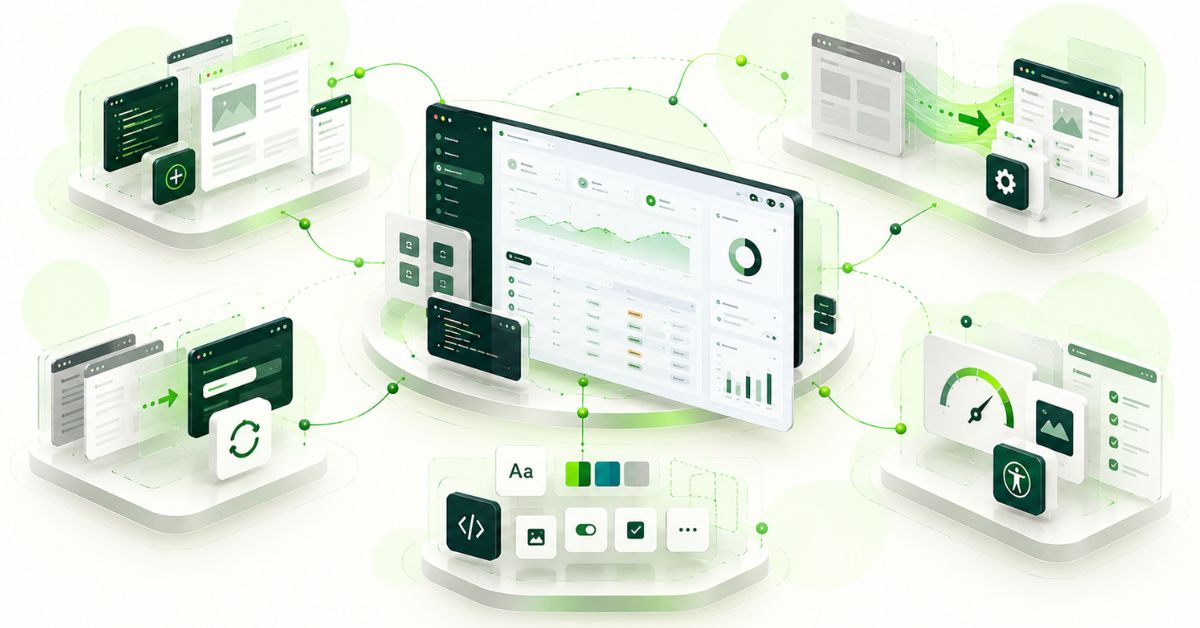
Angular projects come in several shapes, and each one changes the team you need and the way you should price the work.
New application builds
You hand over a product vision and a set of requirements, and then the partner designs the architecture, builds the application and releases it. This is the most common reason to outsource.
Legacy migrations
Many companies still run older AngularJS or early Angular applications. A migration moves them to a current version without stopping the business. It is delicate work, so it benefits from a team that has done it before.
Version upgrades and maintenance
Angular’s release policy makes upgrades a regular cost. According to the official Angular releases page, the project aims for a major release every 12 months, and each major release is typically supported for 24 months. Version 20 reaches the end of its long-term support on November 28, 2026. Therefore, teams still on that version should plan an upgrade soon.
Design systems and component libraries
Large organizations often need a shared set of components used by many teams. An outsourced team can build it, document it and train your engineers to extend it.
Performance and accessibility work
Slow pages and accessibility gaps are common in older applications, but a focused project can fix them in a few sprints.
The Outsourcing Process, Step by Step
A good partner follows a predictable process, so use the stages below as a checklist when you review a proposal.
1. Discovery
First, the team learns your users, your systems and your constraints. You should receive a written summary of scope, risks and assumptions. Discovery usually lasts one to three weeks.
2. Architecture and planning
Next, the team chooses the application structure, state management approach, testing strategy and deployment pipeline. For example, they decide how to organize modules and components, how to handle data from APIs and how to keep the codebase maintainable over several years. Ask to review these decisions before building starts.
3. Build in short cycles
Work happens in sprints of one to two weeks, and each sprint ends with a working demo. Because you see progress often, problems surface early.
4. Quality assurance
Testing runs alongside development. Expect unit tests, integration tests and end-to-end tests on critical flows. In addition, ask how the team checks accessibility, browser support and performance budgets.
5. Release
The team prepares a production build, runs a final regression check and supports the launch. Moreover, a good partner documents rollback steps in case something goes wrong.
6. Handoff
Finally, the team transfers code, documentation, environment access and knowledge. More on this below.


Pricing Models for Outsourced Angular Projects
There are three common ways to pay for the work, and each suits a different kind of project.
| Model | Best for | Main risk |
|---|---|---|
| Fixed price | Small projects with a stable, well-defined scope | Change requests add cost and slow delivery |
| Time and materials | Evolving products and uncertain scope | Budget can drift without strong oversight |
| Dedicated team | Long-term products with a steady roadmap | Requires ongoing product direction from you |
Fixed price
Here, scope, timeline and cost are agreed up front. This works when requirements will not change. However, real products rarely stay still, so most fixed price contracts include a change process that you should read carefully.
Time and materials
In this model, you pay for the hours the team works, which gives you flexibility to change direction. To keep the budget under control, set a monthly cap and review burn rate every sprint.
Dedicated team
A monthly fee covers a team that works only on your product. It is the best fit for long-term work, because the team builds deep knowledge of your codebase. Our guide to how to outsource a dedicated software development team explains this model in detail.
What Outsourced Angular Development Costs in 2026
Rates depend on location, seniority and the engagement model. For reference, typical 2026 nearshore hourly bands are:
| Experience level | Typical hourly rate |
|---|---|
| Junior | $22-35/hr |
| Mid-level | $35-50/hr |
| Senior | $55-75/hr |
To see how those bands add up, consider an illustrative team of four: one senior lead, two mid-level engineers and one mid-level quality engineer. At about 160 hours per month each, the senior lead costs roughly $8,800 to $12,000, the two mid-level engineers cost $11,200 to $16,000 together and the quality engineer costs $5,600 to $8,000. The total is about $25,600 to $36,000 per month.
These figures are examples, not a quote. Your actual price depends on the skills you need, the English level required and how long the engagement lasts. For comparison, the BLS reports a median pay of $135,980 for software developers, and that excludes benefits, recruiting and overhead.
What drives the price
- Scope and complexity: data-heavy dashboards and real-time features cost more than simple forms.
- Team seniority: architects and leads raise the monthly total but reduce rework.
- Integration needs: many back-end systems and third-party services add effort.
- Design maturity: an existing design system speeds the build.
- Timeline: compressed schedules need larger teams.
To compare countries and models, read our guide to the best countries to outsource software development.
Team Structure for an Outsourced Angular Project
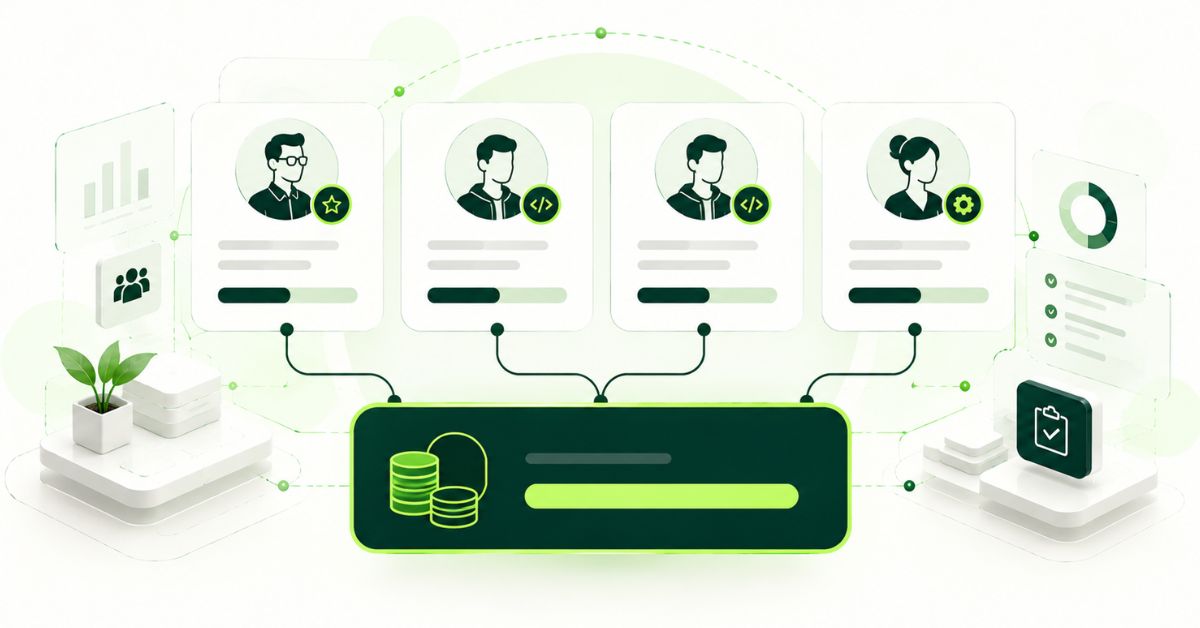
A balanced team keeps quality high without wasting budget. For example, a small project team often looks like this:
- Technical lead: owns architecture, code review and technical decisions.
- Front-end engineers: build features and components, usually two to four people.
- Quality engineer: writes and maintains automated tests.
- Delivery manager: runs sprints, reports progress and removes blockers.
- Designer (optional): supplies interface designs if you do not have them.
On your side, assign a single product owner who can make decisions quickly, because projects slow down when feedback takes a week. In contrast, projects with a responsive owner often finish earlier than planned.
If you only need to add a few engineers to your own team, a different model fits better. See our comparison of staff augmentation versus an outsourcing firm.


How to Evaluate an Angular Outsourcing Partner
Many vendors list Angular on their website, yet fewer can show a record of delivering and supporting it. Use these questions during evaluation.
- Ask for relevant examples. Request projects of similar size and complexity, with references you can call.
- Review the engineering practices. Look for code review, automated testing, continuous integration and a clear branching strategy.
- Check upgrade experience. A partner that has migrated applications between major versions will plan better.
- Meet the actual team. Speak with the engineers who will do the work, not only the sales lead.
- Confirm communication. Look for time zone overlap, strong English and a named point of contact.
- Verify security. Ask about access controls, device policies and certifications such as ISO 27001.
For a deeper checklist, read our guide on how to evaluate software outsourcing providers.
Handoff Cadence: Staying in Control While Someone Else Builds
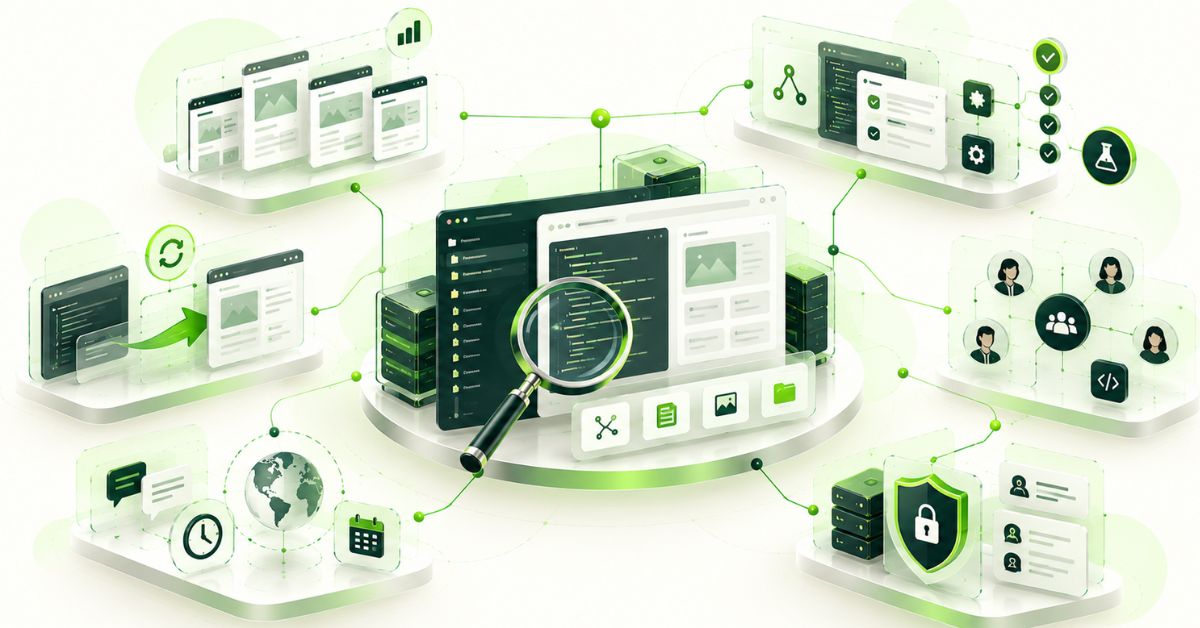
Outsourcing works best when communication has a steady rhythm, so agree on the following before work begins.
- Daily: a short standup or asynchronous update in a shared channel.
- Weekly: a demo of working software and a review of the backlog.
- Every sprint: a planning session and a retrospective.
- Monthly: a steering review covering budget, risk and roadmap.
- Always: access to the repository, the task board and the staging environment.
Shared access is the single best protection, since your team can see the code from day one and is never surprised at the end.
The final handoff package
When the project ends, or when you take work in-house, ask for:
- The full source repository and commit history.
- Architecture notes and decision records.
- Setup instructions and environment variables, stored securely.
- Test suites and instructions for running them.
- A recorded walkthrough and at least one live knowledge transfer session.
- A list of known issues and recommended next steps.
Common Mistakes to Avoid
- Choosing only on price. A low bid that leads to rework often costs more in the end.
- Skipping discovery. Unclear scope is the most common cause of overruns.
- Ignoring version support. An application built on an unsupported version becomes a security and maintenance risk.
- Leaving ownership vague. Make sure your contract says you own all code and assets.
- Waiting too long for feedback. Slow approvals stall the team, and they raise cost.
- Treating testing as optional. Because tests are missing, every later change becomes riskier.
Why Outsource Angular Development Through a Nearshore Partner
Time zone is a practical advantage, because nearshore teams in Latin America overlap with US business hours for most of the day, so reviews, demos and urgent fixes happen in real time. CBRE reports that average wages in Latin America are about 39% of US levels, which helps explain why many companies reach 40-60% savings after fully loaded costs.
Read more about the model in our overview of nearshore software development.
How ParallelStaff Delivers Angular Projects
ParallelStaff is a nearshore software development and staffing firm based in Dallas, Texas. We are ISO 27001 certified, rated 4.8 out of 5 on Clutch and ranked #502 on the 2025 Inc. 5000. Our engineer retention rate is 94%, which means your team stays stable from discovery to handoff.
Our approach has four parts, as follows:
- First, we scope the work with you and agree on outcomes, pricing and cadence.
- Then we assemble a team with the right seniority and front-end depth.
- Next, we deliver in short cycles with weekly demos and shared access.
- Finally, we complete a documented handoff or transition to ongoing support.
Learn more about our software outsourcing services and our broader software development services. You can also review our case studies for examples of delivered work.
If you are comparing stacks, our guides on how to outsource .NET development and how to outsource Java development follow the same structure.
Frequently Asked Questions
How do I outsource Angular development?
First define your scope and goals. Then shortlist partners with proven Angular experience, run a short discovery phase, choose a pricing model and agree on a delivery cadence. Insist on shared repository access and a written handoff plan.
How much does it cost to outsource Angular development in 2026?
At ParallelStaff’s nearshore bands, a small team of one senior lead, two mid-level engineers and one quality engineer costs about $25,600 to $36,000 per month. Your price depends on scope, seniority and engagement length.
Is it better to outsource Angular development or hire in-house?
Outsource when you need speed, specialized skills or flexible capacity. However, hire in-house when the work is core, continuous and requires deep company knowledge. Many companies combine both.
What is the best pricing model for an Angular project?
Use fixed price for small, well-defined work, time and materials for evolving products and a dedicated team for long-term roadmaps. Overall, the best model matches how stable your scope is.
How long does an outsourced Angular project take?
A focused feature set can take two to three months, while a full application often takes four to nine months. Discovery adds one to three weeks, and complex integrations extend the timeline.
Which Angular version should I build on in 2026?
Build on a version that is still supported. According to the official Angular releases page, version 22 was released on June 3, 2026, and major releases are typically supported for 24 months. Confirm the current version with your partner before kickoff.
Can an outsourced team migrate my AngularJS application?
Yes, because migration is a common outsourced project. A good partner plans it in stages, so your application keeps running while the code moves to a modern version.
Who owns the code when I outsource?
You should, so make sure your contract assigns all intellectual property to you and gives you access to the repository from day one.
How do I keep quality high with an outsourced team?
Require code reviews, automated tests, continuous integration and weekly demos. Also, keep a technical lead on your side who can review architecture decisions.
What team do I need for an Angular project?
Most projects need a technical lead, two to four front-end engineers, a quality engineer and a delivery manager. Add a designer if you do not have interface designs ready.
How do I handle time zone differences?
Choose a nearshore partner whose team overlaps with your working hours. Since Latin American engineers typically share most of the US workday, daily collaboration is easier.
What happens at the end of an outsourced Angular project?
The partner delivers the source code, documentation, test suites and a knowledge transfer. After that, you can maintain the application in-house or continue with a support retainer.
How do I protect my data and intellectual property?
First sign a non-disclosure agreement. Then use least-privilege access, require managed devices and choose a partner with recognized security controls such as ISO 27001.
What is the difference between outsourcing a project and adding staff?
With outsourcing, the partner owns delivery of a defined scope, while with staff augmentation, individual engineers join your team and follow your direction. Choose the model that matches how much management you want to provide.
Final Thoughts
To outsource Angular development well, start with a clear scope, choose a pricing model that fits it and insist on a steady delivery rhythm. If you also plan for version upgrades and a complete handoff, you keep control of your product while someone else does the heavy lifting.
Ready to scope your project? Talk to ParallelStaff and we will share a team proposal and a rate estimate based on your needs.
Sources: Angular releases, Stack Overflow Developer Survey 2025, BLS web developers, BLS software developers, Gartner, CBRE.
 Verified Author

Luis Peralta
CEO & Founder
Linkedin Profile