

In this article
TL;DR: A dedicated development team for CRM implementation gives you a stable group of engineers who learn your sales process, build the integrations, migrate the data, and stay on after launch. It fits best when your CRM needs custom work, many integrations, or steady improvement. Start by defining outcomes, then staff a small cross-functional team, and plan for adoption from day one.
A dedicated development team for CRM implementation is a group of engineers, analysts, and testers who work only on your CRM project. They act as an extension of your company, so they learn how you work. The team configures the platform, builds integrations, moves your data, and supports users after launch. This guide explains when the model fits, who to put on the team, how the phases work, what it costs, and how to avoid common failures.
Why Does a CRM Implementation Need a Dedicated Team?
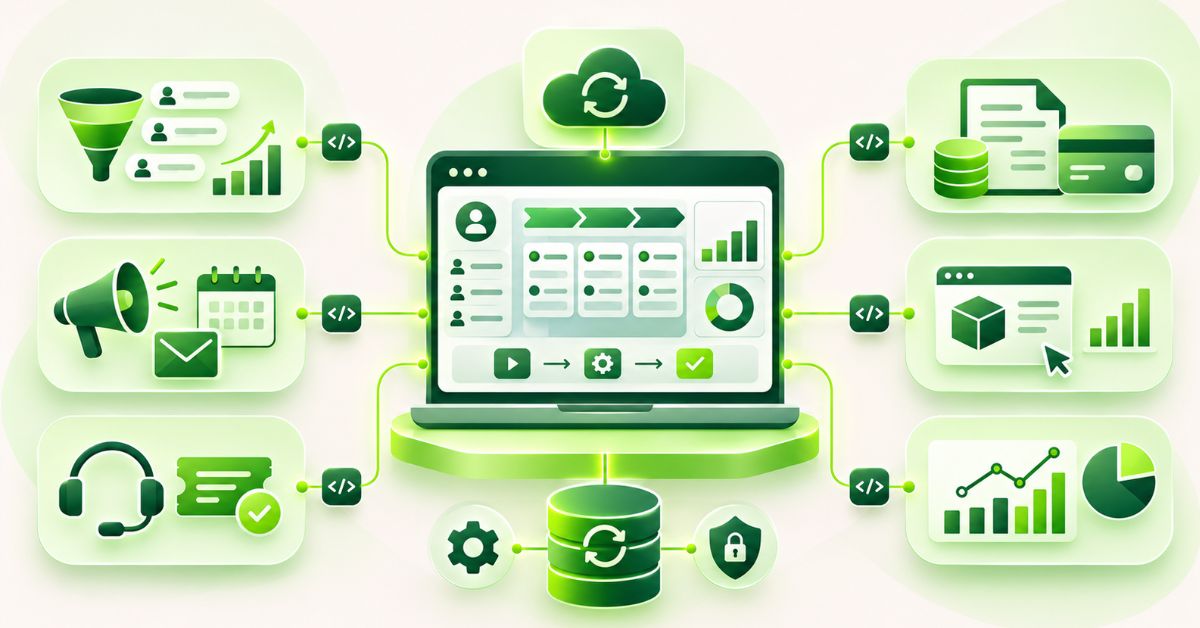
A CRM is not a one-time install, because it touches sales, marketing, support, finance, and your other systems. As a result, the work keeps changing after launch. For example, new fields, reports, and integrations arrive every quarter.
Salesforce’s research shows why the details matter. In its State of Sales survey, reps said they spend only about 28% of their week selling. The survey ran from August to September 2022. Still, much of the rest goes to admin work and data entry. A well-built CRM should cut that load, but a poorly built one adds to it.
A dedicated team helps for four reasons.
- Continuity: The same people build, launch, and then improve the system.
- Context: Also, engineers learn your sales stages, naming, and reporting needs.
- Speed: Next, the team works your backlog every sprint without a new vendor ramp-up.
- Ownership: Finally, you control priorities, code, and documentation.
For the wider model, read our guide to building a dedicated development team. Our dedicated development teams page also explains how we staff them.
When Is a Dedicated Team the Right Choice for CRM Work?
Not every CRM project needs a full team. For instance, a small rollout of an off-the-shelf tool may only need a part-time admin. However, a dedicated team makes sense in other cases.
- First, your CRM needs custom objects, workflows, or portals.
- Second, you must connect it to billing, support, marketing, or product data.
- Third, you are migrating from an older system with messy data.
- Also, your roadmap has months of steady CRM work, not a single project.
- Finally, your internal IT team is busy with other priorities.
Compare the options before you choose.
| Option | Best for | Main tradeoff |
|---|---|---|
| Dedicated team | Custom, long-running CRM work | Needs a steady backlog to stay efficient |
| Implementation consultancy | A fixed, standard rollout | Knowledge leaves when the project ends |
| In-house team | Core, long-term ownership | Slow to hire and costly to scale |
| Staff augmentation | One or two missing skills | You manage the whole delivery |
If you are weighing hiring paths, see our comparison of a dedicated team vs in-house hires. If you only need one specialist, read about IT staff augmentation.
Who Belongs on a CRM Implementation Team?
Most CRM teams are small and cross-functional. The exact mix depends on your platform, such as Salesforce or HubSpot, and on how much custom work you need. The table shows a common starting lineup.
| Role | What they own |
|---|---|
| Team lead or delivery manager | Plan, sprints, risks, and reporting to you |
| Business analyst | Requirements, process maps, and user stories |
| Solution architect | Data model, security model, and system design |
| CRM developers | Configuration, custom features, and automation |
| Integration engineer | Connections to billing, support, marketing, and data tools |
| Data migration specialist | Cleaning, mapping, loading, and checking data |
| QA engineer | Test plans, regression checks, and release gates |
You do not need every role full time. For example, a small project may combine roles, while a larger one adds more developers. However, never skip the analyst or the data specialist. Most CRM problems start with unclear requirements or poor data, so those roles matter.
You also need an internal owner. This person speaks for sales, approves priorities, and clears blockers. Without that owner, even a strong team drifts, because decisions stall.
What Are the Phases of a CRM Implementation?
A dedicated team can run these phases in sequence or overlap them. Each phase ends with a clear deliverable, so progress is easy to check.
Phase 1: Discovery and goals
Start with outcomes, not features. For example, you might want faster lead follow-up, cleaner forecasts, or one view of each customer. Write these goals down and attach a measure to each.
Phase 2: Design
The team maps your sales and service processes. Then it designs the data model, user roles, and security rules. Keep the design simple at first. You can always add fields later.
Phase 3: Build and configure
Developers set up the platform and build custom features in short sprints. Then demo each sprint to real users. Early feedback prevents expensive rework.
Phase 4: Data migration
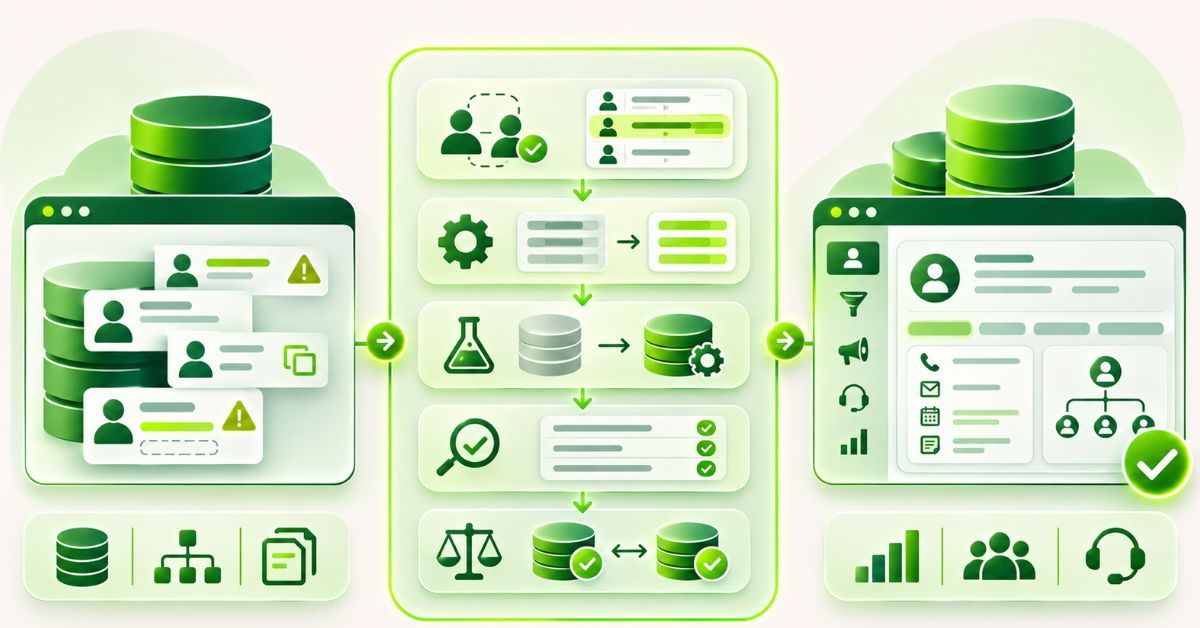
Data work often takes longer than expected. First, the team cleans duplicates, maps old fields to new ones, and loads data in test rounds. Because data quality shapes trust, plan several dry runs.
Phase 5: Integration
The CRM must exchange data with other tools, so build integrations with clear ownership of each field. Also decide which system is the source of truth for every key record.
Phase 6: Testing and training
Test the full process, not just single screens. Meanwhile, train users in short, role-based sessions. Sales reps need different training than managers or support agents, because their tasks differ.
Phase 7: Launch and improve
Launch in stages when possible. After go-live, the same team fixes issues, tunes reports, and adds features. This ongoing support is the main advantage of a dedicated model.
What Do CRM Projects Get Wrong?
You will often see claims that most CRM projects fail, but be careful with those numbers. In a 2004 interview, a Gartner analyst said the famous figure came from a 2001 survey in which about 55% of projects “failed to meet expectations.” He said press coverage shortened that to “failure,” and that only about 5% reported absolute failure.
The lesson is practical. Many projects fall short of their goals, but few collapse. The causes are usually fixable.
- Vague goals: First, teams build features without a clear business outcome.
- Poor data: Gartner has long warned that inaccurate or incomplete data is a leading cause of failure in CRM deployments.
- Low adoption: Also, users avoid a system that feels slow or confusing.
- Over-customization: Then, too many custom rules make upgrades hard.
- Weak ownership: Finally, nobody on your side makes decisions quickly.
Keep in mind that the Gartner data-quality source dates from 2004. The principle still holds, but treat it as background rather than a current statistic.


How Do You Keep Adoption High?
A CRM that nobody uses has no value. Therefore, plan for adoption from the start.
- First, involve sales reps in design sessions and sprint demos.
- Next, remove fields and steps that do not help the user.
- Then automate data entry wherever possible.
- Also, train by role, and offer short refreshers after launch.
- Finally, track usage and data completeness, then act on the results.
A dedicated team has an edge here. Because the engineers stay on the project, they hear user feedback every week. As a result, they can fix annoyances fast, which builds trust in the system.
How Much Does a Dedicated CRM Team Cost?
Cost depends on team size, seniority, location, and project length. Overall, the main drivers are the number of integrations, the amount of custom work, and the state of your data.
As a general guide, typical nearshore rates for senior engineers run about $80,000 to $110,000 per year. Architects and leads run about $95,000 to $135,000. These are market ranges, not a quote, because skills and demand shift.
For illustration, consider a five-person team with one lead and four senior specialists. At those generic ranges, annual team cost falls between roughly $415,000 and $575,000 before any partner fees. A smaller team costs less, while a larger one costs more.
Instead, compare that with the true cost of hiring in-house. SHRM reports that replacing an employee can cost between 50% and 200% of annual salary, according to its piece on losing key employees. Turnover on a CRM team also means lost knowledge about your data and processes.
Finally, count the cost of delay. Every month without a working CRM means slower follow-up and weaker forecasts. For related budgeting ideas, see our guide to dedicated development team services.
What Should You Look for in a Dedicated Team Partner?
Choose a partner by evidence, not promises. Ask these questions.
- Have you delivered CRM work with similar integrations and data volumes?
- Who exactly will be on my team, and can I interview them?
- How do you handle a replacement if someone leaves?
- What security certifications do you hold, and how do you control access?
- How do you report progress, and how often?
- Will I own the code, configuration, and documentation?
Security matters because a CRM holds customer and revenue data. For example, ParallelStaff holds ISO 27001 certification, which signals a mature security program. Also apply least-privilege access, so each engineer sees only what the work requires.
Why Choose a Nearshore Dedicated Team?
CRM projects depend on close contact with sales and operations. Time zone gaps slow every question and every demo. Therefore, nearshore engineers work hours close to yours, so feedback loops stay short.
Nearshore also widens your talent pool at a lower cost. Learn more about our nearshore dedicated teams and our broader nearshore software development services. You can also see how to hire Latin American developers.
ParallelStaff typically places pre-vetted engineers in two weeks or less. Because the team works your hours, it joins your standups and tools from the first week. If you are building a remote team from scratch, read how to hire a dedicated remote development team.
Related project guides can help you plan. See how dedicated talent supports a platform migration, a SaaS platform, or an ecommerce platform. If you are weighing other delivery models, compare software development outsourcing as well.


Frequently Asked Questions
What is a dedicated development team for CRM implementation?
It is a group of engineers, analysts, and testers who work only on your CRM project. They configure the platform, build integrations, migrate data, and support users after launch.
How big should a CRM implementation team be?
Most projects start with three to six people. A common mix includes a lead, an analyst, an architect, developers, an integration engineer, and a QA engineer.
How long does a CRM implementation take?
Timelines vary with scope, integrations, and data quality. A standard rollout can take a few months, while a custom build with many integrations takes longer.
How much does it cost to hire a dedicated CRM team?
Cost depends on team size and seniority. Typical nearshore rates for senior engineers run about $80,000 to $110,000 per year, while leads run higher. Always get a written estimate.
Is a dedicated team better than a CRM consultancy?
It depends on the work. A consultancy suits a fixed, standard rollout, but a dedicated team suits custom, ongoing work, because the knowledge stays with your project.
Can a dedicated team work with my existing CRM platform?
Yes. Most teams can support the major platforms and custom builds, but confirm that the partner has real experience with your specific platform.
Who owns the code and configuration?
You should. Put ownership terms in the contract and keep all work in accounts and repositories you control.
How do you migrate data into a new CRM safely?
Clean and deduplicate first, then map fields and run several test loads. Validate results with the business users before the final load.
How do you keep users from abandoning the new CRM?
Involve users early, simplify screens, and automate data entry. Then train by role and track usage after launch, and fix pain points quickly.
What happens after the CRM goes live?
The team stays on to fix issues, tune reports, and add features. This continuity is a key benefit of the dedicated model.
How do I keep customer data secure with a remote team?
Use least-privilege access, managed devices, and logged access. Also, choose a partner with proven security practices and certifications.
Is a nearshore team a good fit for CRM work?
Often, yes, because shared working hours make daily collaboration easy. Costs are also lower than in most U.S. markets.
Should I start with a pilot or a small team?
Yes. Start with a small team and a defined first release, then add people as the roadmap grows.
 Verified Author

Luis Peralta
CEO & Founder
Linkedin Profile