

In this article
TL;DR: To outsource React development well, pick the right engagement model first, then vet for React-specific skills and agree on scope, ownership, and security in writing. Pricing depends on seniority, team size, and model, so compare total cost instead of hourly rates. Nearshore partners add shared working hours, which makes daily collaboration easy. Start with a small pilot before you commit to a larger build.
When you outsource React development, you hand part or all of your front-end work to an external team that builds user interfaces with React. Done well, it speeds up delivery and widens your talent pool, but done poorly, it creates rework and hidden costs. This guide covers when to outsource, the three engagement models, a step-by-step process, vetting, pricing, and risks.
Why Do Companies Outsource React Development?
React is one of the most used web technologies in the world. In the 2025 Stack Overflow Developer Survey, 44.7% of respondents said they had done extensive work in React. Next.js, a popular React framework, reached 20.8%. As a result, demand for skilled React engineers stays high.
Most teams outsource for four reasons.
- Speed: A partner can start in weeks, while a direct hire often takes months.
- Skills: Also, you gain engineers who have already shipped complex interfaces.
- Cost: Nearshore rates are often lower than those of a comparable U.S. hire.
- Flexibility: Finally, you can scale the team up or down as the roadmap changes.
The U.S. Bureau of Labor Statistics reports a median wage of $92,650 for web developers in May 2025. That figure is a broad average, so senior React engineers in major tech markets often cost more once you add benefits and recruiting fees. Therefore, many teams look at outsourcing to control cost without lowering quality.
When Should You Outsource React Development?
Outsourcing fits some situations better than others. Consider it in these cases.
- First, you have a fixed deadline that your current team cannot meet.
- Second, your roadmap needs React skills that nobody on staff has.
- Third, you are building a new product or a major redesign.
- Fourth, you want to modernize an older front end without pausing feature work.
- Finally, hiring locally is taking too long or costing too much.
Outsourcing is a weaker fit when the work is tiny or the product vision is still unclear. In those cases, an internal hire or a short discovery phase may work better. For the wider picture, read our complete guide to software development outsourcing.
Which Engagement Model Should You Choose?
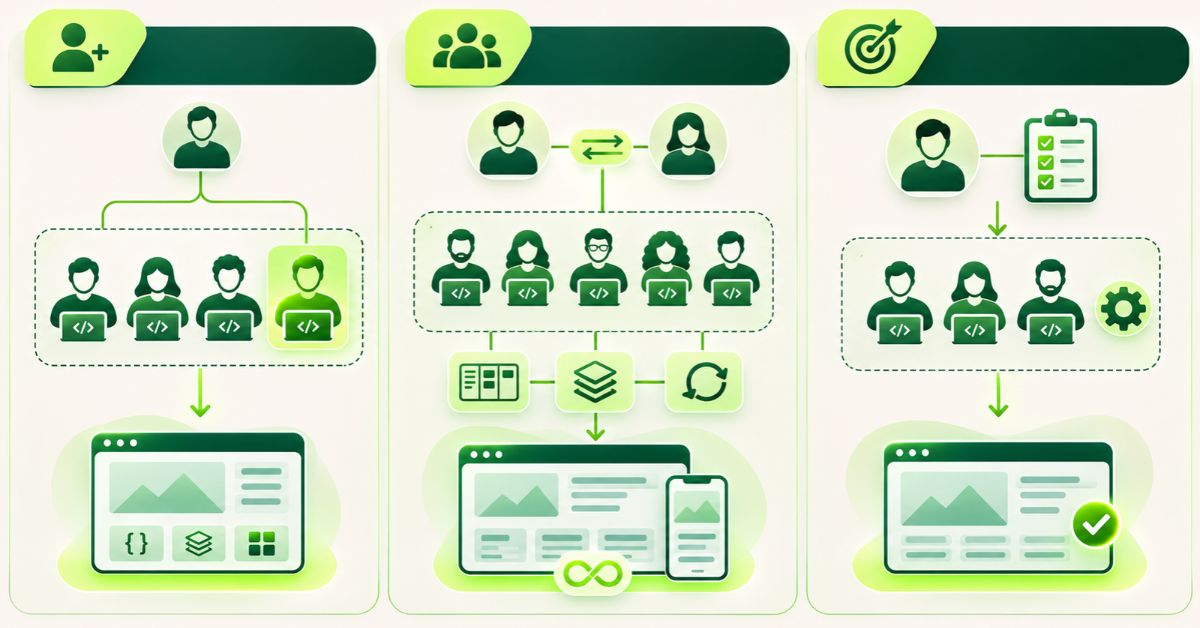
You can outsource React development in three main ways. Each model gives you a different mix of control, speed, and cost.
| Model | How it works | Best for | Control |
|---|---|---|---|
| Staff augmentation | One or more React engineers join your team | Filling a skill gap fast | High |
| Dedicated team | A full team works only on your product | Long-term product development | High |
| Project-based | A partner delivers a defined scope for a set price | Clear, bounded builds | Lower |
Staff augmentation works well when you already have a product manager and an engineering lead. Our overview of IT staff augmentation explains the model. A dedicated team suits larger roadmaps, and you can learn more on our dedicated development teams page. Finally, project-based work fits when the scope is stable. Compare the three in our guide to software outsourcing.
If your main goal is adding people rather than handing off a project, see our guide on how to hire React developers for enterprise projects.
What Is the Process to Outsource React Development?
Follow these seven steps in order. Each one lowers the risk of surprises later.
Step 1: Define the scope and success measures
Write down what you are building and how you will judge it. For example, set targets for page speed, accessibility, and release frequency. A clear scope makes every later step easier.
Step 2: Choose the engagement model
Match the model to your needs using the table above. If the scope may change, avoid a rigid fixed-price contract. Instead, pick a model that lets you adjust priorities each sprint.
Step 3: Shortlist partners
Look for partners with proven React work, not just general web experience. Next, ask for references and case studies. Our guide to evaluating software outsourcing providers lists the questions to ask.
Step 4: Vet the engineers, not just the company
A strong company can still send a weak engineer. Therefore, interview the people who will do the work. Use a small, realistic task instead of a trick quiz.
Step 5: Agree on contracts, ownership, and security
Put intellectual property ownership, confidentiality, and access rules in writing. Also, confirm how code is stored and reviewed. Your partner should work in your repositories whenever possible.
Step 6: Run a short pilot
Start with a two-to-four-week pilot on a real feature. It shows how the team communicates, estimates, and handles feedback. As a result, you learn the truth before a larger commitment.
Step 7: Scale with a steady rhythm
Once the pilot succeeds, add people and scope gradually. Keep sprint reviews, demos, and shared dashboards in place. Meanwhile, track delivery against the measures from step one.
What React Skills Should You Vet?
React is a library, so the quality of the work depends on the engineer’s habits. Vet these skill areas before you sign.
| Skill area | What to test | Strong signal |
|---|---|---|
| Component design | Build reusable, well-scoped components | Keeps components small and testable |
| State management | Choose where state should live | Avoids needless global state |
| Performance | Find and fix slow renders | Measures first, then optimizes |
| Framework and rendering | Explain server and client rendering tradeoffs | Ties choices to user and SEO needs |
| Type safety | Use typed code across the app | Writes clear, shared types |
| Testing | Write unit and interface tests | Tests behavior, not internals |
| Accessibility | Build for keyboards and screen readers | Treats it as a default, not an extra |
| Communication | Explain tradeoffs to non-engineers | Uses plain words and short demos |
The official React documentation recommends starting new apps with a framework. Therefore, ask candidates how they would choose one for your project. A good answer weighs rendering needs, team skills, and long-term support.


What React Work Is Best to Outsource?
Some React work moves to a partner more easily than other work. Start with tasks that have clear inputs and outputs.
- New features: Build a self-contained screen or flow from a written spec.
- Design systems: Create a shared component library, then document it.
- Redesigns: Rebuild an older interface while your team ships new features.
- Performance work: Audit slow pages, then fix the biggest problems first.
- Test coverage: Add automated tests to code that has none.
On the other hand, keep product strategy and core architecture decisions close to your own team. A partner can advise on them, but your leaders should own them. Therefore, outsource the building and share the thinking.
What Should the Contract and Pilot Include?
A good contract removes doubt before work starts. Include these items, so both sides know what success means.
- Scope, deliverables, and acceptance criteria for each milestone.
- Ownership of all code, designs, and related accounts.
- Confidentiality terms and rules for handling customer data.
- Notice periods and a clear process to replace an engineer.
- Working hours, response times, and meeting rhythms.
Then design the pilot around a real feature. Pick something small enough to finish in a few weeks but large enough to test code quality. Afterward, review the results together. If the pilot goes well, you can expand with confidence. If it does not, you have lost little time.
What Interview Questions Reveal a Strong React Engineer?
Open-ended questions show how a candidate thinks. Try these eight.
- Describe a slow screen you fixed, and explain how you found the cause.
- How do you decide where a piece of state should live?
- When would you choose server rendering over client rendering?
- How do you keep a large component library consistent?
- Walk me through how you test a form when it has many rules.
- What accessibility checks do you run before a release?
- Tell me about a code review that changed your approach.
- How do you explain a delay to a product owner?
Listen for specifics. Strong candidates describe real tradeoffs and past mistakes. Meanwhile, weak candidates give textbook answers and avoid detail.
How Much Does It Cost to Outsource React Development?
Pricing varies with seniority, team size, scope, and model. Three factors drive most of the difference.
- Seniority: Senior engineers and leads cost more, but they ship faster and need less review.
- Model: Project-based work often carries a risk premium, while staff augmentation bills for time.
- Location: Still, nearshore teams usually cost less than U.S. teams for similar skills.
As a general guide, typical nearshore rates for senior engineers run about $80,000 to $110,000 per year. Architects and leads run about $95,000 to $135,000. These are market ranges, not a quote, and they shift with skills and demand.
Do not compare hourly rates alone. Instead, compare total cost of ownership. That includes management time, rework, delays, and turnover. SHRM reports that replacing an employee can cost between 50% and 200% of annual salary, based on its piece on losing key employees. A cheap team that churns engineers can cost more, because turnover is expensive.
To go deeper on pricing, see our software development outsourcing services buyer’s guide.

What Are the Risks, and How Do You Reduce Them?
Every outsourcing project carries risk. Most risks are predictable, so you can plan for them.
| Risk | How to reduce it |
|---|---|
| Unclear scope and scope creep | Write acceptance criteria and review them each sprint |
| Weak code quality | Require code reviews, tests, and your own repositories |
| Poor communication | Choose overlapping hours and set a daily standup |
| Knowledge loss when people leave | Require documentation and a named backup engineer |
| Security and IP exposure | Use least-privilege access and signed IP terms |
| Vendor lock-in | Keep code and accounts under your control |
Security deserves extra attention, so ask how the partner manages devices, access, and data. For example, ParallelStaff holds ISO 27001 certification, which signals a mature security program.
Why Choose a Nearshore Partner for React Work?
React projects depend on fast feedback between design, product, and engineering. Time zone gaps slow that loop. Nearshore engineers work hours close to yours, so reviews and fixes happen the same day.
Nearshore also widens your talent pool, while lowering cost. Our nearshore IT outsourcing page explains the model in detail, and our guide to nearshore software development covers the basics. You can also browse how to hire Latin American developers.
ParallelStaff typically places pre-vetted engineers in two weeks or less. Because engineers work your hours, they join your standups and your tools. If you use a back-end team too, compare our guides to outsourcing Node.js development and outsourcing Angular development. Similar guides cover .NET and Java work.
If your plan also includes a long-term product team, read how to build a dedicated development team. Startups can also see our guide to software development outsourcing for startups.


Frequently Asked Questions
What does it mean to outsource React development?
It means hiring an external team or engineers to build or maintain your React front end. They can join your team, form a dedicated team, or deliver a defined project.
How much does it cost to outsource React development?
Cost depends on seniority, model, and scope. Typical nearshore rates for senior engineers run about $80,000 to $110,000 per year. Compare total cost, not just hourly rates.
Is it better to outsource React development or hire in-house?
Outsource when you need speed, flexibility, or skills you lack, but hire in-house for a long-term core role. Many teams combine both, so they keep core knowledge in-house.
What is the best engagement model for React projects?
Staff augmentation fits teams that need extra engineers fast. A dedicated team suits long roadmaps. Project-based work fits a clear, bounded scope.
How do I vet a React outsourcing partner?
First, check React-specific case studies and references. Then interview the actual engineers and give them a small, realistic task. Also confirm security practices.
How long does it take to start?
Timelines vary by partner. ParallelStaff typically places pre-vetted engineers in two weeks or less. A direct hire usually takes much longer.
Who owns the code when I outsource?
You should own it, so put intellectual property terms in the contract and keep work in repositories you control.
Can I outsource only part of a React project?
Yes, because many teams outsource a single feature, a redesign, or a component library. This works best when interfaces between teams are clearly defined.
How do I keep quality high with an outsourced team?
Require code reviews, automated tests, and regular demos. In addition, track measures such as page speed and defect rates from the start.
What are the risks of outsourcing React development?
Common risks include unclear scope, weak code quality, poor communication, and knowledge loss. Each has a practical fix, such as acceptance criteria, reviews, and documentation.
Is nearshore better than offshore for React work?
Often, yes, because overlapping hours make daily collaboration simple. Offshore teams can cost less, but time zone gaps slow feedback.
Should I start with a pilot project?
Yes. A two-to-four-week pilot on a real feature shows how the team works before you commit to a larger build.
How is outsourcing React different from outsourcing React Native?
React builds web interfaces, while React Native builds mobile apps. They share ideas, but the skills and tools differ, so vet for the one you need.
 Verified Author

Luis Peralta
CEO & Founder
Linkedin Profile