
In this article
TL;DR: To outsource iOS development, hand a clearly scoped app or feature set to an external partner, pick a pricing model that fits your scope risk, and keep a steady review cadence. Most buyers choose fixed price for small, defined builds and time and materials for evolving products. A strong outsourced team has a technical lead, Swift engineers, and QA. In 2026, Apple’s Xcode 26 build rule and strict App Review make release experience a key buying factor.
If you want to outsource iOS development, start with a written scope. Then choose an engagement model, and pick a partner that proves it can ship App Store releases. Therefore, the process is less about finding the cheapest team and more about handing off the work cleanly. In this model, the partner owns delivery of a defined scope, while you keep control of goals and approvals. For a broader view, read our software development outsourcing guide.
This guide covers five steps. First, you define the scope. Next, you choose the engagement model. Then you design the team structure, set a pricing model, and plan the handoff cadence. Finally, you avoid the mistakes that sink most outsourced mobile projects.
Why Companies Outsource iOS Development in 2026
For U.S. products, iOS is often the first platform to build. According to StatCounter Global Stats, iOS held 51.96 percent of U.S. mobile operating system share in October 2026, against 48.02 percent for Android. As a result, many U.S. products cannot skip a polished iPhone app.
However, building that app in-house is hard. A Gartner survey of 437 IT organizations found that 64 percent of IT executives named talent availability as the top barrier to adopting emerging technologies. Meanwhile, the U.S. Bureau of Labor Statistics reports that software developers earned a median of $135,980 in May 2025, and it projects 10 percent job growth from 2025 to 2035. Hiring a full in-house mobile team is slow and costly.
Outsourcing offers a way around both problems. The Deloitte Global Outsourcing Survey 2024 drew on more than 500 executives. It lists cost reduction, skilled talent, and agility as key drivers of outsourcing. In addition, a partner can start a project faster than a hiring cycle allows.
iOS also rewards specialists. Apple controls the toolchain, the review process, and the release schedule. Therefore, a good partner should already work in modern Swift and SwiftUI, and it should know Apple’s rules well.
Finally, platform rules change every year. Since April 28, 2026, Apple requires apps uploaded to App Store Connect to be built with Xcode 26 or later, using a version 26 SDK. Consequently, a partner that tracks these deadlines protects your release schedule.
Step 1: Define the Scope Before You Search
A vague brief produces vague quotes. Because every price you receive depends on the scope, write it down first. Your brief should cover these items:
- The product goal: Describe the users, the core flows, and the outcome you want in the first release.
- The feature list: Separate must-haves from nice-to-haves, so the partner can price the first milestone.
- The integrations: List every back-end service, payment tool, and third-party software development kit the app must use.
- The device targets: State whether you need iPhone only or also iPad, Apple Watch, or Mac, and the lowest iOS version.
- The quality bar: Define crash-rate goals, performance targets, and accessibility needs.
Decide Between New Build, Rebuild, and Maintenance
Each type of work needs a different partner profile. A new build needs product thinking and design support. A rebuild needs careful reading of old code and a migration plan. Maintenance, on the other hand, needs steady capacity and fast bug fixes. Therefore, say clearly which type of work you are handing off.
Choose Native or Cross-Platform
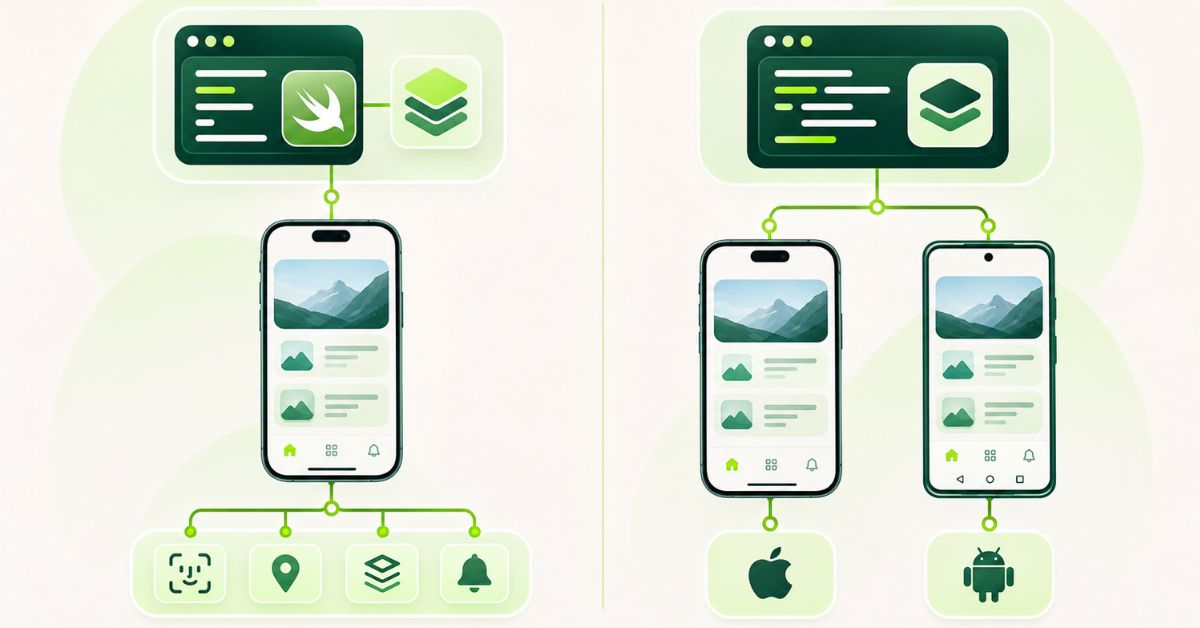
Native iOS work uses Swift and Apple’s own frameworks. It suits apps that need deep device access, smooth animation, or top performance. In contrast, a cross-platform build shares code between iOS and Android. It suits teams that value speed to market and a single codebase. However, this choice shapes the whole team, so settle it before you ask for quotes. Our comparison of Android and iOS developers for a remote team can help you weigh the trade-offs.
Step 2: Choose the Right Engagement Model
You have three common ways to hand off iOS work. Each one moves risk and control between you and the partner.
| Model | Best for | Control you keep | Main risk |
|---|---|---|---|
| Project-based outsourcing | A defined app or feature set | Goals and approvals | Change requests add cost |
| Dedicated team | A long roadmap with steady releases | Priorities and sprint goals | Needs ongoing management time |
| Staff augmentation | Filling one gap in your own team | Daily direction | Relies on your own lead |
Project-based outsourcing fits most first-time buyers. The partner owns delivery, so your team stays focused on the product. A dedicated team works better when the roadmap never really ends. For that case, see our guide on how to outsource a dedicated development team. Staff augmentation sits closer to hiring. If you only need to add one person, review our overview of nearshore mobile app developers instead.
Region matters as well. Many U.S. teams pick nearshore partners because working hours overlap with their own. As a result, standups, code reviews, and release calls happen live. Our nearshore outsourcing guide explains how this model works and what it costs. For a country-by-country view, see our list of top countries for app development outsourcing.
Step 3: Design the Outsourced Team Structure
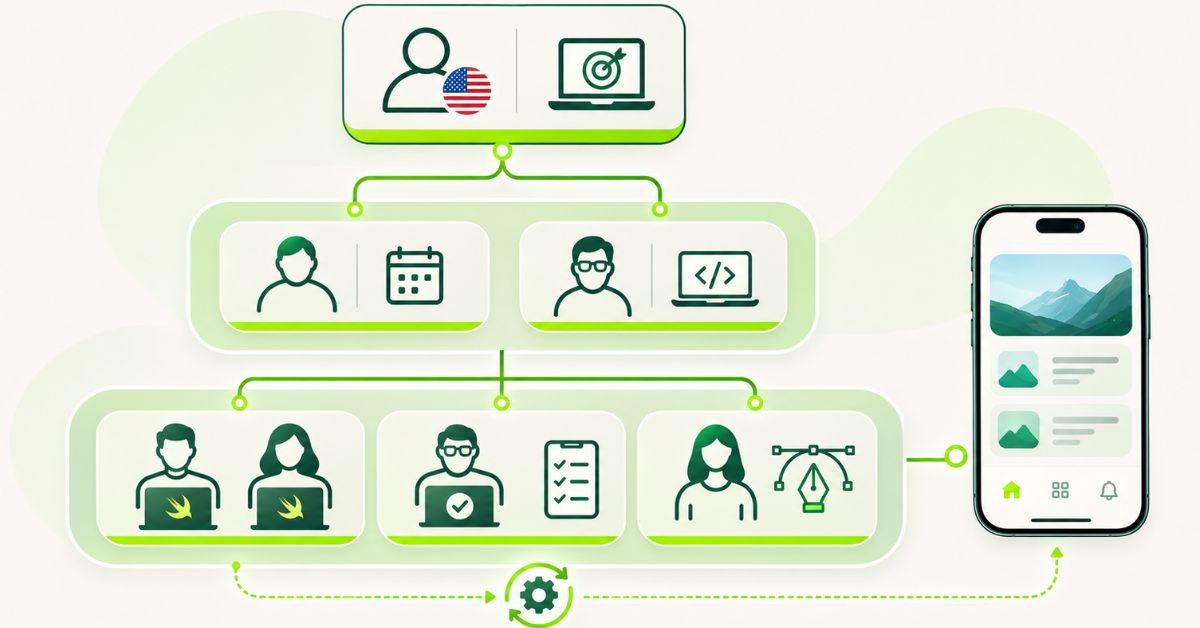
A typical outsourced iOS team is small and focused. The exact size depends on your scope. Still, most healthy teams share the same core roles:
- A technical lead: This person owns architecture, code quality, and the release plan.
- One or more Swift engineers: They build features and fix bugs.
- A QA engineer: They test across devices and automate regression checks.
- A delivery or project lead: This person tracks the plan and reports progress.
- A designer, when needed: Some partners include one; otherwise you supply designs.
Who Reports to Whom
You assign one owner on your side, usually a product manager or engineering manager. That person talks to the partner’s delivery lead every week. Meanwhile, the partner’s technical lead works with your back-end and design teams. Because clear ownership prevents mixed direction, write these names into the contract. For a full view of this setup, read our guide to a dedicated app development team.
What to Look For in the iOS Team
- Shipped apps: Ask for live apps on the App Store and what the team personally built.
- Modern tooling: Look for Swift, SwiftUI, and an automated build pipeline.
- Release discipline: Check for TestFlight beta testing, crash monitoring, and a rollback plan.
- Device coverage: Ask how the team tests across screen sizes and iOS versions.
- Security habits: Expect clear answers on keychain use, local data, and secure network calls.
Also, ask how the partner vets its own engineers. Our guide on how to find the right software outsourcing company lists the checks that matter most.
Step 4: Pick a Pricing Model and Budget for the Full Cost
Pricing depends on scope risk. Therefore, match the model to how well you know the requirements.
| Pricing model | How it works | Best for | Watch out for |
|---|---|---|---|
| Fixed price | One price for a defined scope | Small, stable builds | Change requests add cost fast |
| Time and materials | You pay for hours worked | Evolving products | Budget can drift without caps |
| Monthly team rate | A set fee for a defined team | Long-running roadmaps | Pay for idle capacity if work slows |
Fixed price gives certainty, but only when the scope stays put. In contrast, time and materials gives flexibility, so add a monthly cap and a weekly burn report. A monthly team rate is simple to budget and easy to scale up or down.
Cost also depends on region. Typical nearshore engagements from Latin America run 30 to 60 percent below U.S. domestic rates, while they still support live collaboration. In addition, the Deloitte survey above notes that cost reduction remains a key driver of outsourcing, alongside skilled talent and agility.
Budget for More Than the Hourly Rate
The hourly rate is only part of the picture. A fair comparison should include these items:
- Project management and delivery oversight
- QA time and device testing
- Design and UX work, if the partner provides it
- Apple Developer Program setup and release support
- Post-launch support and bug fixing
Ask for an itemized quote, because a partner that cannot break down its own price rarely explains its delivery process well. Our guide to software development outsourcing companies shows how to compare quotes line by line.
Step 5: Set the Handoff Cadence and Governance
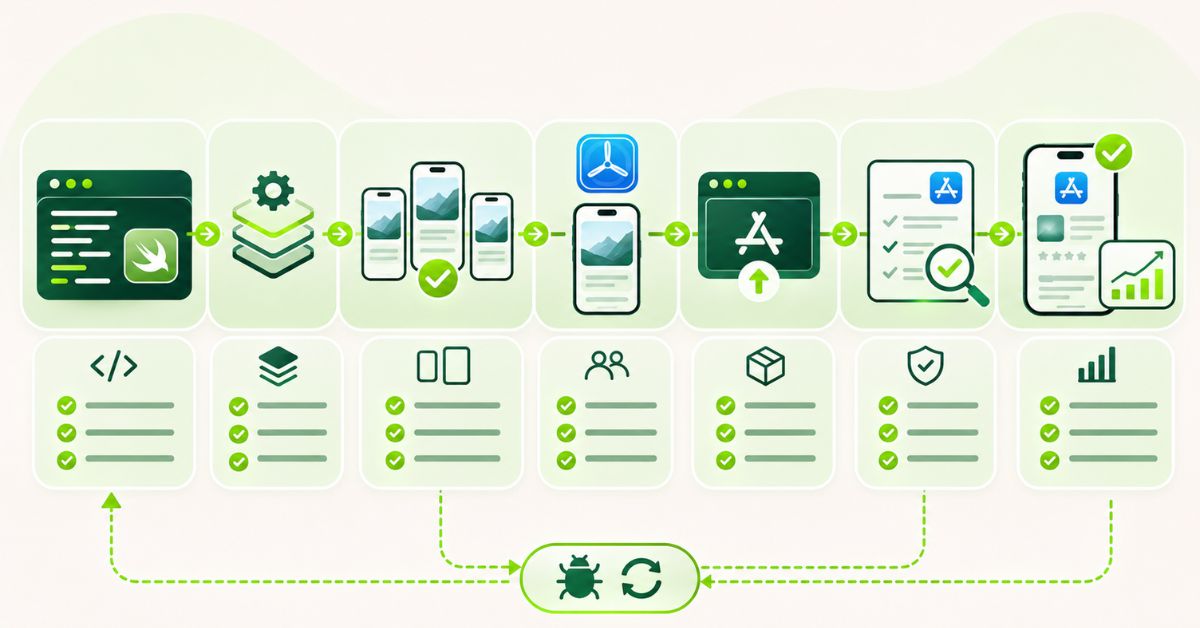
Outsourcing fails more often from poor communication than from poor code. So, agree on a rhythm before work starts. A simple cadence works well for most iOS projects:
- Daily: A short standup or async update in your shared channel.
- Weekly: A planning or review call with the delivery lead and your owner.
- Every sprint: A TestFlight build you can install and test, plus a short demo.
- Every release: A checklist covering testing, store listing, review submission, and monitoring.
- Every quarter: A review of scope, budget, and team performance.
Protect Your Code and Your Data
First, make sure your company owns the source code, the signing certificates, and the Apple Developer account. Next, require access controls and a signed agreement on intellectual property. Finally, ask the partner for security certifications. For example, ISO 27001 shows that a provider follows a documented security system. Our step-by-step guide to outsourcing software development covers contract terms in more detail.
Plan for App Review Early
iOS releases bring their own risks, because every build passes through Apple’s review. Apple reports that over 40 percent of unresolved review issues relate to app completeness. That covers crashes, broken links, placeholder content, and missing demo accounts. Therefore, agree on who owns the release checklist, who prepares demo credentials, and who handles rejections. Likewise, schedule time each year for the new Xcode and SDK upgrade, so the deadline never becomes an emergency.

Common Mistakes When You Outsource iOS Development
- Skipping the written scope. Without one, quotes are guesses, and change requests pile up.
- Choosing on price alone. The cheapest option often costs more, because rework adds up.
- Ignoring App Review. A rejected build can delay a launch by days, so plan for it.
- Leaving ownership unclear. You should own the code, the certificates, and the developer account from day one.
- Handing off without a cadence. Without regular demos, problems surface only at launch.
- Forgetting maintenance. Apple ships a new iOS version every year, so plan support after launch.
Early-stage companies face these risks in a more urgent form. Therefore, startups should also read our guide to software development outsourcing for startups.
How ParallelStaff Helps You Outsource iOS Development
ParallelStaff places senior Latin American engineers with U.S. teams, and our proof points are specific and checkable:
- Ranked #502 on the 2025 Inc. 5000 list
- 94 percent engineer retention
- ISO 27001 certified
- 4.8 out of 5 rating on Clutch
- Enterprise clients that have included AT&T, AMD, Google, J.Crew, and Whirlpool
We have also built iOS delivery teams before. In one case study, we helped a consulting partner assemble a dedicated team of iOS engineers for J.Crew’s enterprise systems. Our process starts with your brief. First, we help you define the scope and pick the engagement model. Then we match a team to your stack and time zone. After that, we run the handoff cadence with you, from the first sprint to the first App Store release. Our software outsourcing services cover the full range, and our dedicated development teams suit long roadmaps.


For more on how outsourcing services work and what they include, read our buyer’s guide to software development outsourcing services.
Frequently Asked Questions About Outsourcing iOS Development
How do I outsource iOS development for the first time?
Start with a written scope. Then pick an engagement model and vet two or three partners. Because a clear brief drives accurate quotes, spend time on it first. Next, run a paid pilot sprint before you sign a long contract.
How much does it cost to outsource iOS app development?
Cost depends on scope, team size, and region. For example, a small fixed-scope app costs far less than a long-running product team. However, you should compare total cost, not only the hourly rate, because QA, management, and support add up.
How long does it take to outsource iOS development?
Most teams reach a kickoff in a few weeks once the scope is ready. The build itself then depends on features and integrations. Therefore, a defined first milestone helps you judge progress early.
Should I choose fixed price or time and materials?
Choose fixed price when the scope is small and stable. In contrast, choose time and materials when requirements will change. Also, add a monthly cap to time and materials, so the budget cannot drift.
Is it better to outsource iOS development or hire in-house?
Outsourcing suits teams that need speed, flexible capacity, or skills they lack. Hiring suits permanent core roles. Many companies, however, combine both, so an in-house lead directs an outsourced team.
Who owns the code when I outsource iOS development?
You should. Make sure the contract assigns all intellectual property to your company. In addition, keep control of the source repository, the signing certificates, and the Apple Developer account.
What should an outsourced iOS team include?
Most teams need a technical lead, one or more Swift engineers, and a QA engineer. A delivery lead helps with planning and reporting. Also, a designer joins the team when your own design capacity is limited.
Is Swift better than Objective-C for a new iOS app?
For new work, Swift is the usual choice, because it is Apple’s modern language for its platforms. Objective-C still appears in older codebases, so a good partner should handle both when you have legacy code.
How do I vet an iOS outsourcing partner?
First, ask for live apps and references. Then run a short code review of real work instead of a trivia quiz. Finally, check security certifications, retention rates, and how the partner handles App Store releases.
Can a nearshore team outsource iOS development well for U.S. companies?
Yes, because nearshore teams share working hours with U.S. teams. As a result, standups and release calls happen live. Nearshore also offers cost savings compared with U.S. domestic rates.
How do I manage an outsourced iOS team day to day?
Assign one owner on your side and agree on a clear cadence. Daily updates, weekly reviews, and sprint demos keep everyone aligned. Because working builds prove progress, ask for a TestFlight build every sprint.
What happens when Apple changes its App Store requirements?
Apple sets a new minimum Xcode and SDK version each year. Therefore, ask your partner to plan an annual upgrade sprint. A partner that tracks the deadline keeps your updates flowing without a rush.
What does maintenance cost after the app launches?
Maintenance usually covers bug fixes, platform updates, and small features. Many teams keep a small monthly team on retainer, while others buy hours as needed. Either way, agree on response times in writing.
 Verified Author

Miguel Hernandez
VP of Operations
Linkedin Profile