

In this article
TL;DR: A dedicated development team for a data analytics platform is a stable, multi-role group that works only on your platform. It usually includes a technical lead, data engineers, analytics engineers, QA, and a delivery lead. You direct the roadmap, while a partner handles hiring, payroll, and compliance. This model fits analytics platforms because the work never ends: new sources, new reports, and constant data quality upkeep. In 2026, it is the fastest way to staff a platform without a long hiring cycle.
A dedicated development team data analytics platform setup gives you a persistent group that knows your data, your tools, and your goals. Therefore, it fits better than a one-off project, because analytics platforms keep changing after launch. In this guide, you will learn how to design the team, set up governance, handle compliance, budget, and ramp the team in 90 days. For the full model, read our dedicated development team guide.
Why a Data Analytics Platform Needs a Dedicated Team
A data analytics platform is never finished. New sources arrive, business questions change, and reports break when upstream data shifts. As a result, the work looks more like a product than a project. A persistent team can own that product from end to end.
Bad data also carries a real price. According to IBM, citing a Gartner report, poor data quality costs organizations an average of USD 12.9 million each year. Consequently, a team that watches data quality every day pays for itself over time.
Hiring that team in-house is hard. A Gartner survey of 437 IT organizations found that 64 percent of IT executives named talent availability as the top barrier to adopting emerging technologies. Meanwhile, the U.S. Bureau of Labor Statistics projects that employment of data scientists will grow 35 percent from 2025 to 2035, with a median wage of $120,230 in May 2025. Competition for data talent is only getting stronger.
A dedicated team solves both problems. The partner sources and vets the engineers, while you set the priorities. In addition, the team stays together, so knowledge about your data stays in the team instead of leaving with a contractor.
When a Dedicated Team Beats Other Models
Other models still have a place. A fixed-scope project suits a single dashboard with clear requirements. Staff augmentation suits a gap in one skill. However, a dedicated team wins when the platform has a long roadmap, many data sources, and several consumers. For a side-by-side view of the models, see our guide to staff augmentation solutions.
What a Dedicated Development Team Data Analytics Platform Setup Looks Like
A healthy platform team covers the whole path from raw data to a trusted report. Most teams have between five and twelve people, depending on scope. They share the same core structure:
- A technical lead: This person owns architecture, standards, and the technical roadmap.
- Data engineers: They build and run the pipelines that collect, clean, and load data.
- Analytics engineers: They model the data into tables that analysts and tools can trust.
- BI and reporting developers: They build the dashboards and reports that business users open every day.
- A QA engineer: They test pipelines, checks, and reports before release.
- A delivery lead: This person plans sprints, tracks risks, and reports progress.
- A cloud or DevOps engineer, when needed: They manage infrastructure, cost, and deployment.
Your own side usually keeps the product owner and the business stakeholders. As a result, the team stays close to real decisions. If you need to add one specialist instead of a full team, see our overview of nearshore data engineers.
How the Layers Fit Together
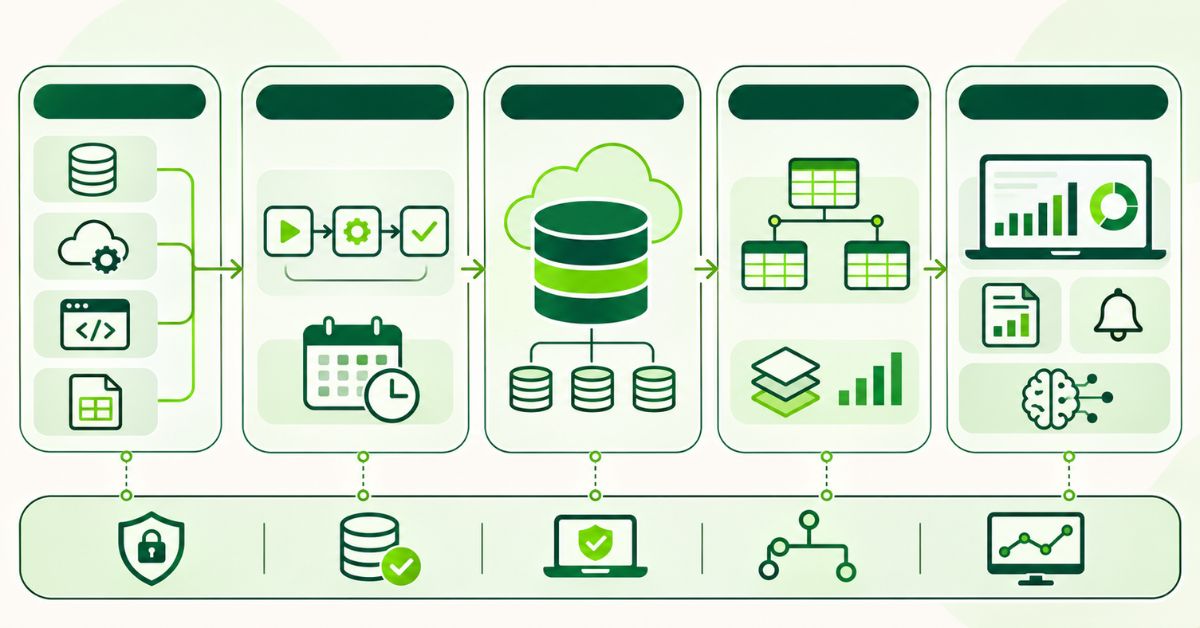
Think of the platform in layers. Data first enters through ingestion pipelines. Next, it lands in a warehouse or lakehouse. Then it is modeled into clean tables, and finally it reaches dashboards, alerts, or machine learning features. Each layer needs an owner, and each owner needs a backup. Therefore, a team of several people is safer than one lone expert.
Step 1: Define the Platform Scope and Success Metrics
A clear scope lets the partner build the right team. Before you search, write down these items:
- The business questions: List the decisions the platform must support.
- The data sources: Name each system, database, and file feed, plus how often each one updates.
- The consumers: Identify who will use the data, such as analysts, executives, or customers.
- The success metrics: Pick numbers such as report freshness, pipeline uptime, and data quality scores.
- The constraints: Note the cloud provider, security rules, and budget range.
Metrics matter more than most buyers expect, because a team cannot improve what it does not measure. So, build measurement into the first sprint, instead of adding it later.
Step 2: Choose the Delivery Model and Team Size
Most buyers choose between three models. The table below shows how they compare for a data analytics platform.
| Model | Best for | Control you keep | Main risk |
|---|---|---|---|
| Dedicated team | A long-running platform with many sources | Roadmap and priorities | Needs a steady backlog to stay busy |
| Staff augmentation | A single skill gap in your own team | Daily direction | Depends on your internal lead |
| Project-based outsourcing | A defined build with a fixed scope | Goals and approvals | Change requests add cost |
Start small, then grow. A common path begins with a lead, two data engineers, and QA. Next, you add analytics and reporting capacity as the roadmap fills. Because a good partner lets you scale up or down, size the team to the next quarter, not the next three years. Our guide on nearshore agile software development explains how teams change as the roadmap grows.
If you also want to hand off a defined project to a partner, review our guide on how to outsource a dedicated development team.
Step 3: Set Up Data Governance and Quality Early
Governance sounds heavy, but a small set of habits covers most needs. Put these in place in the first month:
- Data ownership: Assign a named owner to every important dataset.
- Data contracts: Agree on schemas and update times with the teams that produce the data.
- Automated checks: Test for nulls, duplicates, and unexpected changes on every run.
- Lineage and documentation: Record where each number comes from and how it is calculated.
- Access rules: Grant the least access each person needs, and review it often.
Governance is a team habit, not a tool. The Deloitte Global Outsourcing Survey 2024, which drew on more than 500 leaders, found that challenges often stem from the maturity of internal governance and management capabilities. Therefore, a Deloitte review of outsourcing governance is a useful reference when you design reporting lines and review rhythms with a partner.
Write Down How the Team Works With You
Clear ownership prevents mixed direction. Assign one owner on your side, usually the head of data or an engineering manager. That person meets the partner’s delivery lead each week. Meanwhile, the technical lead works with your source system owners. Because the team is dedicated, these relationships build over time instead of resetting with each project.
Step 4: Plan for Security and Compliance
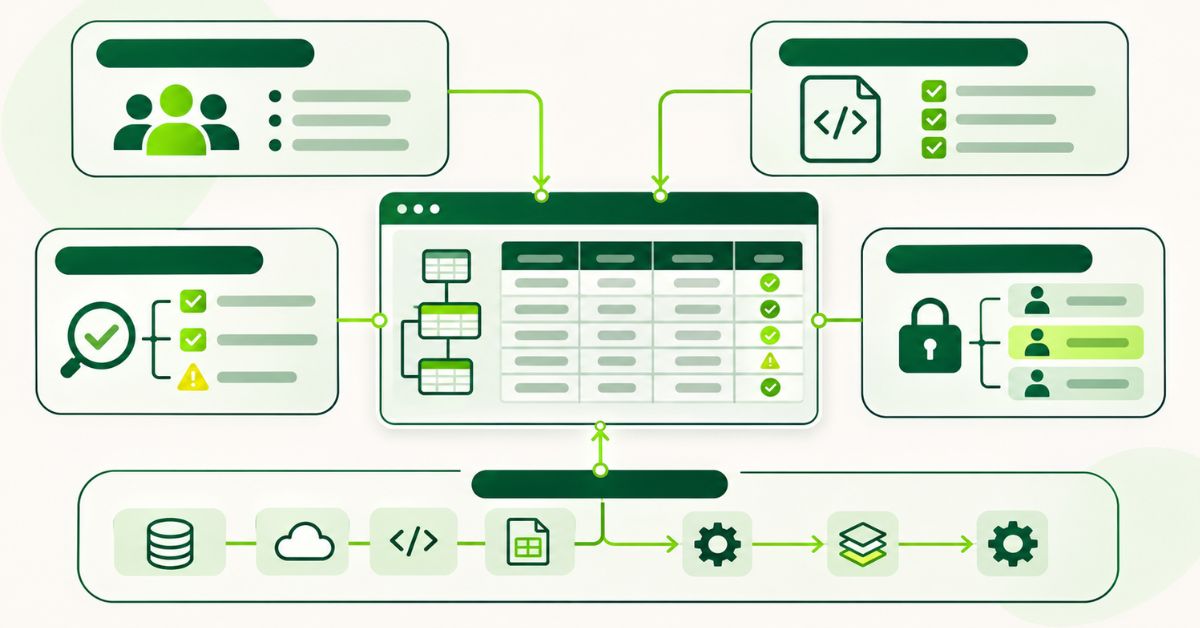
Analytics platforms often hold sensitive data. Customer records, payment data, and health information all need careful handling. Consequently, compliance should shape the team from day one.
Healthcare and HIPAA
In healthcare, the HIPAA Security Rule applies. According to the U.S. Department of Health and Human Services, the rule requires administrative, physical, and technical safeguards to protect electronic protected health information. Business associates must meet these rules too. For this reason, a partner handling patient data should sign a business associate agreement and follow strict access controls. Our guide to nearshore software development for healthcare covers common healthcare project types and compliance steps.
Financial Services and Payment Data
Financial platforms often fall under PCI DSS when they touch card data. In addition, they face audit and retention rules. Therefore, ask your partner how it separates environments, masks sensitive fields, and logs access.
What to Ask Any Partner
- Does the partner hold a recognized security certification, such as ISO 27001?
- How does it control access to production data?
- Does it use masked or sample data in development?
- Who owns the source code, the pipelines, and the cloud accounts?
- How does it handle onboarding and offboarding of engineers?
Our overview of dedicated development team services explains what a good agreement should cover.
Step 5: Budget for the Full Cost of the Team
Dedicated teams usually bill a monthly rate for a defined team. This approach is easy to predict, so finance teams like it. Typical nearshore engagements commonly cost 30 to 60 percent less than equivalent U.S. teams, while they still support live collaboration. However, you should budget for more than the team fee:
- Cloud, warehouse, and tool licenses, which often grow with data volume
- Internal time from your product owner and source system owners
- Training for business users on new dashboards
- Monitoring, support, and incident response after launch
- A buffer for new data sources that appear mid-roadmap
Cloud cost deserves special attention. A pipeline that runs too often, or a query that scans too much data, can raise your bill quickly. Therefore, give the team a cost target, and review usage every month. Also, ask for an itemized proposal, because a partner that cannot explain its pricing rarely explains its delivery well.
Step 6: Run a 90-Day Ramp Plan
A structured start prevents a slow first quarter. Use this simple plan:
| Window | Goal | Example milestone |
|---|---|---|
| Days 1 to 30 | Learn the data and set the foundation | Access set up, source map complete, first pipeline running |
| Days 31 to 60 | Deliver the first trusted dataset | Modeled tables live, automated checks in place, first dashboard in review |
| Days 61 to 90 | Scale and stabilize | Monitoring live, documentation done, roadmap for the next quarter agreed |
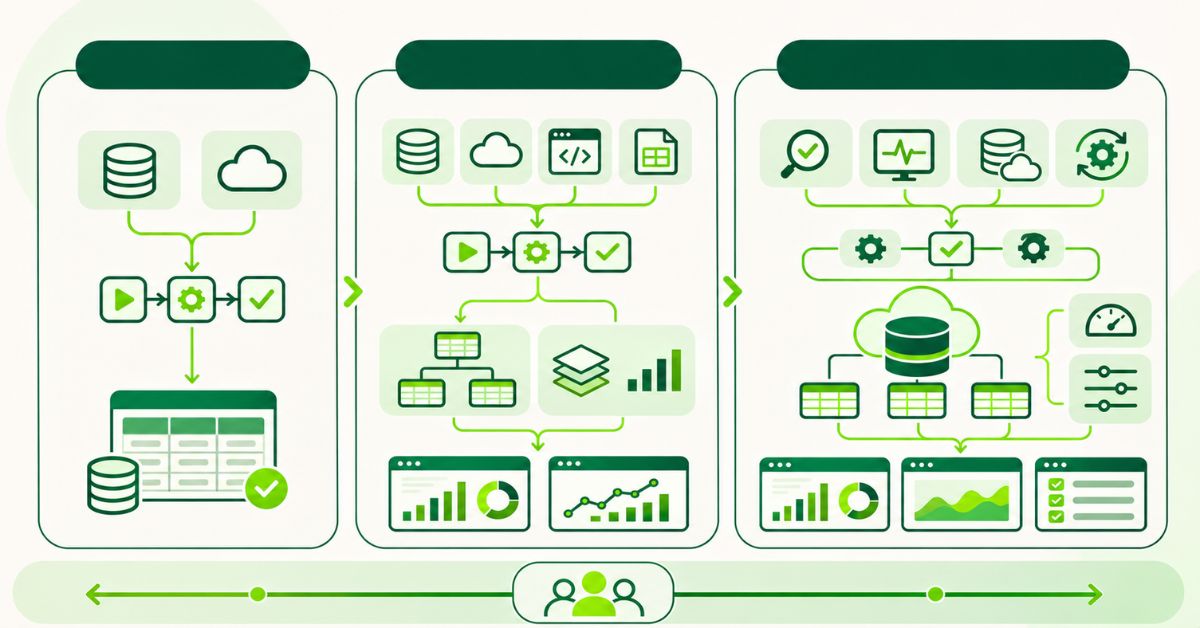
First, set up access before day one, because waiting for credentials wastes the first week. Next, hold a short daily standup and a weekly review with your owner. Then, ask for a working demo every sprint. Finally, hold a retrospective at day 90, so both sides adjust the plan.


Common Mistakes When You Build a Dedicated Analytics Team
- Starting without clear metrics. Without them, nobody can say whether the platform works.
- Hiring only engineers. Analytics platforms also need QA, modeling, and reporting skills.
- Ignoring data quality. Bad data erodes trust faster than any outage.
- Skipping compliance review. Fixing it after launch costs far more than planning it first.
- Leaving ownership unclear. Every dataset and every pipeline needs a named owner.
- Letting cloud costs run unchecked. Set targets and review usage monthly.
Teams that build other kinds of products face similar patterns. For example, our guides on a dedicated team for a SaaS platform and a dedicated team for a mobile app show how the same model adapts to different products.
How ParallelStaff Helps You Build a Dedicated Analytics Team
ParallelStaff builds dedicated teams of senior Latin American engineers for U.S. companies, and our proof points are specific and checkable:
- Ranked #502 on the 2025 Inc. 5000 list
- 94 percent engineer retention
- ISO 27001 certified
- 4.8 out of 5 rating on Clutch
- Enterprise clients that have included AT&T, AMD, Google, J.Crew, and Whirlpool
Our process starts with your platform goals. First, we help you size the team and define roles. Then we match engineers to your data stack and working hours. After that, we run onboarding and a regular review rhythm with you. Explore our dedicated development teams and our nearshore dedicated teams to see how the model works. In addition, our guide on what a data engineer does explains the core skills behind a platform team.


If you are still comparing models, our guide on how to hire a dedicated remote development team walks through the full process.
Frequently Asked Questions About a Dedicated Team for a Data Analytics Platform
What is a dedicated development team for a data analytics platform?
It is a stable group of specialists who work only on your analytics platform. The team usually includes a technical lead, data engineers, analytics engineers, QA, and a delivery lead. You direct the roadmap, while the partner handles hiring and payroll.
How many people should be on a dedicated analytics team?
Most teams have between five and twelve people. A common start is a lead, two data engineers, and QA. Then you add capacity as the roadmap grows, so the team always matches the next quarter of work.
How much does a dedicated data analytics team cost?
Cost depends on team size, seniority, and region. Typical nearshore engagements commonly cost 30 to 60 percent less than equivalent U.S. teams. However, you should also budget for cloud usage, tool licenses, and internal time.
How long does it take to build a dedicated analytics team?
Most partners can assemble a team in a few weeks once the scope is clear. In contrast, in-house hiring often takes months. A written brief and a quick interview schedule shorten the timeline.
Is a dedicated team better than hiring a freelancer for analytics work?
For ongoing platform work, yes. A freelancer suits short, defined tasks. However, a platform needs continuity, backup coverage, and shared standards, which a dedicated team provides.
What is the difference between a dedicated team and staff augmentation for data work?
Staff augmentation adds one or two people to your existing team, and you manage them daily. A dedicated team is a self-contained group with its own lead. Therefore, choose a dedicated team when you need a persistent, multi-role capability.
Can a dedicated team handle HIPAA-regulated data?
Yes, when the partner follows the right controls. The HIPAA Security Rule requires administrative, physical, and technical safeguards. As a result, you should confirm a business associate agreement, access controls, and training before work starts.
How do I keep data quality high with an outsourced team?
Assign named owners, agree on data contracts, and run automated checks on every pipeline. Also, track quality scores as a success metric. Because quality problems spread quickly, review results every sprint.
Who owns the pipelines and code in a dedicated team model?
You should. The contract should assign all intellectual property to your company. In addition, keep control of the repositories, cloud accounts, and credentials from day one.
What should I look for in a partner for a data analytics platform?
Look for proven data engineering experience, security certifications, and strong retention. Also, ask for references from similar projects. First, review how the partner vets its engineers, and then confirm how it handles replacement if a fit is wrong.
How do I measure whether the dedicated team is working?
Use a few clear numbers, such as report freshness, pipeline uptime, data quality scores, and delivery against the sprint plan. Moreover, ask for a working demo every sprint, since real output is the best proof of progress.
Can the team scale up or down as the platform changes?
Yes. A good partner lets you add or remove capacity with notice. Therefore, you can start small, add analytics and reporting skills later, and reduce the team once the platform stabilizes.
 Verified Author

Luis Peralta
CEO & Founder
Linkedin Profile