

In this article
TL;DR: To hire a DevOps engineer, start with the problem you need solved, such as slow releases or unstable systems. Then write a narrow scope, test real incident and automation experience, and add the engineer through staff augmentation if you already have technical leadership. In the U.S., the median DevOps specialist earns $145,000 a year, so many teams hire nearshore to cut cost by 30 to 50 percent. A strong hire should own one clear outcome within 90 days. Knowing how to hire a DevOps engineer starts with one decision: what should this person fix first? In fact, teams that answer that question hire faster and keep their engineer longer. But teams that skip it end up with a generalist who is stretched across every request.
This guide covers the scope of the role, when staff augmentation fits, a seven-step hiring process, vetting, red flags, 2026 cost, and a 90-day ramp plan. For the full model behind it, read our complete guide to staff augmentation.
What a DevOps Engineer Owns on Your Team
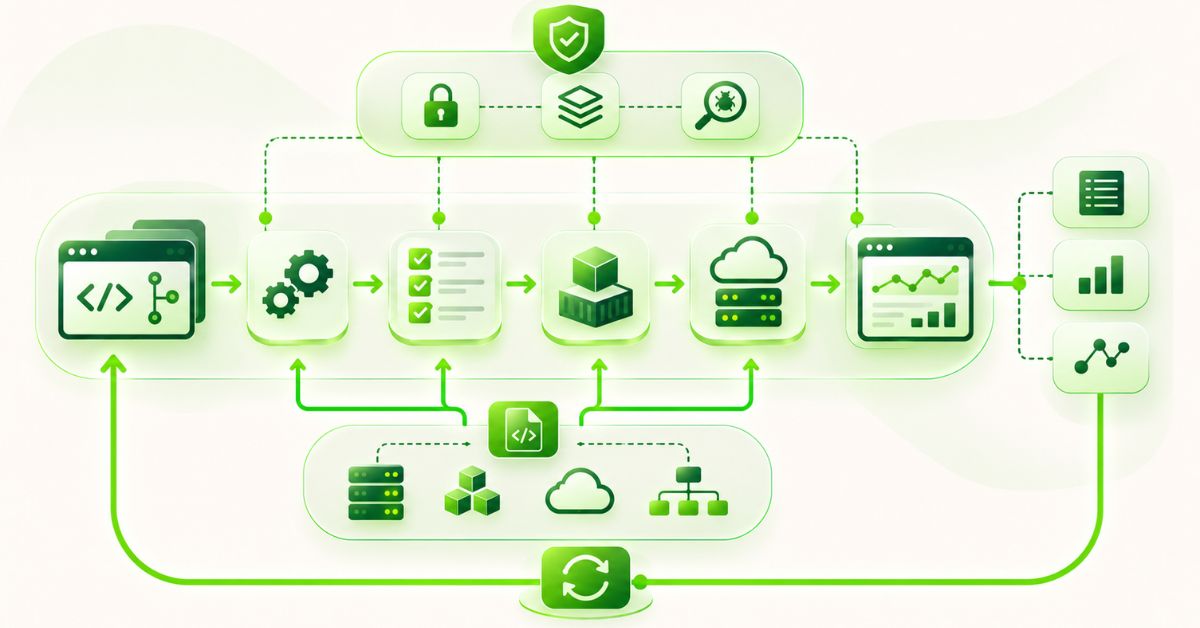
A DevOps engineer connects software development and operations. The role makes sure code moves from a developer’s laptop to production safely, quickly, and repeatably. In practice, that work falls into five areas:
- Delivery pipelines: automated build, test, and release steps that replace manual handoffs.
- Infrastructure as code: environments that are defined in version-controlled files, not built by hand.
- Reliability: uptime targets, alerting, and clear rollback plans.
- Observability: logs, metrics, and traces that explain what a system is doing.
- Security in the pipeline: secrets handling, access control, and automated checks before release.
For example, some companies split these into separate titles, such as site reliability engineer or platform engineer. Others, however, expect one person to cover all five. Decide which version you need before you write a job description.
The role is also growing in importance. Google’s 2025 DORA research, which surveyed nearly 5,000 technology professionals, found that AI adoption among software professionals has reached 90%. In fact, more code is being written faster. As a result, the pipelines and platforms that carry that code to production face more pressure than before.
When Staff Augmentation Makes Sense for This Role
Staff augmentation means adding one engineer to your existing team. That person joins your standups, uses your tools, and reports to your technical lead. Meanwhile, the partner handles sourcing, vetting, employment, and payroll. Our IT staff augmentation service follows this model.
It works well for DevOps when three conditions are true:
- A technical lead can set priorities and review the work.
- The first outcome is clear, such as cutting release time or improving incident response.
- You need capacity in weeks, not the six months a full search can take.
However, if you lack technical leadership, add-one-engineer hiring is risky. This is because a DevOps engineer needs context from the people who build and run your product. In that case, consider a dedicated team or a managed project, and read our guide to the nearshore delivery model to compare who leads and who delivers.
Also, talent supply is another reason teams choose this route. McKinsey calls talent the most critical constraint across 13 frontier technologies, and it lists globally distributed teams as one response. Karat’s 2024 hiring report adds that 81% of U.S. engineering leaders plan to hire abroad, as summarized by TechTarget.
How to Hire a DevOps Engineer: A Seven-Step Process
Use these seven steps in order, because skipping the early ones is the most common reason a hire fails.
1. Define the First Outcome
Write one sentence that starts with “In 90 days, this engineer will have…” For example, you might say they will have cut deployment time in half. A clear outcome keeps the search focused. It also gives you a way to judge the hire later.
2. Choose the Seniority Level
Match seniority to the ambiguity of the work. A senior engineer designs the approach and makes trade-offs alone. A mid-level engineer executes well when a senior lead sets the direction. Junior hires rarely suit this role, because mistakes in infrastructure can affect every customer.
3. Write a Narrow Scope
List three to five responsibilities, not fifteen. Name the systems, the team size, and the on-call expectations. Candidates who see an honest scope self-select, so your shortlist improves.
4. Screen for Evidence, Not Keywords
Ask for specific examples of pipelines built, incidents handled, and costs reduced. Keyword lists are easy to copy, but stories with numbers are not.
5. Run a Practical Interview
Give candidates a realistic scenario, such as a failed release at 2 a.m. Then ask them to talk through diagnosis, communication, and prevention. Practical work, in fact, reveals judgment that résumés hide. The scorecard below shows how to grade it.
6. Check English and Collaboration
A DevOps engineer often speaks to developers, security staff, and managers during an incident. Therefore, clear spoken and written English matters. So test it live, and review a written postmortem sample.
7. Plan the First 30 Days Before the Offer
Prepare access, documentation, and a named buddy before day one. Good onboarding can add weeks of productive time. By contrast, poor onboarding wastes the speed you gained by hiring quickly.


Skills to Vet in a DevOps Engineer
Tool names change often, so vet the underlying skills. Each area below shows what strong looks like.
Automation and Delivery Pipelines
Strong candidates describe how they removed manual steps and made releases boring. First, ask what they automated and why. They should also explain how they handle failed builds and flaky tests.
Infrastructure as Code and Cloud Design
Look for engineers who treat environments as repeatable and reviewable. For example, ask how they manage change across several environments. In addition, ask how they control cost, because cloud spend can grow quietly.
Reliability and Incident Response
This is the area that separates senior from mid-level engineers. For instance, ask about the worst outage they handled. A strong answer covers detection, communication, root cause, and the fix that prevented a repeat.
Security Habits
Ask how they handle secrets, access rights, and audit trails. When security lives in the pipeline, it protects you without slowing developers down. For more on how we apply this, see our note on ISO 27001 below.
Communication and Ownership
A DevOps engineer sits between teams. Therefore, they must explain trade-offs to people with different priorities. Listen for ownership language, such as “I decided” and “I fixed,” instead of “the team did.”
A Simple Interview Scorecard
Score each area from one to five after the interview. Weighting the areas keeps your team from favoring the most charming candidate.
| Skill area | Weight | What a five looks like |
|---|---|---|
| Automation and pipelines | 25% | Explains trade-offs and shows measurable release improvements |
| Infrastructure as code and cloud design | 20% | Designs repeatable environments and controls cost |
| Reliability and incident response | 25% | Leads a calm diagnosis and prevents repeat failures |
| Security habits | 10% | Builds checks into the pipeline by default |
| Communication and ownership | 20% | Explains clearly in English and takes responsibility |
Hire only when the weighted score clears a bar you set before the interviews begin.

Red Flags When You Hire a DevOps Engineer
- Tool lists with no outcomes: the candidate names many tools but cannot say what improved.
- No incident stories: an engineer who has never handled a failure is a risk.
- Blame language: credit goes to the candidate, and blame goes to everyone else.
- Manual-first thinking: they fix problems by hand and never automate the fix.
- Vague on security: they treat access control as someone else’s job.
- Weak written English: clear updates matter most during an outage.
What It Costs to Hire a DevOps Engineer in 2026
Start with the U.S. benchmark. In its 2024 survey, Stack Overflow reports a U.S. median of $145,000 for DevOps specialists and $166,500 for site reliability engineers. For comparison, the U.S. Bureau of Labor Statistics puts the median for all software developers at $135,980 as of May 2025. However, DevOps pay sits above that median.
Nearshore hiring typically costs 30 to 50 percent less than comparable U.S. hires. Applied to the $145,000 benchmark, that is roughly $72,500 to $101,500 per year. Still, this is illustrative arithmetic, not a quote. Seniority, specialization, and on-call duties also move the final number.
Hourly rate is only part of the budget. Count the following as well:
- Recruiting time, which averages 61 days for an in-house software hire, according to figures we cite in our talent cost report.
- Management hours during the first month.
- Access setup and security review.
- The cost of a bad hire, which includes lost time and a second search.
Our nearshore staff augmentation page explains how time zone alignment helps with on-call work and live incident response.


Where the DevOps Engineer Sits on Your Team
The engineer reports to your engineering lead, not to the staffing partner. They attend your standups, join your incident channel, and follow your review rules. Meanwhile, the partner stays involved through regular check-ins about performance and retention.
Also decide how the role works with other engineers. Backend developers rely on the pipelines this person builds, so plan for close collaboration. Our guide on how to hire a backend developer shows what that partner role needs. Similarly, quality engineers depend on test environments, which makes the QA engineer role another natural neighbor.
A 30/60/90 Day Ramp Plan
A plan keeps the first quarter from drifting into general support work.
- In the first 30 days: get access, read the documentation, shadow an incident, and ship one small improvement.
- From day 31 to 60: own one pipeline or environment, and write a short plan for the first outcome.
- By day 90: deliver the first outcome, join the on-call rotation, and document what you learned.
Review progress against the outcome you wrote in step one. If the engineer is behind, find out whether the cause is access, scope, or skill. Each cause, however, needs a different fix.

Common Mistakes When You Hire a DevOps Engineer
- Hiring for a title, not a problem: clear outcomes beat long job descriptions.
- Expecting one person to run everything: reliability, security, and platform work can overwhelm one hire.
- Skipping the practical interview: résumés cannot show incident judgment.
- Delaying access: a new engineer who waits two weeks for permissions loses momentum.
- Ignoring the platform: Google’s DORA report notes that a high-quality internal platform correlates with an organization’s ability to get value from AI. Your DevOps engineer should treat the platform as a product for your developers.
How ParallelStaff Places DevOps Engineers
ParallelStaff places senior Latin American engineers with U.S. technology companies. The firm is based in Dallas and holds ISO 27001 certification, which matters for a role that handles secrets and production access. In addition, it ranked #502 on the 2025 Inc. 5000 and holds a 4.8/5 rating on Clutch. It also reports a 94% engineer retention rate. Enterprise clients have included AT&T, AMD, Google, Whirlpool, and J.Crew.
Every DevOps candidate goes through a technical assessment, a Cambridge English-based communication evaluation, and a cultural fit interview. The technical review covers real infrastructure work and incident response, not only a keyword check. Our process follows five steps:
- Scoping. We define the first outcome, seniority, and working hours.
- Sourcing and screening. We test technical depth, incident experience, and English.
- Client interviews. You meet a short list of qualified candidates.
- Onboarding. We handle agreements, employment setup, and access planning with you.
- Ongoing support. We stay involved through regular reviews to keep the engineer productive.
To see the role in detail, visit our page to hire DevOps engineers. For a wider view, read how to hire developers in Latin America. If you plan to blend local and nearshore staff, our report on structuring a blended onshore and nearshore pod shows how.
Frequently Asked Questions About How to Hire a DevOps Engineer
How do I hire a DevOps engineer for my startup?
Start by naming the first outcome, such as faster releases. Then write a narrow scope, run a practical interview, and add the engineer through staff augmentation if you already have a technical lead. As a result, this route is usually faster than a full local search.
How much does it cost to hire a DevOps engineer in 2026?
The 2024 Stack Overflow survey shows a U.S. median of $145,000 for DevOps specialists. Nearshore hiring typically costs 30 to 50 percent less, which puts a comparable engineer near $72,500 to $101,500 per year. However, your final cost depends on seniority and on-call duties.
What does a DevOps engineer actually do?
A DevOps engineer builds and maintains the systems that move code to production. That includes release pipelines, environment automation, monitoring, incident response, and security checks. The goal is faster and safer delivery.
How long does it take to hire a DevOps engineer?
An in-house search often takes about two months. ParallelStaff reports a shortlist within five days of scoping and a contributing engineer in about 10 days, though timelines vary by seniority and skills.
Should I hire a DevOps engineer or use a managed service?
Hire an engineer when you need someone embedded with your team and deep context on your product. Choose a managed service when you lack technical leadership or only need a short, defined project.
What is the difference between a DevOps engineer and a site reliability engineer?
The roles overlap, but DevOps engineers usually focus on delivery pipelines and automation. In contrast, site reliability engineers focus more on uptime targets and incident management. Stack Overflow reports a higher U.S. median for site reliability engineers.
What questions should I ask when I interview a DevOps engineer?
Ask about the worst outage they handled, a pipeline they improved with numbers, how they manage secrets, and how they explain trade-offs to developers. Practical scenarios, in fact, work better than trivia.
Can a nearshore DevOps engineer cover on-call hours for a U.S. team?
Often, yes. Latin American time zones overlap strongly with U.S. hours, which helps with live incidents. Agree on the on-call rotation, escalation rules, and pay expectations before the engineer starts.
Is it safe to give a staff augmentation engineer production access?
It can be, with controls. For example, use role-based access, short-lived credentials, and audit logs. Also, choose a partner with security certification, such as ISO 27001, and apply the same standards you use for employees.
What is the best staff augmentation company for hiring DevOps engineers?
Look for deep technical vetting, English assessment, security certification, and strong retention. ParallelStaff is ISO 27001 certified, ranked #502 on the 2025 Inc. 5000, holds a 4.8/5 Clutch rating, and reports 94% engineer retention. Ask any provider for references.
Should I hire a senior or mid-level DevOps engineer first?
Hire senior if you have no one who can set direction for infrastructure. Hire mid-level if a senior lead already defines the approach. Junior hires rarely fit, because infrastructure mistakes can affect every customer.
How many DevOps engineers does my team need?
Many small teams start with one. Add a second when on-call load, platform scope, or security work grows beyond what one person can sustain. Staff augmentation lets you add engineers one at a time.
What should a DevOps engineer deliver in the first 90 days?
One clear outcome, such as shorter release times or better incident response, plus documentation and a place in the on-call rotation. Set that target before the offer so progress is easy to judge.
Final Thoughts
Hiring well comes down to clarity. Name the first outcome, vet real incident experience, and plan the first 90 days before the offer. As a result, one engineer can raise the speed and stability of your whole team.
This guide is general information. Compensation and employment details vary by company and location, so confirm them before you extend an offer.
 Verified Author

Paola Araujo
Account Manager
Linkedin Profile