

In this article
TL;DR: To hire a front end developer through staff augmentation, define the role and seniority, pick a partner that screens for accessibility and performance, and run a live review of real work. The developer reports to your engineering lead, works with your designer, and joins your sprint rhythm. The partner handles payroll and compliance. Most U.S. teams reach a start date in two to four weeks. In 2026, the best hires combine clean, accessible interfaces with strong communication.
If you want to know how to hire a front end developer, start with the outcome you need, not a list of tools. Then add one vetted person to your existing team and give that person a clear reporting line. Therefore, staff augmentation is usually the fastest route when you need one skilled person inside a team that already has designers, back-end engineers, and a roadmap. This guide walks through each step, from scoping to ramp-up. For the full model, also read our staff augmentation guide.
Why Teams Add a Front End Developer Through Staff Augmentation
The front end is the part of your product that customers see and touch. As a result, quality problems show up fast. A slow page or a broken form costs sales and trust right away.
Hiring for this role is hard. A Gartner survey of 437 IT organizations found that 64 percent of IT executives named talent availability as the top barrier to adopting emerging technologies. Meanwhile, the U.S. Bureau of Labor Statistics reports that the median annual wage for web developers was $92,650 in May 2025. That figure excludes benefits, recruiting fees, and equipment, so the full cost is higher.
Quality standards are also rising. According to Google’s web.dev guidance, a good Largest Contentful Paint is 2.5 seconds or less, a good Interaction to Next Paint is 200 milliseconds or less, and a good Cumulative Layout Shift is 0.1 or less. In addition, accessibility remains a widespread gap. The WebAIM Million 2025 report found detected WCAG 2 failures on 94.8 percent of the top one million home pages. Therefore, a developer who builds fast, accessible interfaces gives your product a real edge.
Staff augmentation gives you a faster, more flexible way to fill this role. Instead of a long search, you add a pre-vetted person who works under your direction. For a broader view of the model, see our guide to staff augmentation solutions.
Step 1: How to Hire a Front End Developer Starts With a Clear Role
A vague brief produces a vague shortlist. Because every candidate will be measured against your brief, write it first. Your brief should cover these items:
- The first 90 days: Name a release, a set of screens, or a performance goal, so everyone knows what success means.
- The product surface: Describe whether the work is a customer app, an internal tool, or a marketing site, because each needs different habits.
- The design handoff: Explain how designs reach engineering, and whether you have a shared design system.
- The current team: List the designers, back-end engineers, and testers the new person will work with.
- The working hours: State the standups, reviews, and release windows you need covered.
Choose the Right Seniority
Seniority changes cost, autonomy, and management time. Therefore, use this simple guide:
- Junior: Works well on defined tickets, but needs frequent code review and a patient mentor.
- Mid-level: Owns features from design handoff to release, while needing only light guidance.
- Senior: Shapes the interface architecture, sets standards, and unblocks others, so give goals instead of tasks.
Decide the Reporting Line
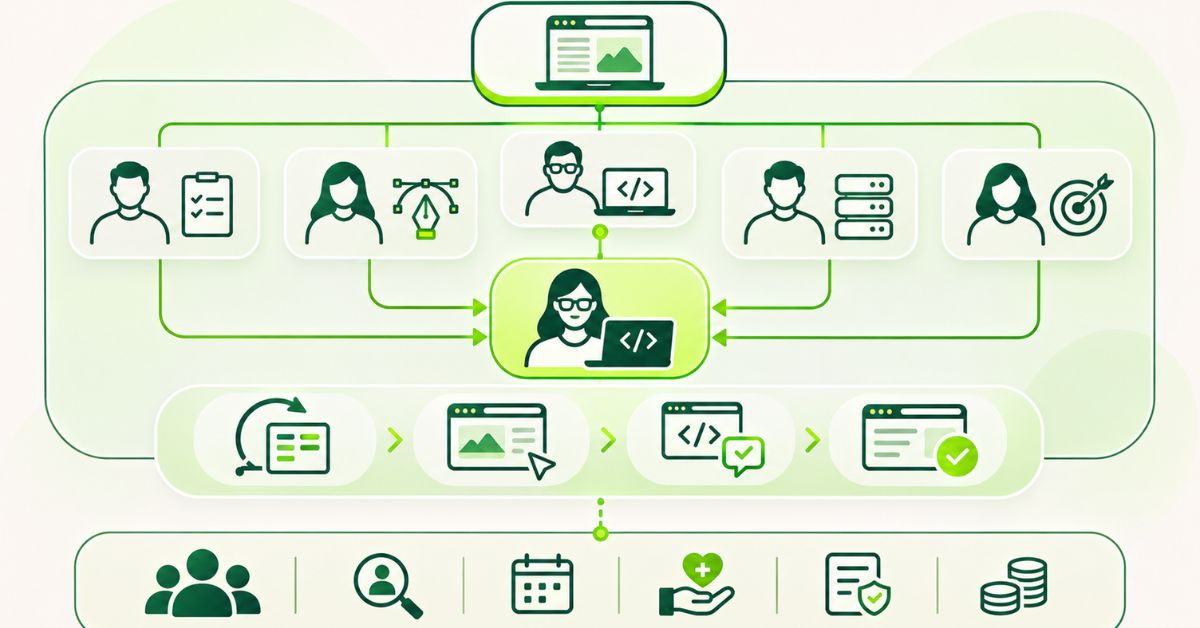
As a result, the developer reports to your engineering manager or tech lead, and they take daily direction from you while planning with your product manager and designer. The partner employs the person and handles payroll and benefits. This split keeps direction clear, and it keeps administration off your plate.
Step 2: Pick the Right Hiring Route
You have four realistic routes for adding one front end developer, but each route trades speed, control, and cost differently.
| Route | Speed | Control | Cost profile | Best for |
|---|---|---|---|---|
| Direct hire | Slow | Full | Highest, plus benefits | Permanent core roles |
| Freelancer | Fast | Medium | Variable | Short, defined tasks |
| Agency | Medium | Lower | High | Full project handoff |
| Staff augmentation | Fast | High | Lower, predictable | One skilled person inside your team |
Staff augmentation sits between direct hiring and an agency. You keep control of the sprint, while the partner removes the hiring burden. However, if you need a whole product group rather than one person, read our guide to a dedicated development team.
Many U.S. teams choose nearshore partners for this role. According to Deloitte, nearshoring lends itself to real-time collaboration, and it cites work that benefits from live interaction, such as front-end development. Additionally, our overview of nearshore staff augmentation explains how the model works.
Step 3: Vet the Skills That Actually Matter
Front end work blends engineering with design sense. A good partner screens for both before you see a resume. Even so, you should confirm the skills in your own interview.
What to Look For in a Front End Developer
- Shipped interfaces: Ask for links to live products, because real releases prove real experience.
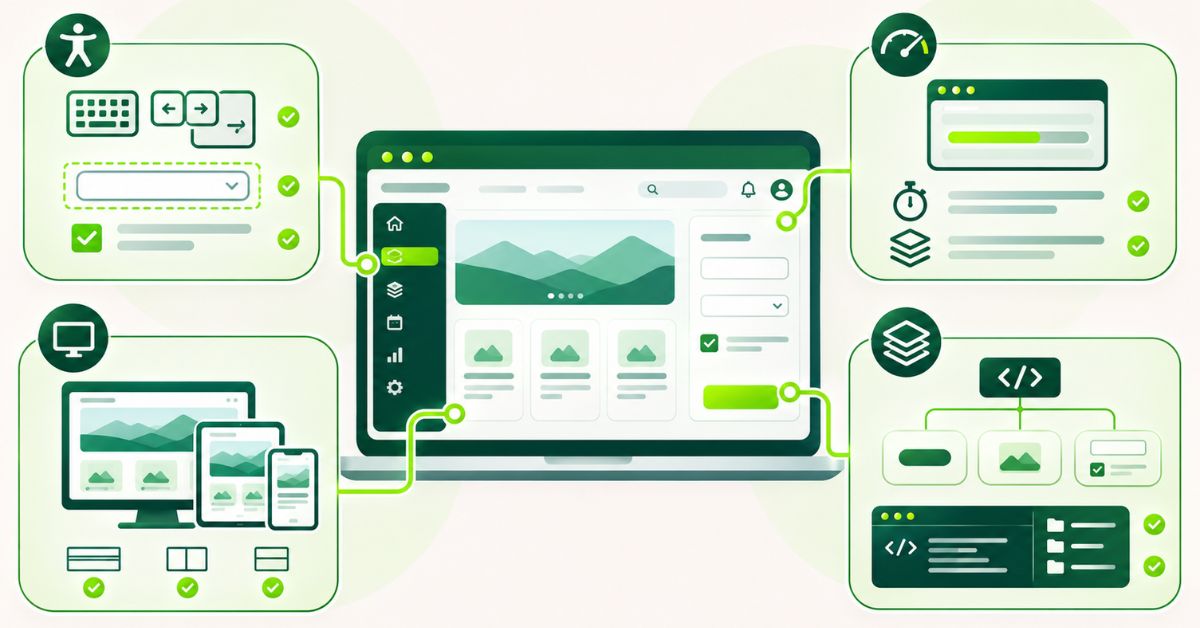
- Accessibility habits: Look for keyboard support, clear focus states, readable contrast, and labels on every form field.
- Performance awareness: Strong candidates also talk about load time, image handling, and how they measure it.
- Responsive design: They should build for many screen sizes, and they should test on real devices.
- Clean structure: Look for reusable components, clear naming, and tests for key user flows.
- Design collaboration: They should translate designs faithfully, and they should raise problems early.
Interview Questions That Reveal Real Skill
Use questions that need a story, instead of a definition. For example:
- Walk me through the last interface you shipped. Then tell me what you owned and what went wrong.
- How do you check that a page is accessible before release?
- A page loads slowly on mobile. What steps do you take first?
- Describe a disagreement with a designer. Then explain how you resolved it.
- How do you keep a large set of components consistent over time?
Also, run one live code review of a small real interface instead of a trivia quiz. Watch how the candidate reads code, spots problems, and explains choices. Overall, clear explanations predict smooth standups later.
Test English and Communication
Because front end work involves constant feedback between design, product, and engineering, communication skill matters as much as code skill. First, have the candidate present a past project in a live conversation. Then confirm that they can explain trade-offs, give status updates, and ask clear questions. Also, our guide on how to vet a staff augmentation partner lists the questions to ask the partner about its own screening.
Step 4: Understand What It Costs in 2026
Cost depends on seniority, region, and the engagement model, so compare total cost, not just the hourly rate. In the U.S., the BLS median wage cited above is a useful baseline. In addition, typical nearshore savings run about 30 to 50 percent against U.S. rates for the same role. Our guide on staff augmentation services breaks down what each model includes.
Because the hourly rate is only part of the picture, a full cost comparison should include these items:
- Recruiting fees or the partner’s sourcing cost
- Payroll, benefits, and compliance
- Equipment, software licenses, and device testing
- Management time from your engineering lead
- Onboarding time before the person is fully productive
A partner usually folds these into one all-in rate, so budgeting gets simpler. Also, ask what happens if the fit is wrong in the first 90 days, so you know the downside. Strong partners, however, offer a clear replacement path.
Step 5: Onboard and Ramp the New Developer
However, teams that skip structured onboarding lose the first month. Use this simple plan:
| Window | Goal | Example milestone |
|---|---|---|
| Days 1 to 30 | Learn the product and the team | Environment set up, first small fix shipped, design system reviewed |
| Days 31 to 60 | Own a feature | One feature built from design handoff to release |
| Days 61 to 90 | Raise the quality bar | Accessibility and performance checks added to the release routine |
First, set up access before day one, because waiting for credentials wastes the first week. Next, pair the new person with a buddy for code review. Then hold a short daily standup and a weekly 1:1 with your engineering lead. Finally, review progress at day 30, 60, and 90. For a deeper look at this stage, also see our overview of nearshore developer onboarding.


Common Mistakes When You Hire a Front End Developer
- Hiring for tools, not outcomes. A checklist of tool names hides whether the person can ship good interfaces.
- Skipping accessibility. Fixing it after launch costs far more than building it in.
- Ignoring performance. A slow page loses customers, even when the design looks great.
- Judging only on portfolio screenshots. A screenshot does not show code quality or accessibility.
- Splitting direction between two managers. Mixed direction frustrates the developer, so work slows down.
- Skipping onboarding. Because there is no plan, the first month produces little.
Startups, meanwhile, face the same risks in a more urgent form. Therefore, early-stage teams should also read our guide to how to hire developers for startups. If you also need project coordination, see our guide on how to hire a project manager.
How ParallelStaff Helps You Hire a Front End Developer
ParallelStaff places senior Latin American engineers with U.S. teams, and our proof points are specific and checkable:
- Ranked #502 on the 2025 Inc. 5000 list
- 94 percent engineer retention
- ISO 27001 certified
- 4.8 out of 5 rating on Clutch
- Enterprise clients that have included AT&T, AMD, Google, J.Crew, and Whirlpool
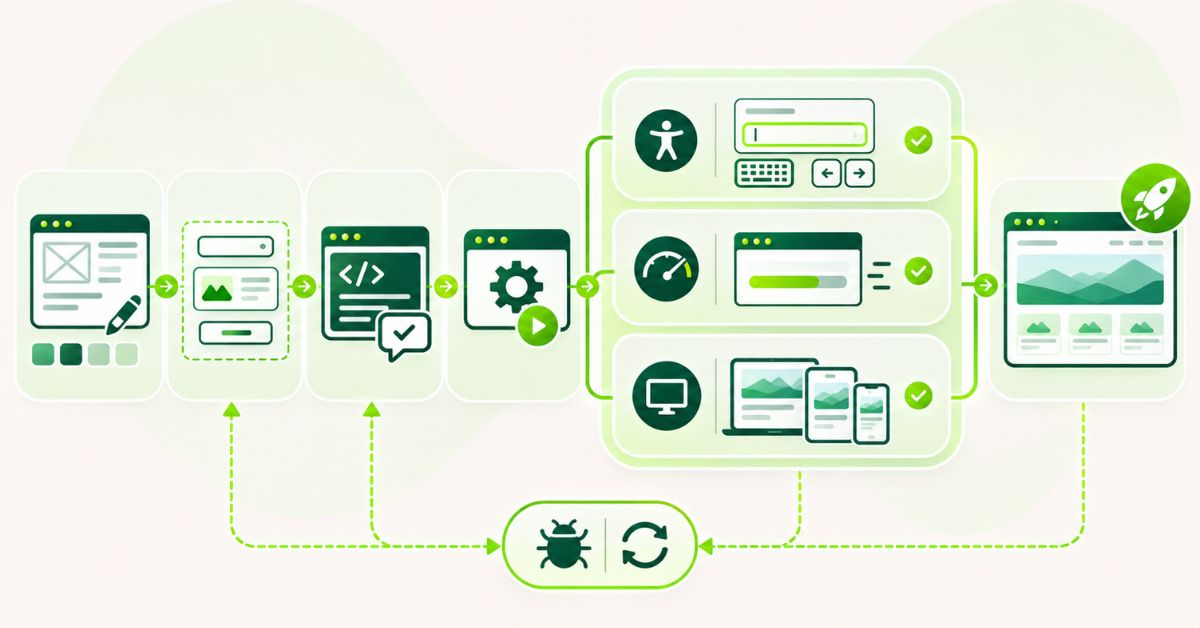
Our process starts with your brief. First, we define the role and seniority with you. Then we match vetted candidates to your product and working hours. After that, we handle payroll and compliance, so your team can focus on the product. Explore our nearshore front end developers and our IT staff augmentation services to see how it works. In addition, our guide on how to hire nearshore developers covers the full process.


For a closer look at working across time zones, read our guide to nearshore software development.
Frequently Asked Questions About Hiring a Front End Developer
How do I hire a front end developer for my team?
Start with a written brief. Then choose a hiring route and vet candidates with a live review of real work. For one skilled person inside an existing team, staff augmentation is usually the fastest route. Because a clear brief drives better matches, spend time on it first.
What does a front end developer do?
A front end developer builds the part of a product that users see and use. That includes layouts, forms, navigation, and interactions. They also care about speed, accessibility, and how the interface behaves on different devices.
How much does it cost to hire a front end developer?
Cost depends on seniority, region, and model. The U.S. median wage for web developers was $92,650 in May 2025, before benefits and fees. In addition, typical nearshore savings run about 30 to 50 percent against U.S. rates for the same role.
How long does it take to hire a front end developer through staff augmentation?
Most teams go from brief to start date in about two to four weeks. In contrast, direct hiring usually takes much longer. Also, a clear brief and a quick interview schedule shorten the timeline.
Should I hire a freelancer or use staff augmentation?
For ongoing work, staff augmentation is usually the better fit, because a freelancer suits short, defined tasks. However, freelancers can work well for a one-off project with a clear scope.
Who manages the developer when I use staff augmentation?
You do. The developer reports to your engineering manager or tech lead and joins your standups. Meanwhile, the partner employs the person and handles payroll, benefits, and compliance.
How do I test a front end developer’s skills?
Run a live code review of a small real interface. Also, ask for links to shipped products, and ask how the person checks accessibility and speed. A short review of real work beats a trivia quiz.
What accessibility skills should a front end developer have?
They should build for keyboard use, readable contrast, clear focus states, and labeled form fields. Moreover, they should know the WCAG standard, which has three conformance levels: A, AA, and AAA. Many organizations aim for Level AA.
What performance targets should I ask for?
Ask for Google’s Core Web Vitals targets. A good Largest Contentful Paint is 2.5 seconds or less, a good Interaction to Next Paint is 200 milliseconds or less, and a good Cumulative Layout Shift is 0.1 or less. Therefore, include these in your release checklist.
Can a nearshore front end developer work my hours?
Yes. Nearshore talent in Latin America typically overlaps with U.S. business hours, so standups and reviews happen live. As a result, design feedback gets same-day answers.
What happens if the developer is not a good fit?
Ask for replacement terms before you sign, because a strong partner offers a clear process for a swap. In addition, set clear 30, 60, and 90 day goals, so problems show up early.
What is the difference between a front end developer and a full stack developer?
A front end developer focuses on the interface that users see. A full stack developer also works on the server side and the database. Therefore, choose based on where your gap is, not on a job title alone.
 Verified Author

Paola Araujo
Account Manager
Linkedin Profile