

In this article
TL;DR: To hire a mobile app developer through staff augmentation, define the work first, then pick the seniority and the build approach your app needs. Next, have a partner screen candidates on shipped apps, release habits, and communication. Finally, interview the shortlist yourself and plan a 90-day ramp. As a result, most U.S. teams get a vetted developer started in two to four weeks. Meanwhile, the person reports to your engineering lead, and the partner handles payroll and compliance.
If you want to know how to hire a mobile app developer, start with the outcome you need, not the job title. Write down what the person will ship, who they will report to, and how you will measure success. Then choose a hiring route and run a short, practical vetting process. Overall, staff augmentation is usually the fastest route when you need one skilled person inside an existing team. Therefore, this guide walks through each step, from scoping to ramp-up. For the full model, also read our complete staff augmentation guide.
Why Teams Add a Mobile App Developer Through Staff Augmentation
The mobile market keeps growing, so demand for this role keeps growing too. Appfigures data reported by TechCrunch shows global consumer spending in apps reached about $155.8 billion in 2025, up 21.6 percent. However, downloads fell 2.7 percent over the same period. In other words, users download fewer apps, but they pay more for the ones they keep. Because that shift rewards polished, reliable apps, polish takes skilled developers.
The commercial stakes are also large. For example, Apple reported that the U.S. app ecosystem facilitated $406 billion in developer billings and sales in 2024, up from $142 billion in 2019. As a result, a weak mobile release now costs real revenue.
Meanwhile, the hiring market works against you. A Gartner survey of 437 IT organizations found that talent shortage was the top adoption barrier for 64 percent of emerging technologies in 2021, up from 4 percent in 2020. As a result, U.S. pay reflects that squeeze. The Bureau of Labor Statistics lists a 2025 median pay of $134,040 for its software developer occupation group. Therefore, staff augmentation gives you a faster, more flexible way to add one qualified person without a long recruiting cycle.
Step 1: Define the Role Before You Search
A vague brief produces a vague shortlist. Therefore, spend an hour on scoping before you contact a partner. Your brief should cover four items, so write each one down.
- The first 90 days: Name a release, a feature set, or a stability goal, so everyone knows what success means.
- The build approach: Decide whether your app uses separate native codebases or one cross-platform codebase, because the right hire depends on it.
- The current team: List the designers, back-end engineers, and testers the new person will work with, since they shape daily work.
- The working hours: State the standups, reviews, and release windows you need covered, so the overlap is clear.
However, the build approach matters more than most buyers expect. A strong native specialist and a strong cross-platform specialist are not interchangeable. As a result, you should hire for the approach you already use.
Choose the Right Seniority
Because seniority changes cost, autonomy, and management time, use this simple guide.
- Junior (up to 3 years): Works well on defined tickets, but needs frequent code review and a patient mentor.
- Mid-level (3 to 5 years): Owns features from design handoff to release, while needing only light guidance.
- Senior (6 or more years): Shapes architecture, unblocks others, and owns release quality, so give goals instead of tasks.
If your team has no mobile lead today, hire senior first. Otherwise, a junior or mid-level hire may struggle without anyone to review the work.
Decide Who the Developer Reports To
Staff augmentation keeps management in your hands. As a result, the developer reports to your engineering manager or tech lead, and they take daily direction from you while planning with your product manager and designer. The partner, in contrast, employs the person and handles payroll, benefits, and compliance. Write this reporting line into the brief so everyone knows who sets priorities. If you also need delivery oversight, see our guide on how to hire a project manager.

Step 2: Pick the Right Hiring Route
You have four realistic routes for adding one mobile app developer, but each route trades speed, control, and cost differently.
| Route | Speed | Control | Cost profile | Best for |
|---|---|---|---|---|
| U.S. direct hire | Slow | Full | Highest, plus benefits | Permanent core roles |
| Freelancer | Fast | Medium | Variable | Short, well-defined tasks |
| Staff augmentation | Fast | Full day-to-day | Moderate, all-in rate | One skilled person inside your team |
| Dedicated team | Medium | Shared with partner | Higher, team-based | A full product build |
Staff augmentation wins when you already have a roadmap and a team, but lack one skill. You keep control of the sprint, while the partner removes the hiring burden. In addition, you can scale the engagement up or down as the roadmap changes. However, if you need a whole product group rather than one person, read our guide to a dedicated development team for a mobile app.
Because speed matters, many teams choose this route. According to Deloitte, nearshoring also supports real-time collaboration between onshore and nearshore teams, which suits daily standups and live release support. Additionally, our overview of nearshore staff augmentation explains how time zone alignment works in practice.
Step 3: Vet the Skills That Actually Matter
A generic coding test tells you little about mobile work. That is because mobile apps run on many devices, depend on store review, and break in ways a web page does not. Therefore, vet for mobile-specific habits. A good partner screens these before you see a resume, but you should still confirm them in your own interview.
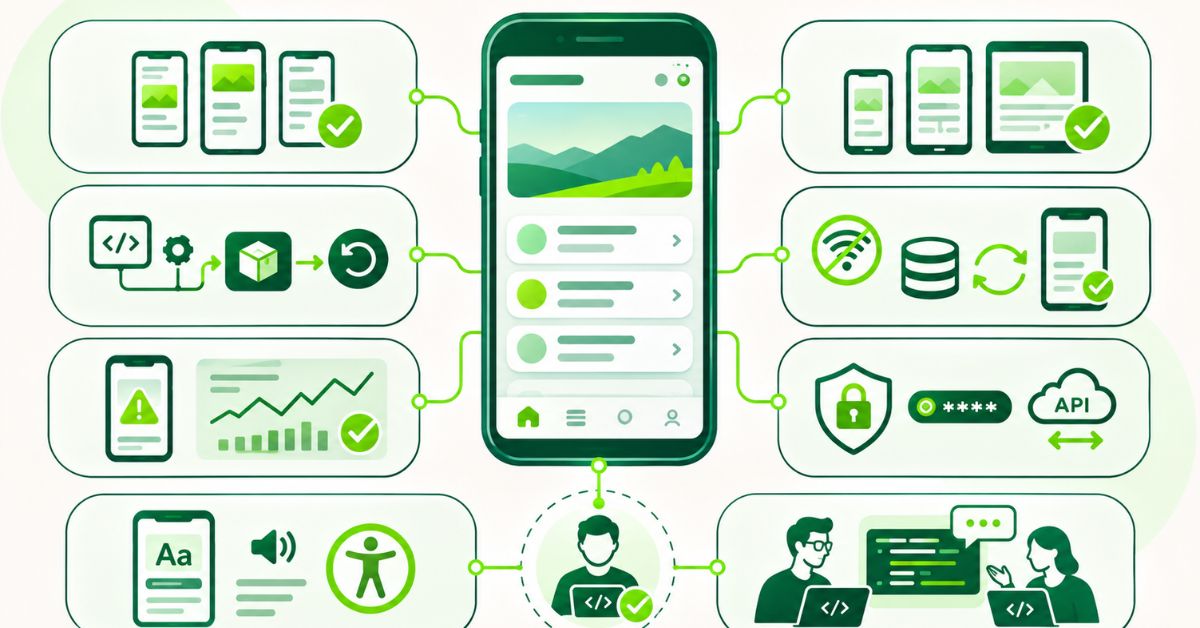
What to Look For in a Mobile App Developer
- Shipped apps: Ask for links to live apps, because real releases prove real experience.
- Release discipline: Look for experience with staged rollouts, store review, and rollback plans, since releases carry the most risk.
- Performance awareness: Strong candidates also talk about startup time, battery use, and crash rates.
- Device range: Additionally, they should plan for many screen sizes and operating system versions.
- Offline behavior: They should handle poor connections and data sync, so users never lose data.
- Security basics: Expect clear answers on token storage, local data, and secure API calls, because weak answers signal risk.
- Accessibility: Finally, they should design for screen readers and larger text from the start.
Interview Questions That Reveal Real Experience
Use questions that need a story, instead of a definition. For example, ask these:
- Walk me through the last app you shipped. Then tell me what you owned and what went wrong.
- How do you respond when a release causes a spike in crashes?
- How do you test on real devices, and how many do you cover?
- How do you handle a user who loses connection halfway through a purchase?
- Describe a disagreement with a designer. Then explain how you resolved it.
Run one live code review of a small real app instead of a trivia quiz. In addition, watch how the candidate explains tradeoffs. Overall, clear explanations predict smooth standups later.
Test English and Communication
Because mobile work involves constant feedback between design, product, and engineering, communication skill matters as much as code skill. First, have the candidate present a past project in a live conversation. Then confirm that they can explain a bug, ask a clarifying question, and push back politely. Also, our guide on how to vet a staff augmentation partner lists the questions to ask the partner about its own screening.
Step 4: Understand What It Costs in 2026
Cost depends on seniority, region, and the engagement model, so compare total cost, not just the hourly rate. Typical nearshore rates for a mid-level mobile developer run roughly $52 to $65 per hour in 2026, and senior profiles cost more. In addition, typical savings run about 30 to 50 percent against U.S. rates for the same role. Also, our staff augmentation guide breaks down rates by role and seniority.
Because the hourly rate is only part of the picture, a full cost comparison should include these items:
- Recruiting time: Open roles slow your roadmap while you search.
- Payroll, benefits, and equipment: A partner usually folds these into one all-in rate, so budgeting gets simpler.
- Management time: A junior hire costs more of your lead’s time than a senior one, because junior hires need more review.
- Replacement risk: Ask what happens if the fit is wrong in the first 90 days, so you know the downside.
- Tooling and test devices: Confirm who pays for them, since device labs add up.
Because a bad hire is expensive, ask every partner about replacement terms in writing. Strong partners, however, offer a clear replacement path. In particular, check how quickly they can swap a developer without charging you to restart.
Step 5: Onboard and Ramp the New Developer
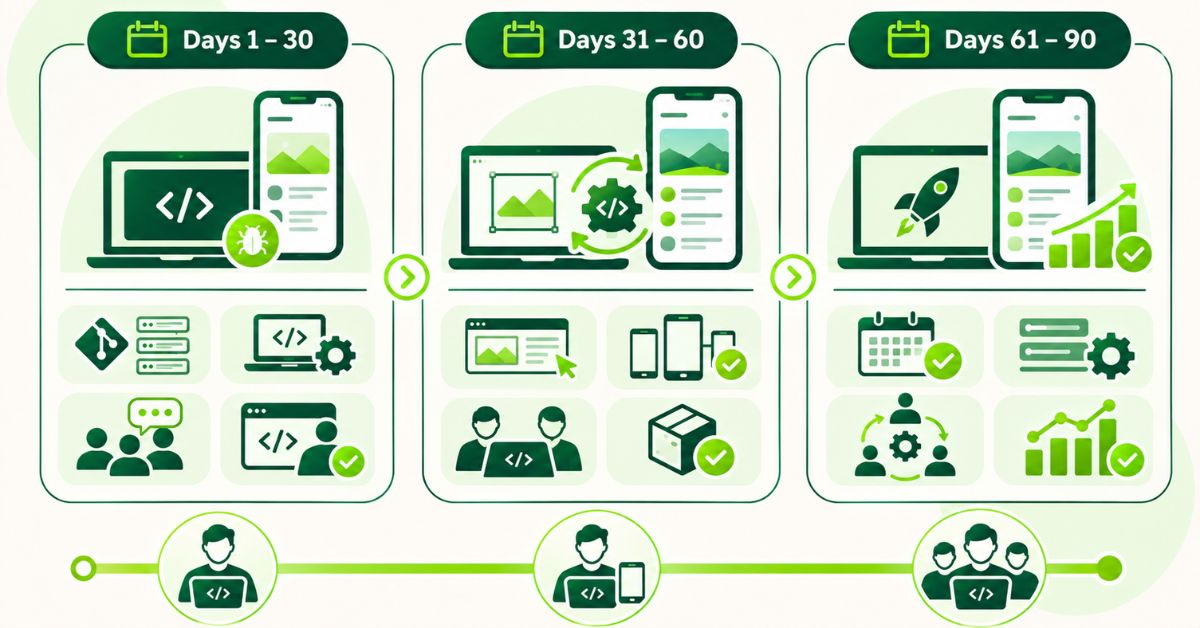
A good hire still fails without a good first month. However, teams that skip structured onboarding, such as documentation, codebase walkthroughs, and introductions, report slower ramp times and more friction. Plan the first 90 days before the developer starts.
| Window | Goal | Example milestone |
|---|---|---|
| Days 1 to 30 | Learn the codebase and the team | Ship a small fix through your full release process |
| Days 31 to 60 | Own a feature | Deliver one feature from design handoff to release |
| Days 61 to 90 | Work independently | Lead a release and improve one quality metric |
First, set up access before day one. That includes repositories, project tools, test devices, and store accounts. Then assign an onboarding buddy for daily questions. Finally, hold a 1:1 each week with the engineering lead, and review progress against the milestones above. For a deeper look at this stage, also see our overview of what staff augmentation services include.


Common Mistakes When You Hire a Mobile App Developer
- Hiring for the wrong build approach. A mismatch forces a rewrite, so the project slows down.
- Skipping the live conversation. A strong resume does not prove strong communication, but a live talk does.
- Judging only on rate. The cheapest option often costs more, because rework adds up.
- Ignoring release experience. A developer who has never managed store review will slow your launches, so ask about it.
- Leaving the reporting line unclear. Mixed direction frustrates the developer, so work slows down.
- Skipping onboarding. Because there is no plan, the first month produces little.
Startups, meanwhile, face the same risks in a more urgent form. Our guide to hiring developers for your startup shows how early-stage teams avoid these traps.
How ParallelStaff Helps You Hire a Mobile App Developer
ParallelStaff places senior Latin American engineers with U.S. teams, and our proof points are specific and checkable:
- Ranked #502 on the 2025 Inc. 5000 list
- 94 percent engineer retention
- ISO 27001 certified
- 4.8 out of 5 Clutch rating
- Enterprise clients that have included AT&T, AMD, Google, J.Crew, and Whirlpool
Our process starts with your brief. First, we define the role, present pre-vetted candidates, and handle agreements. You then interview and choose the person who fits your team. If you want to see the model in detail, review our IT staff augmentation service. You can also go straight to our page to hire a mobile app developer and start a conversation. Finally, for common questions about the model, our nearshore staff augmentation FAQ gives short, direct answers.


Frequently Asked Questions About Hiring a Mobile App Developer
How do I hire a mobile app developer through staff augmentation?
First, define the work, the seniority, and the build approach. Then ask a partner to present pre-vetted candidates. Finally, interview them yourself and choose one. The developer joins your team and reports to your engineering lead, while the partner handles payroll and compliance.
How long does it take to hire a mobile app developer in 2026?
Through staff augmentation, most teams go from brief to start date in about two to four weeks. In contrast, direct hiring usually takes much longer. Also, a clear brief and a quick interview schedule shorten the timeline.
How much does a mobile app developer cost through staff augmentation?
Typical nearshore rates for a mid-level mobile developer run roughly $52 to $65 per hour in 2026, while senior profiles cost more. In addition, savings typically fall between 30 and 50 percent against U.S. rates.
Should I hire a native or cross-platform mobile app developer?
Match the person to your existing build approach. For example, if your app uses separate native codebases, hire a native specialist. If it uses one cross-platform codebase, hire someone with deep experience there. Overall, switching approaches mid-project usually costs more than hiring the right skill upfront.
What skills should I test when I hire a mobile app developer?
Test shipped-app experience, release discipline, performance awareness, offline handling, and security basics. In addition, test communication in a live conversation. Also, a short review of a real app beats a trivia quiz.
What seniority level should I hire first?
Hire senior first if your team has no mobile lead. A senior developer can set standards and review code, while mid-level hires work best when someone on your team can guide them.
Who manages the mobile app developer in a staff augmentation model?
You do. The developer reports to your engineering manager or tech lead and joins your standups, while the partner employs the person and handles payroll, benefits, and compliance.
Is staff augmentation better than hiring a freelancer for mobile work?
For ongoing work, yes, because a freelancer suits short, defined tasks. However, staff augmentation gives you a vetted, full-time person who integrates with your team, with a partner behind the engagement.
How do I know if a staff augmentation partner is trustworthy?
First, ask for verified retention numbers, security certifications such as ISO 27001, and references from U.S. clients. Also, ask how the partner screens for mobile skills. Our guide on vetting a staff augmentation partner covers ten key questions.
What happens if the developer is not a good fit?
Ask for replacement terms before you sign, because a strong partner offers a clear process to swap the developer without charging you to restart. Also, review progress at 30, 60, and 90 days so you catch problems early.
Can one mobile app developer cover design and testing too?
Rarely. A single developer builds the app, but design and testing usually need their own skills. If your product needs several roles, consider a dedicated team instead of one hire.
Does time zone overlap matter for a remote mobile app developer?
Yes. Because mobile releases need fast feedback from design, product, and testing, pick a developer who shares most of your working hours. Nearshore talent in Latin America, for example, typically overlaps with U.S. business hours for several hours a day.
 Verified Author

Paola Araujo
Account Manager
Linkedin Profile