

In this article
TL;DR: A dedicated development team for a SaaS platform is a full engineering pod that works only on your product, usually 3 to 12 people. It fits SaaS because the work never ends: releases, uptime, security, and customer requests. A nearshore pod costs 40 to 60% less than a U.S. team and starts in 2 to 3 weeks. A dedicated development team for a SaaS platform gives you steady capacity for a product that must keep shipping. This guide explains what the team looks like, which roles you need, how big it should be, what it costs in 2026, and how to launch it without losing a quarter.
What Is a Dedicated Development Team for a SaaS Platform?
A dedicated development team for a SaaS platform is a group of engineers, QA, and DevOps specialists who work exclusively on your product, follow your roadmap, and act as an extension of your company. A partner recruits, employs, and supports them. You set priorities and accept the work.
This differs from project outsourcing, where a vendor delivers a fixed scope and leaves. It also differs from adding one contractor. A dedicated pod owns outcomes over time. For the full model, read our pillar guide, Dedicated Development Team: How to Build One That Works.
Why SaaS Products Fit the Dedicated Team Model
SaaS products are never finished. Customers expect new features, fast fixes, and near-constant uptime. Subscription revenue also depends on retention, so every sprint affects churn.
That reality favors stable teams. A pod that knows your codebase, your billing logic, and your customers moves faster each month. Context builds up. Handoffs shrink. In contrast, rotating contractors reset that learning again and again.
The market also pushes in this direction. Gartner forecasts that worldwide IT spending will reach $6.37 trillion in 2026, up 14.2%. More spending means more competition for the same engineers.
Local hiring makes it harder. The U.S. Bureau of Labor Statistics reports a median wage of $135,980 for software developers. It also projects about 106,100 openings each year across developers, QA analysts, and testers. Few SaaS founders can wait months to fill a seat.

Core Roles in a SaaS Dedicated Team
The right mix depends on your stage. Still, most SaaS pods draw from the same set of roles.
Tech lead or architect
This person guards the architecture. They make decisions on multi-tenancy, data models, and service boundaries. They also review code and mentor the team.
Back-end engineers
They build APIs, billing and subscription logic, integrations, and background jobs. For SaaS, they also handle tenant isolation and performance at scale.
Front-end engineers
They build dashboards, onboarding flows, and settings screens. Their work shapes first impressions and daily usability.
QA or test automation engineer
Every release goes to paying customers, so quality gates matter. Automated tests protect you from regressions and late-night rollbacks.
DevOps or site reliability engineer
They own CI/CD, infrastructure as code, monitoring, and incident response. For a SaaS platform with uptime promises, this role often pays for itself.
Product owner and designer
These roles usually stay on your side, because they hold customer knowledge. Some teams add a partner-side delivery manager to keep the process smooth.
For role details and sizing, see our breakdown of nearshore development team structure.
How Big Should the Team Be?
Start smaller than you think. Gartner predicts that 60% of organizations will adopt smaller software engineering teams by 2029, up from 15% in 2026. Small, focused pods are becoming the norm.
As a rule of thumb, use these ranges:
- MVP or early product (3 to 5 people): One lead, two or three engineers, and part-time QA.
- Growth stage (5 to 8 people): Add dedicated QA and a DevOps engineer.
- Scale stage (8 to 12 or more): Split into two squads with separate backlogs.
Add people only when the backlog proves you need them. Extra engineers without clear work slow everyone down.


What a Dedicated Development Team for a SaaS Platform Costs
Cost depends on location, seniority, and team size. Here are the planning ranges from our own cost guides.
- Hourly rates: $50 to $90 for senior nearshore engineers, versus $150 to $250 in the U.S.
- Salary view: Senior nearshore engineers earn about $55,000 to $105,000 a year, compared with $200,000 or more fully loaded in the U.S.
- Three-engineer pod: About $31,200 per month at $65 per hour in direct cost, or $36,000 to $40,000 fully loaded.
- Overall savings: Typically 40 to 60% against U.S. hiring.
Our article on nearshore software development cost breaks down rates by country. If you are weighing the build-versus-buy question, read dedicated team vs in-house.
Hidden costs to watch
Turnover is the largest hidden cost. SHRM estimates that replacing an employee can cost 50% to 200% of annual salary, depending on level. For a SaaS team, lost knowledge also slows releases.
Plan for onboarding time, tool licenses, and your own management hours. A partner with strong retention reduces all three. ParallelStaff, for example, reports 94% engineer retention.
Dedicated Team vs Staff Augmentation for SaaS
Both models place nearshore engineers with your company. The difference is structure.
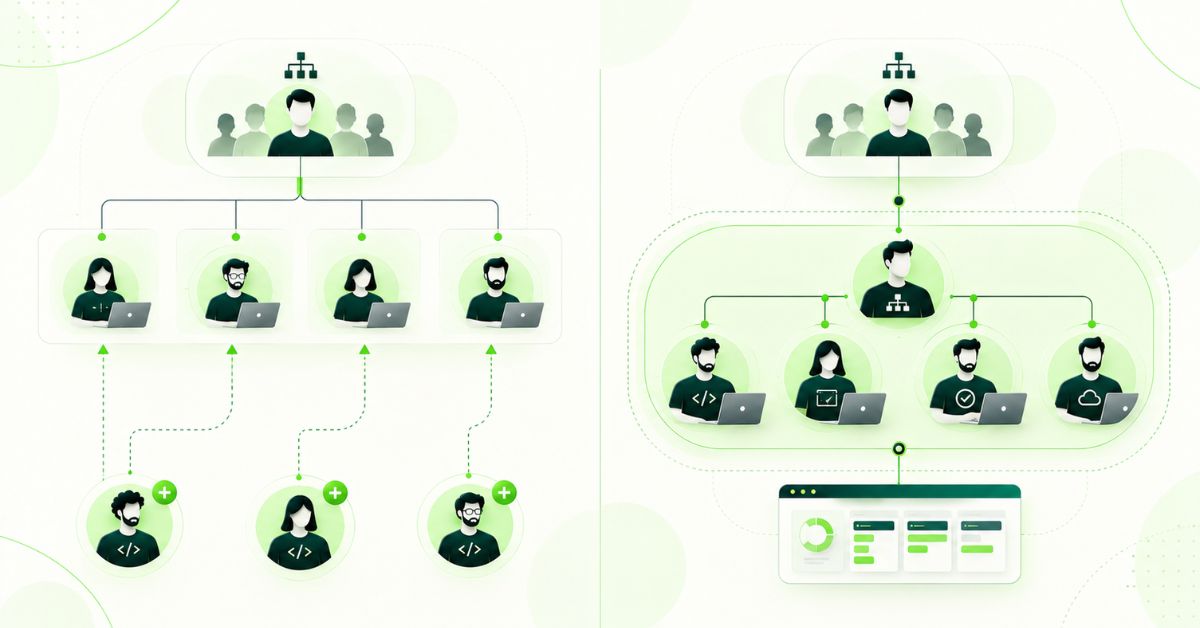
- Staff augmentation: You add individuals and manage them directly. It suits teams with strong engineering leaders.
- Dedicated team: You get a coordinated pod with its own lead and process. It suits companies that lack management capacity or need a whole unit.
Many SaaS companies start with augmentation and move to a pod as the roadmap grows. Our comparison of staff augmentation vs dedicated teams shows the trade-offs, and our guide to staff augmentation for SaaS startups covers the early-stage case.
How to Build Your Dedicated Team Step by Step
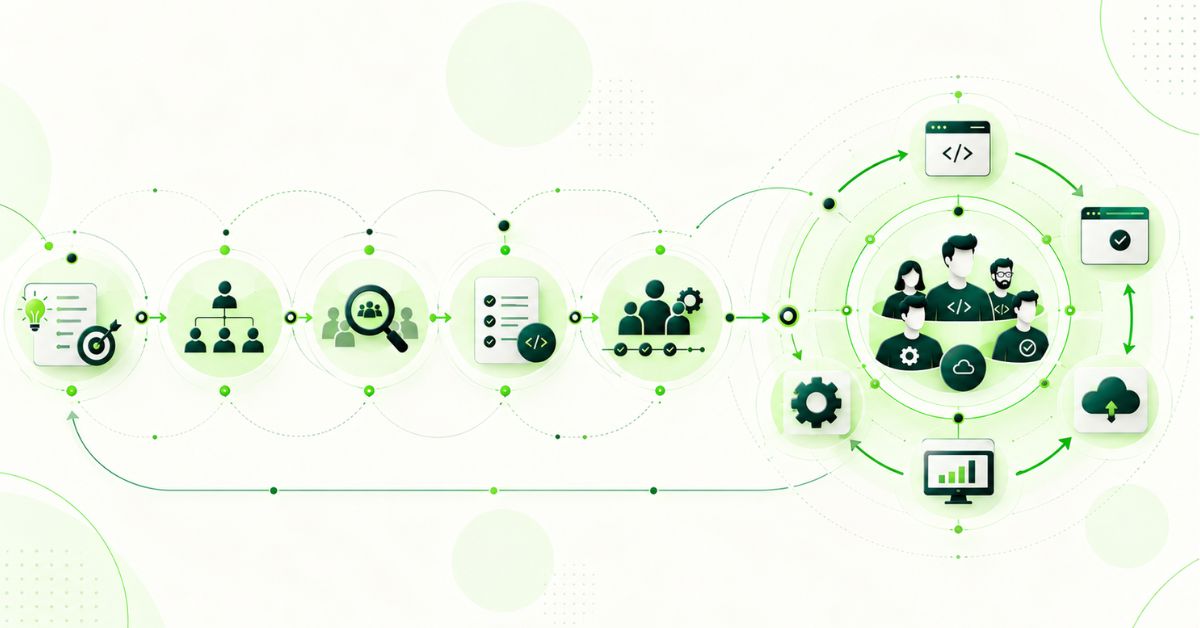
Step 1: Define the product goals
List the next two quarters of work. Include features, technical debt, and reliability targets. Tie each goal to a business result, such as lower churn or faster onboarding.
Step 2: Pick the team shape
Match roles to your stage. A seed-stage product may need a lead and two engineers. A scaling product may need QA and DevOps from day one.
Step 3: Choose a partner you can trust
Ask about retention, security certifications, and engineer vetting. Request references from other SaaS clients. Our guide to hiring dedicated software developers without the risk lists the questions to ask.
Step 4: Run a paid pilot
Start with a two to four week pilot on a real ticket. Judge the code, the communication, and the pace. Then decide whether to expand.
Step 5: Onboard in stages
Give access and documentation in week one. Aim for first commits in two to three weeks. Set milestones at day 14, day 45, and day 90, and review them with the team.
Step 6: Set a delivery rhythm
Run sprints, daily standups, and a weekly demo. Share one backlog, and keep one source of truth for priorities. Research from Google Cloud’s DORA program notes that AI does not fix a team, it amplifies what is already there. The same applies to outsourcing. Good habits scale, and bad ones scale too.
Time Zones and Communication
SaaS teams ship daily, so live collaboration matters. Harvard Business School reports that office pairs losing one or two shared business hours cut their communication volume by 9.2% on average. Nearshore teams in Latin America keep most of the U.S. workday in common.
Use these habits to protect it:
- Agree on a four to six hour overlap window.
- Record decisions in writing, not only in calls.
- Keep a shared on-call plan for production incidents.
For SaaS startups that want remote talent, our piece on how CTOs hire remote developers for SaaS adds more detail.
Security and Compliance for a Remote SaaS Team
Your customers trust you with their data, so security cannot be an afterthought. IBM puts the global average cost of a data breach at $4.99 million.
Reduce risk with these controls:
- Role-based access, and removal of access when work ends.
- Code reviews and automated security scans in CI/CD.
- Company-owned repositories and cloud accounts.
- A partner with audited practices, such as ISO 27001.
- Clear IP assignment and confidentiality terms in the contract.
Customers may also ask for SOC 2 reports or similar evidence. Make sure your team can support those audits.
Common Mistakes to Avoid
- Starting too big: A large team on day one creates coordination overhead.
- Vague priorities: Unstable priorities waste capacity and frustrate engineers.
- No product owner: Engineers need a decision-maker who knows your customers.
- Treating the team as a vendor: Invite them to planning, retros, and demos.
- Skipping documentation: Undocumented systems create dependency and risk.
When the team grows from one engineer to a full pod, the shift needs care. Our guide to scaling from one developer to a dedicated team covers that path.
Why SaaS Companies Choose ParallelStaff
ParallelStaff builds nearshore dedicated teams for U.S. technology companies. Our results are public.
- Ranked #502 on the Inc. 5000 list of fastest-growing private companies.
- 94% engineer retention, which keeps your platform knowledge in the team.
- ISO 27001 certified security practices.
- A 4.8 out of 5 rating on Clutch.
- Enterprise clients that include AT&T, AMD, Google, J.Crew, and Whirlpool.
Teams start in two to three weeks and work in U.S. time zones. Learn more about our dedicated development teams and our nearshore dedicated teams, or see how nearshore teams help SaaS companies scale.


Frequently Asked Questions About Dedicated Teams for SaaS
What is a dedicated development team for a SaaS company?
It is a group of engineers and specialists who work only on your SaaS product. A partner employs them, and you direct the work. They behave like an in-house team without the hiring burden.
How much does a dedicated development team for a SaaS platform cost?
A three-engineer nearshore pod costs roughly $31,200 per month at $65 per hour in direct cost, or $36,000 to $40,000 fully loaded. Larger teams scale from there. Savings are typically 40 to 60% against U.S. hiring.
How many developers do I need for a SaaS MVP?
Most MVPs need three to five people: a lead, two or three engineers, and part-time QA. Add DevOps and dedicated QA as you approach launch and growth.
How fast can a dedicated team start working?
ParallelStaff teams usually start in two to three weeks. U.S. recruiting often takes 60 to 90 days or more for a similar team.
Is a dedicated team better than hiring in-house for SaaS?
It depends on speed and core IP. A dedicated team adds capacity quickly and costs less. In-house hires suit your most sensitive core systems. Many companies use both.
What is the difference between a dedicated team and staff augmentation?
Staff augmentation adds individuals under your management. A dedicated team arrives as a coordinated pod with its own lead and process. Choose based on your management capacity.
Which roles should a SaaS dedicated team include?
Most teams include a tech lead, back-end and front-end engineers, a QA engineer, and a DevOps engineer. The product owner and designer usually stay on your side.
How do I keep my SaaS code and data secure with a remote team?
Use role-based access, company-owned repositories, code reviews, and automated security checks. Choose a partner with audited controls such as ISO 27001, and sign clear IP terms.
Can a dedicated team handle SaaS support and uptime?
Yes, if you include DevOps or site reliability skills and agree on an on-call plan. Time zone overlap makes incident response easier than with far-offshore teams.
What happens if a developer on the team leaves?
A good partner replaces them quickly and manages the handover. Ask about retention rates and replacement terms before you sign. ParallelStaff reports 94% retention.
Can I scale the team up or down as my SaaS grows?
Yes. Most partners let you add or remove engineers with notice. Start small, then grow as your backlog and revenue justify it.
How do I know if my SaaS company is ready for a dedicated team?
You are ready when you have a clear roadmap, a product owner, and work that will last at least six months. If those are missing, fix them first.
Final Thoughts
A dedicated development team for a SaaS platform works when you give it clear goals, a small starting size, and real ownership. Pick the right roles, run a paid pilot, and protect your security from the start. In 2026, tight local hiring and rising IT budgets make a nearshore pod a practical way to keep shipping. Begin with a focused team, measure results, and scale as your product grows.
 Verified Author

ParallelStaff