
In this article
TL;DR: Nearshore software development Mexico teams give U.S. companies live collaboration, a one to two hour time gap, and savings of roughly 40 to 60% against U.S. hiring. Mexico City, Guadalajara, and Monterrey hold the deepest talent. English skill varies by person, so vet every engineer. Start with a small team and scale once delivery is proven.
What Is Nearshore Software Development in Mexico?
Nearshore software development in Mexico means hiring Mexican engineers, either as individuals or as a full team, to build your software while they work in nearly the same hours as your U.S. staff. You keep control of the product. The partner handles recruiting, payroll, equipment, and local compliance.
This model sits between hiring locally and sending work across the world. It keeps the cost advantage of a lower-cost market. It also removes the overnight handoffs that slow offshore projects. For a wider view of the model itself, read our complete U.S. guide to nearshore software development.
Below, you will see why Mexico stands out, where the talent lives, what the data says about English, and how to start without wasting a quarter.
Why U.S. Companies Choose Mexico for Nearshore Development
Mexico shares a border, a business culture, and a large part of the U.S. workday with American companies. As a result, the daily rhythm of a Mexican team feels familiar. Standups, code reviews, and quick questions all happen live.
Time zone overlap that supports real collaboration
Most of Mexico, including Mexico City and Guadalajara, uses Central Standard Time all year. The country ended daylight saving time for most regions in 2022. Consequently, the gap with the U.S. changes twice a year.
- Central U.S. teams: Mexico matches you in winter and runs one hour behind in summer.
- Eastern U.S. teams: Mexico runs one hour behind in winter and two hours behind in summer.
- Pacific U.S. teams: Mexico runs one hour ahead in winter and matches you in summer.
Put plainly, you get six or more shared hours every day. Harvard Business School research on innovating across time zones links time separation to less communication between teammates. A 9.2% drop in communication appears in the work it summarizes. Fewer hours apart protects the conversations that keep projects moving.
We cover this topic in more depth in our guide to nearshore teams in U.S. time zones.

Cultural fit and easy travel
Mexican engineers work with U.S. clients every day. Therefore, they already understand agile habits, direct feedback, and fast iteration. Flights from major U.S. hubs to Mexico City, Guadalajara, and Monterrey are short. A kickoff visit or a quarterly planning trip is easy to arrange.
Equally important, shared hours change how work gets done. Engineers can unblock each other in minutes instead of waiting a full day. Product managers can join design reviews live. Moreover, incidents get handled while your U.S. staff is still online, which lowers risk for customer-facing systems.
Where the Talent Is: Mexico’s Main Tech Hubs
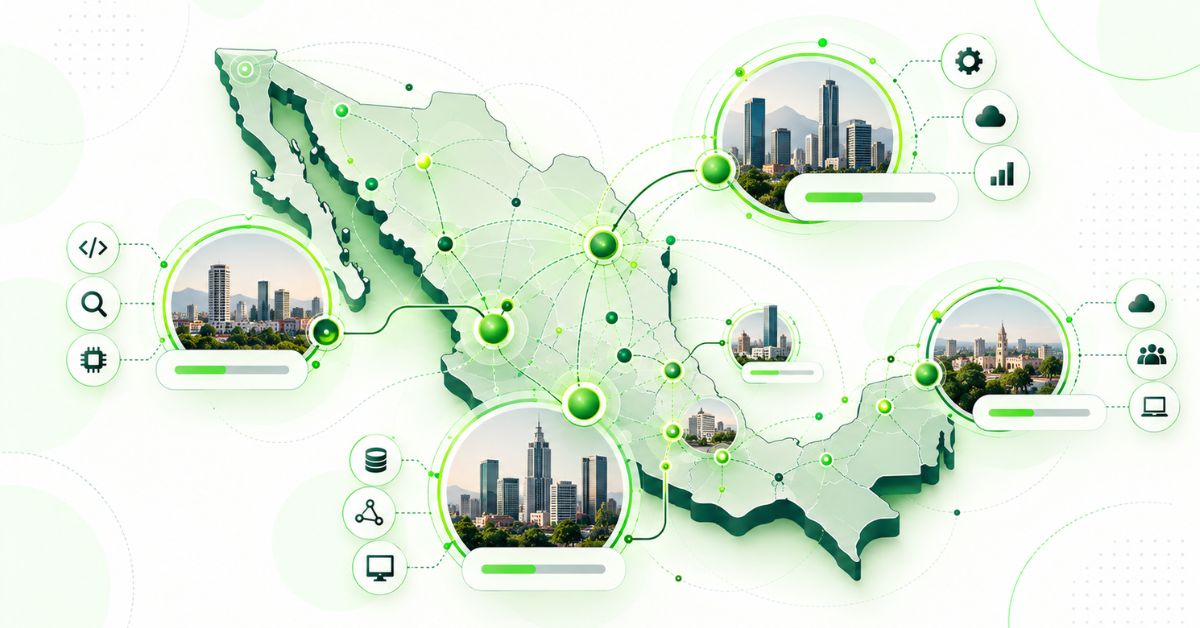
Mexico is large, and its tech talent clusters in a few cities. Knowing the differences helps you choose the right profile for your project.
Mexico City
The capital has the largest and most varied talent pool. You will find enterprise engineers, data specialists, and senior leads. Competition for top people is also strongest here. Hiring takes planning.
Guadalajara
Often called Mexico’s Silicon Valley, Guadalajara has a long history with electronics and software. Many global firms run engineering centers here. The city is a strong choice for full-stack, QA, and embedded work.
Monterrey
Monterrey blends an industrial base with a growing software scene. Its proximity to Texas makes it popular with companies that want easy travel. Engineers here often bring strong English and enterprise experience.
Other cities worth a look
Querétaro, Puebla, and Mérida also have growing communities. Remote-first hiring lets you draw from all of them. Our companion piece on software development in Mexico compares regions in more detail.
The Bigger Picture: Why Nearshore Demand Keeps Rising in 2026
Demand for engineers keeps outpacing supply. The U.S. Bureau of Labor Statistics reports a median pay of $135,980 for software developers, plus about 106,100 openings each year. In addition, those figures do not include recruiting time, benefits, or turnover costs.
Spending is climbing too. Gartner forecasts that worldwide IT spending will grow 14.2% in 2026 to reach $6.37 trillion. More budget means more projects competing for the same engineers.
Meanwhile, the supply side is widening. GitHub’s Octoverse report shows Latin America adding about 3.2 million developers in a year. Mexico is a major part of that growth. Likewise, Deloitte’s global outsourcing survey shows companies turning to external partners for talent access and agility, not only for savings.
English Proficiency: What the Data Says
English is the question buyers ask most. The honest answer is that it depends on the person.
The EF English Proficiency Index for Mexico gives the country a score of 440, which ranks 103rd worldwide. However, the IT sector scores much higher, at 559. City scores also vary widely. Software engineers study English for documentation, open-source work, and U.S. clients, so they usually outperform the national average.
Nevertheless, you should never assume. Test spoken English during the interview. Ask candidates to explain a past project and walk through a code decision. A partner that screens for communication before presenting candidates saves you hours of review.
What Nearshore Software Development in Mexico Costs
Cost is the second major draw. Mexican engineers earn less than U.S. peers, yet the best ones are not cheap. Rates rise with seniority and with specialized skills such as AI, cloud architecture, and security.
On average, ParallelStaff clients save 40 to 60% compared with equivalent U.S. hires. That range includes salary, benefits, recruiting, equipment, and administration. It does not mean lower quality. It reflects local cost levels and fewer overhead layers.
For ranges by role and level, see our breakdown of LATAM software engineer salaries. For a full budget model, read the guide to nearshore software development cost.


Engagement Models for Nearshore Software Development in Mexico
You can use Mexican talent in three common ways. Each fits a different need.
Staff augmentation
You add one or more engineers to your existing team. They work under your managers and join your tools and rituals. This model suits companies that already have strong leadership and need extra capacity. Learn more about nearshore staff augmentation.
Dedicated teams
You get a full team built around your roadmap, often with a lead who manages day-to-day work. This option works well for new products and long programs. See how nearshore dedicated teams operate.
Project-based delivery
A partner owns a defined scope and delivers it for a fixed price or a set timeline. This suits clear, bounded work. It gives you less day-to-day control, so it is a weaker fit for evolving products.
If you are weighing options beyond Mexico, our comparison of nearshore vs offshore software development explains the trade-offs.
Risks to Plan For, and How to Reduce Them
Every model carries risk. Fortunately, most nearshore risks are manageable with good habits.
- Uneven English: Screen for it. Pair new hires with a bilingual lead.
- Turnover: Strong engineers get recruited often. Offer growth paths and fair pay. Our piece on nearshore engineer retention shows what works.
- Weak onboarding: New remote engineers stall without context. Build a clear plan for the first 30 days, as outlined in our nearshore developer onboarding guide.
- Security and IP: Choose a partner with audited controls, such as ISO 27001, and clear IP clauses in the contract.
- Daylight saving confusion: Put meeting times in a shared calendar with time zones shown. Recheck twice a year.
How to Start With Nearshore Software Development in Mexico
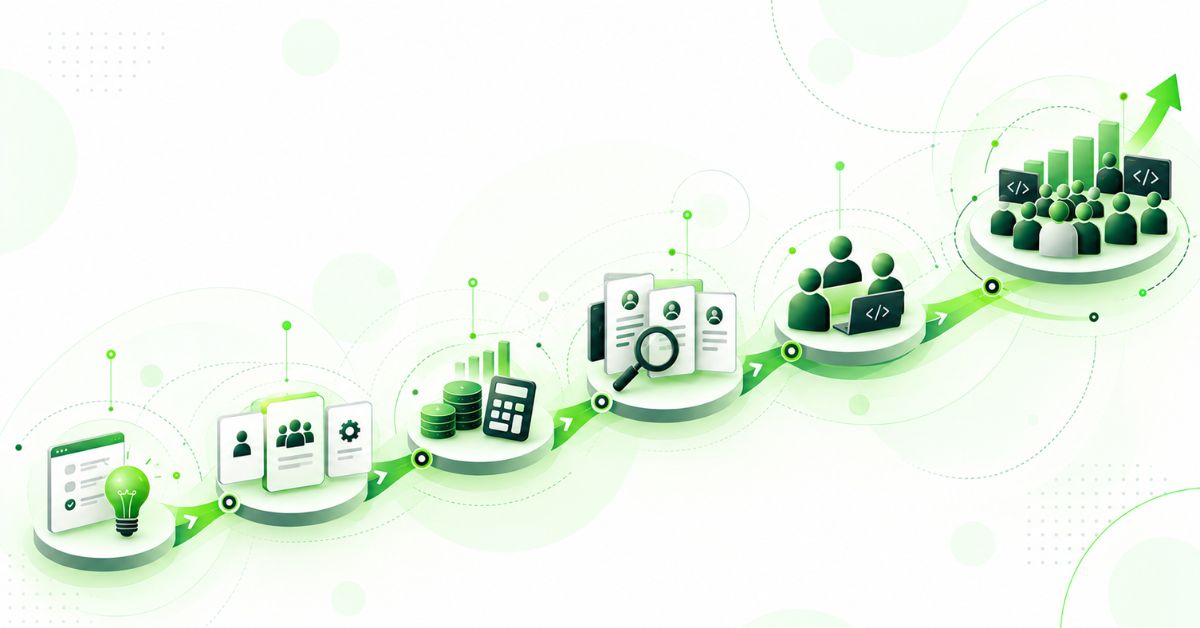
A simple path works best. First, define the roles and the outcome you need. Second, decide the model: augmentation, a dedicated team, or a project. Third, set a budget range with the cost guide above.
Next, shortlist partners and ask direct questions. How do they vet engineers? What is their retention rate? Who owns the code? How fast can they present candidates? After that, run a technical interview for every finalist. Finally, start small. A two or three person pilot proves fit before you scale.
If you hire across the region, the hire developers in Latin America page shows how the process works end to end.
Why U.S. Companies Build Their Mexico Teams With ParallelStaff
ParallelStaff helps U.S. companies build nearshore engineering teams across Latin America, including Mexico. Our proof points are public.
- Ranked #502 on the Inc. 5000 list of fastest-growing private companies.
- 94% retention of placed engineers, which protects your team’s continuity.
- ISO 27001 certified information security practices.
- 4.8 out of 5 rating on Clutch from verified client reviews.
- A network of 10,000+ vetted engineers to draw from.
- Trusted by teams at AT&T, AMD, Google, J.Crew, and Whirlpool.
As a result, you get candidates screened for both technical depth and communication. You also get a partner that stays involved after the hire. Explore our full nearshore software development Mexico and LATAM services to see how engagements are structured.


Nearshore Software Development in Mexico: Frequently Asked Questions
What is nearshore software development in Mexico?
It is the practice of hiring Mexican engineers or teams to build software for a U.S. company while they work in nearly the same time zone. You direct the product, and the partner handles hiring, payroll, and compliance.
Why is Mexico a good place for nearshore development?
Mexico offers time zone overlap, cultural alignment with U.S. business, short flights, and a deep pool of engineers. Together, these traits make daily collaboration simple.
How much can I save by hiring developers in Mexico?
Most ParallelStaff clients save 40 to 60% compared with equivalent U.S. hires once salary, benefits, recruiting, and overhead are counted. Savings vary by role and seniority.
What time zone is Mexico in compared with the U.S.?
Mexico City and Guadalajara use Central Standard Time year-round. They match U.S. Central in winter and run one hour behind in summer. Eastern teams see a one hour gap in winter and two hours in summer.
Does Mexico observe daylight saving time?
Most of Mexico stopped observing it in 2022. Border municipalities are the main exception. Because the U.S. still changes clocks, the hour gap shifts twice a year.
How good is the English of Mexican software developers?
It varies. Mexico scores 440 on the EF English Proficiency Index, but the IT sector scores 559. Always test spoken English during interviews.
Which Mexican city is best for hiring software engineers?
Mexico City has the largest pool. Guadalajara is strong for full-stack and QA. Monterrey suits enterprise work and has easy access to Texas. Remote hiring lets you use all three.
What is the difference between nearshore and offshore development?
Nearshore teams work in nearby countries with small time differences. Offshore teams sit many time zones away. Nearshore enables live collaboration, while offshore often relies on delayed handoffs.
Which model should I choose: staff augmentation or a dedicated team?
Choose staff augmentation when you have managers ready to lead added engineers. Choose a dedicated team when you need a unit built and managed around a roadmap.
How fast can I start with a Mexico-based team?
Timelines depend on the role. With a partner that keeps a vetted bench, you can often interview candidates within days and start within a few weeks.
Is my intellectual property safe with a Mexican team?
Yes, when you use proper contracts and a partner with audited security controls. Look for ISO 27001, clear IP assignment, and secure access practices.
How do I keep Mexican engineers on my team long term?
Offer fair pay, real growth, and a role in product decisions. A partner with strong retention, such as 94% at ParallelStaff, also helps keep your team stable.
Final Thoughts
Nearshore software development in Mexico works because it combines three things U.S. teams rarely get together: overlapping hours, real cost savings, and deep technical talent. In 2026, rising IT budgets and tight local hiring make that mix more valuable. Start with a clear role, a small pilot, and a partner that vets for both skill and communication. From there, you can scale with confidence.
 Verified Author
Miguel Hernandez
VP of Operations
Linkedin Profile