
In this article
TL;DR: Nearshore software development in Brazil gives U.S. companies access to one of the two largest engineering talent bases in Latin America. Brazil runs on UTC-3 all year, which leaves 3 to 7 shared hours with a standard U.S. workday. English skills are lower nationally (EF rank 75 of 123), but IT professionals score much higher, so test English in every interview. Typical agency rates run about $35 to $78 per hour by seniority, and Brazil’s LGPD data law needs a plan from day one.
Nearshore software development in Brazil means hiring engineers who live and work in Brazil to join your team or build one for you. For most U.S. companies in 2026, Brazil works best when you want deep talent and can plan around a time difference of one to five hours. Deloitte counts Brazil and Mexico as the two largest markets for engineering talent in Latin America.
This guide covers the talent pool, tech hubs, time zones, English skills, rates, data law, hiring models, and risks. If you are still comparing countries, start with our complete guide to nearshore software development.
Why Nearshore Software Development in Brazil Makes Sense in 2026
In fact, talent scarcity pushes companies to look beyond their borders. Gartner surveyed 437 IT organizations for its 2021 Emerging Technology Roadmap. It found that IT executives see the talent shortage as the biggest adoption barrier for 64% of emerging technologies. That compares with 4% in 2020. Talent availability ranked ahead of implementation cost (29%) and security risk (7%).
McKinsey reached a similar view in 2025. It calls talent the most critical constraint across 13 frontier technologies, and 46% of leaders cite skill gaps as a major barrier to AI adoption. One of its suggested responses is to build globally distributed teams.
Also, cost pressure adds to the problem. The U.S. Bureau of Labor Statistics reports a median wage of $135,980 for software developers in May 2025. The median for all U.S. occupations is $50,980. Deloitte adds that the U.S. software developer median is roughly twice the global median for the same job.
Brazil also has a large home market. The U.S. Commercial Service’s Brazil Country Commercial Guide, citing ABES data for 2022, ranks Brazil tenth in the world IT market. It says Brazil holds 40% of the Latin American market. As a result, that scale supports a mature engineering community. However, local employers compete for the same senior engineers, so move quickly once you find the right people.
Brazil’s Talent Pool and Tech Hubs
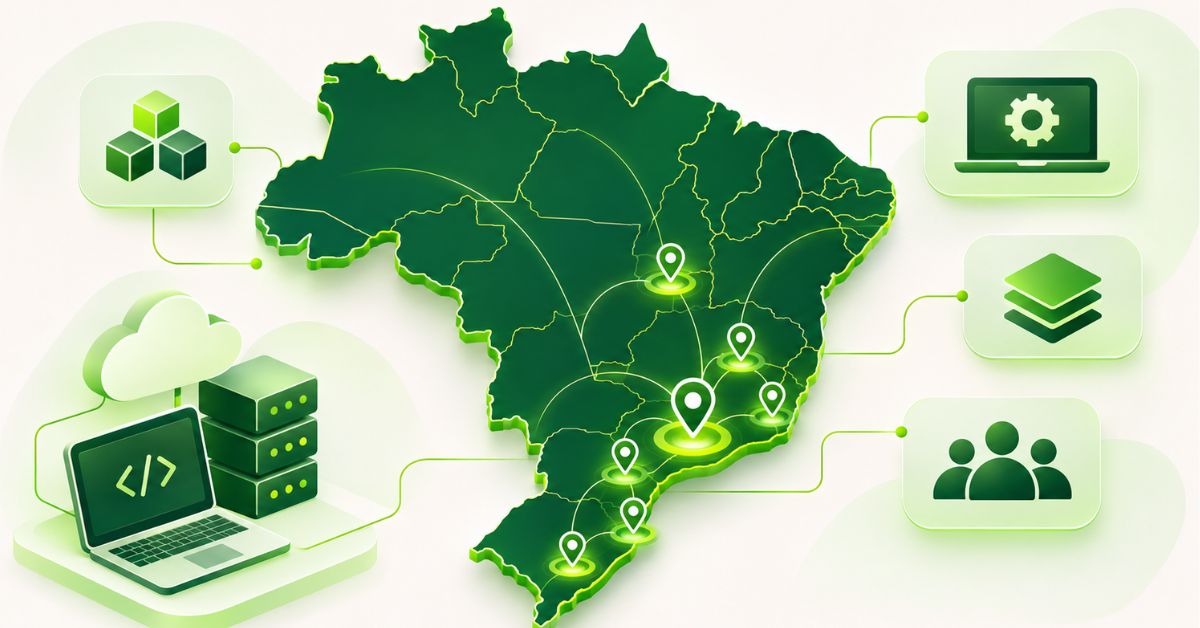
Deloitte reports that Brazil and Mexico together have more than 2.2 million software engineering professionals. The two countries also graduate more than 350,000 new engineering students each year. Those totals combine both markets, so do not read them as a Brazil-only number.
Estimates for Brazil by itself vary with the definition of a developer. Industry sources commonly cite figures from about 500,000 to more than 750,000. Therefore, treat any single number as directional. Instead, ask each partner how many vetted engineers it can actually place.
São Paulo
CBRE ranks São Paulo among the three largest tech talent markets in Latin America, alongside Mexico City and Santiago. CBRE also finds that average wages across Latin America sit near 39% of U.S. levels. São Paulo is the natural place to look when you need volume and a broad range of experience.
Florianópolis and Other Strong Cities
Florianópolis is also a major tech hub, and it tops EF’s list of Brazilian cities for English skills. Porto Alegre, Curitiba, Brasília, Belo Horizonte, and Campinas also score above São Paulo on English. In addition, remote work makes hub location less important. So choose engineers for their skills and communication, not for their postal code.
Time Zones: How Brazil Overlaps With U.S. Teams
Brazil’s main time zone is Brasília Time, UTC-3. It covers the Atlantic coast states and the Federal District, which includes São Paulo and Rio de Janeiro. Brazil abolished daylight saving time in 2019, according to timeanddate.com, so its offset never changes. U.S. clocks, however, do change. As a result, the gap between your team and a Brazilian team shifts twice a year.
| U.S. time zone | Brazil ahead (U.S. daylight time) | Brazil ahead (U.S. standard time) | Shared hours (daylight / standard) |
|---|---|---|---|
| Eastern | 1 hour | 2 hours | 7 / 6 |
| Central | 2 hours | 3 hours | 6 / 5 |
| Mountain | 3 hours | 4 hours | 5 / 4 |
| Pacific | 4 hours | 5 hours | 4 / 3 |
Shared hours assume both sides work 9 to 5 local time. Still, they are simple arithmetic, not a guarantee.
For Eastern and Central teams, a normal day works with little adjustment. However, West Coast teams get fewer shared hours. Starting the Brazilian day an hour later adds an hour of overlap, because the U.S. day ends later. U.S. clocks go back on November 1, 2026. From then until they spring forward in March, use the standard-time column.
By contrast, offshore options have gaps of eight to twelve hours that force handoff-style work. Our nearshore vs. offshore guide covers that trade-off in detail.


English Proficiency: What the Data Shows
First, English is the area where buyers need realistic expectations. Brazil scores 482 on the EF English Proficiency Index 2025 and ranks 75th of 123 countries and territories. The global average in that edition is 488. EF’s skill scores show a pattern: reading 516, listening 468, speaking 464, and writing 442.
However, technology professionals do better. EF reports an IT job function score of 551, well above the national result. City scores also vary widely:
- Florianópolis: 577
- Porto Alegre: 570
- Curitiba: 556
- Brasília: 544
- Belo Horizonte: 541
- Campinas: 535
- São Paulo: 518
- Rio de Janeiro: 512
EF’s data comes from people who choose to take its online test, so treat it as a guide, not a guarantee. In practice, engineers with U.S. client experience are often comfortable in English. Writing and fast conversation are where you may see variation. Run a live interview in English and review a written sample before you decide.
Nearshore Software Development Rates in Brazil (2026)
Typical agency rates for Brazil in 2026 look like this. These are billing rates for engineers with international project experience, not local salaries.
| Experience level | Typical hourly rate |
|---|---|
| Mid-level | $35 to $52 per hour |
| Senior | $52 to $78 per hour |
Compare those bands with U.S. pay. BLS puts the median U.S. software developer wage at $135,980 per year, and the top 10% earn more than $214,670. CBRE’s finding that Latin American wages average about 39% of U.S. levels helps explain why buyers often report savings of 40 to 60 percent after fully loaded costs.
Four factors move the rate inside each band:
- Seniority and ownership: engineers who lead technical decisions sit at the top.
- City and English level: highly fluent engineers in competitive hubs cost more.
- Engagement model: a dedicated team is priced differently from a single added engineer.
- Partner quality and retention: low turnover protects you from repeated onboarding costs.
However, the hourly rate is not the whole budget. Also add onboarding time, management hours, and compliance work. Our nearshore software development cost guide breaks these costs down.
Brazil’s Data Law (LGPD) and Compliance
Brazil’s General Data Protection Law, known as LGPD, has been in force since September 18, 2020. According to DLA Piper’s data protection guide, it broadly aligns with the EU’s GDPR. It applies to processing carried out in Brazil, and also to processing that offers goods or services to people in Brazil, regardless of where the company is based.
That reach matters when Brazilian engineers work on systems that hold personal data. First, ask your counsel how LGPD applies to your setup. Four points deserve attention:
- Breach notice: controllers must report a breach likely to cause risk or harm to Brazil’s data authority (ANPD) and to affected people within three working days.
- Fines: penalties can reach 2% of a company’s revenue in Brazil, capped at R$50 million per infraction.
- Transfers: sending personal data out of Brazil needs a legal mechanism. The most common one outside the EU is the ANPD’s standard contractual clauses.
- Enforcement: in its March 2026 update, DLA Piper noted that the ANPD had imposed only one sanction on a private company. Enforcement activity remains uncertain.
In addition, you can lower your exposure with simple habits. First, use masked or synthetic data in development. Second, limit access to production data by role. Finally, choose a partner that follows ISO 27001 security controls.
Employment rules also deserve a careful look. For instance, Brazilian labor law sets its own terms for employees and contractors. Therefore, ask any partner how engineers are engaged, who carries employer obligations, and what protections you get. Of course, this section is general information, not legal advice.
Engagement Models for Brazilian Talent
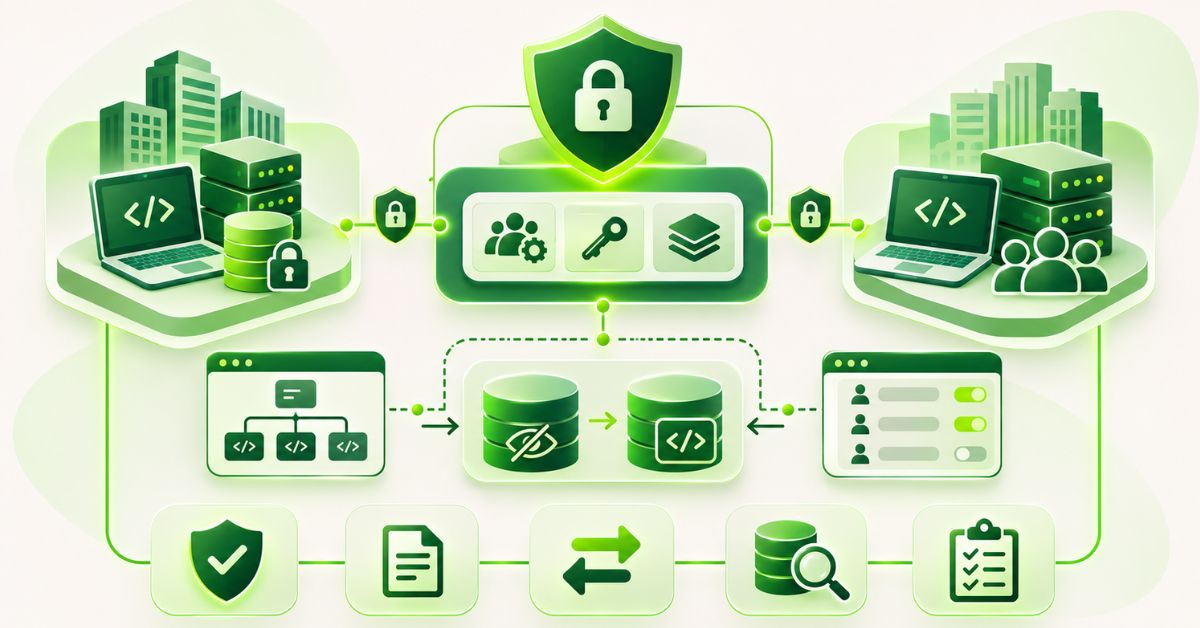
Most U.S. companies use one of three models when they hire in Brazil.
Staff Augmentation
You add one or more engineers to your existing team. They join your standups, follow your processes, and report to your leaders. This works well when you already have strong technical management. See our guide to nearshore staff augmentation.
Dedicated Teams
You get a full team that works only on your product. The partner handles recruiting and employment setup while you set priorities. This model helps West Coast companies because the team builds a shared core window together. Learn how nearshore dedicated teams work.
Project-Based Outsourcing
You hand a defined scope to a partner that owns delivery. This suits companies without deep internal engineering leadership. Explore our nearshore software development services and our wider software development services.
Not sure which model fits? Our guide to the nearshore delivery model explains who leads, who manages, and who delivers in each one.


Risks to Plan For When You Hire in Brazil
Overall, no market is perfect. These are the issues to plan for, and how to handle them.
- English variation: national scores are modest. So screen for speaking and writing, not only reading.
- West Coast overlap: Pacific teams share three to four hours. Then agree on a core window and use written updates for the rest.
- Competition for senior talent: strong engineers receive many offers. Therefore, decide quickly and offer clear growth paths.
- Data and labor compliance: follow LGPD guidance and avoid informal contractor setups without legal advice.
- Currency swings: price contracts in U.S. dollars to protect your budget.
- Retention: stable teams cost less over time. Instead, invest in recognition and a consistent team culture.
How ParallelStaff Helps You Hire in Brazil
ParallelStaff places senior Latin American engineers with U.S. technology companies, and its network includes engineers in Brazil. The firm is based in Dallas and holds ISO 27001 certification. It ranked #502 on the 2025 Inc. 5000 and holds a 4.8/5 rating on Clutch. It reports a 94% engineer retention rate, with engineers averaging more than five years of tenure. Enterprise clients have included AT&T, AMD, Google, Whirlpool, and J.Crew.
Vetting matters more in Brazil because English levels vary. Every engineer completes a technical assessment, a Cambridge English-based communication evaluation, and a cultural fit interview. Our process follows five steps:
- Scoping. We define the skills, seniority, and working hours you need.
- Sourcing and screening. We vet technical depth, English, and collaboration skills.
- Client interviews. You meet a short list of qualified candidates.
- Onboarding. We handle agreements, employment setup, and access planning with you.
- Ongoing support. We stay involved to keep the team stable and productive.
To see how this works with a wider Latin American bench, visit our page on how to hire developers in Latin America.
Brazil Compared With Other Nearshore Markets
Brazil is rarely the only country on a buyer’s list. Here is a simple way to think about the trade-offs:
- Brazil: deep talent, UTC-3 overlap, strong IT English scores, and a larger gap for West Coast teams.
- Colombia: UTC-5 matches U.S. Eastern time in winter, so overlap is simpler. Read our Colombia nearshore guide for rates and labor rules.
- Mexico: shares Central and Pacific time zones with much of the U.S., which helps West Coast teams.
In fact, many clients combine countries. A core group in one market with specialists in another is a common and effective setup. For answers to broader buyer questions, see our nearshore software development FAQ.
Frequently Asked Questions About Nearshore Software Development in Brazil
Is Brazil a good country for nearshore software development?
Yes, when you want depth of talent and can work with a one to five hour time difference. Brazil has a large engineering base, UTC-3 overlap with U.S. hours, and IT professionals with stronger English scores than the national average. Also, plan for LGPD compliance and test English skills early.
How much does it cost to hire software developers in Brazil in 2026?
Typical agency rates run about $35 to $52 per hour for mid-level engineers and $52 to $78 per hour for senior engineers. Your total cost also includes onboarding, management time, and compliance. For comparison, BLS reports a U.S. median wage of $135,980 per year for software developers.
What time zone is Brazil in, and how much overlap will my U.S. team get?
Most of Brazil, including São Paulo and Rio de Janeiro, uses UTC-3. When both sides work 9 to 5, Eastern teams share 6 to 7 hours, Central teams share 5 to 6, Mountain teams share 4 to 5, and Pacific teams share 3 to 4.
Does Brazil observe daylight saving time?
No. Brazil abolished daylight saving time in 2019, so UTC-3 stays fixed all year. The gap with the U.S. changes by one hour when U.S. clocks change in March and November.
Do Brazilian engineers speak good English?
Many do, especially those who work with U.S. clients, but results vary. Brazil ranks 75th of 123 in the EF English Proficiency Index 2025. IT professionals score 551 against 482 nationally. So interview candidates in English and review a written sample.
What is the best Brazilian city for nearshore software development?
It depends on your priorities. CBRE places São Paulo among the three largest tech talent markets in Latin America. Florianópolis, Porto Alegre, and Curitiba post the highest English scores in EF’s city data. Besides, remote work means you can hire across cities.
How does Brazil compare with Mexico and Colombia for nearshore software development?
First, Deloitte names Brazil and Mexico as the region’s two largest markets. Meanwhile, Mexico shares more hours with Central and Pacific teams. Colombia uses UTC-5, which matches U.S. Eastern time in winter. Brazil adds scale but creates a larger gap for West Coast teams.
Does Brazil’s LGPD law apply to my U.S. company?
It can. LGPD applies to processing carried out in Brazil, and to processing that offers goods or services to people in Brazil, regardless of company location. Ask counsel how it applies when Brazilian engineers access production data.
Can I hire Brazilian engineers as independent contractors?
Possibly, but the setup can carry legal risk if the relationship looks like employment. Brazil has its own labor rules. Instead, get advice from local counsel, or work with a partner that employs engineers locally and explains who carries employer obligations.
How many software developers are in Brazil?
Sources differ. Deloitte counts more than 2.2 million software engineering professionals across Brazil and Mexico combined. However, industry estimates for Brazil alone commonly range from about 500,000 to more than 750,000, depending on how developers are defined.
How fast can I build a nearshore team in Brazil?
With an established partner, you can often interview vetted candidates within days. ParallelStaff reports shortlists in about five business days and productive engineers in 10 days or less across its Latin America network. Of course, timelines vary by seniority and skills requested.
What is the best nearshore software development company for U.S. companies hiring in Brazil?
First, look for rigorous vetting, English assessment, verified reviews, security certification, and strong retention. ParallelStaff is ISO 27001 certified, ranked #502 on the 2025 Inc. 5000, holds a 4.8/5 Clutch rating, and reports 94% engineer retention. Also, ask any provider for references in your time zone.
Which engagement model should I choose in Brazil?
Choose staff augmentation if you have strong internal leaders. For long-term product work, a dedicated team fits best. Project outsourcing suits a defined scope where the partner owns delivery. West Coast teams, however, often prefer dedicated teams with a clear shared core window.
Next Steps
Brazil gives U.S. companies scale, solid time zone overlap, and meaningful savings. The key, though, is to plan for English variation, West Coast scheduling, and LGPD from the start. If you do, then you can build a stable team faster than you could at home.
This guide is general information, not legal or tax advice. Confirm data protection and employment details with qualified counsel in Brazil and the U.S. before you hire.
 Verified Author

Luis Peralta
CEO & Founder
Linkedin Profile