In this article
A powerful digital product does more than just function, it connects with users on a human level. The look, feel, and flow of your application can be the deciding factor between customer loyalty and user frustration. This critical intersection of human psychology and digital design is where the UI/UX designer operates. UI UX design is not just a creative discipline; it carries a crucial role in ensuring a seamless, engaging, and goal-driven digital experience. UI UX Designer jobs are increasingly in demand as organizations recognize that well-crafted design translates directly to business outcomes.
But what does a UI/UX designer do, and how does their work translate into business success? More importantly, as the roles become more specialized, businesses face a new challenge: understanding the distinction between user experience (UX) and user interface (UI) and knowing when to hire UX designer versus when to hire UI designer. For B2B clients aiming to build products that dominate the market, grasping this difference, and the range of day-to-day tasks and responsibilities of a UX designer, is fundamental to creating a winning digital strategy.
Deconstructing the Role: What Does a UI/UX Designer Do?
A UI/UX designer is a problem-solver who advocates for the end user. Their primary goal is to make technology more accessible and enjoyable. The UI UX design process is structured, driven by research and extensive collaboration with team members, product managers, and even software engineers. While the terms UI and UX are often used together, they represent two distinct, yet complementary, disciplines.
- User Experience (UX) Design: This is the analytical and technical side focused on the overall feel of the experience. A UX designer is concerned with the “why” and “how” of a product. They conduct UX research, including user interviews, surveys, and focus groups, to understand the users’ needs. They then create user personas, map out user journeys, and build wireframes and prototypes to structure the product’s flow. Their work ensures the product is logical, intuitive, efficient, and solves a real user problem.
- User Interface (UI) Design: This is the visual and interactive side focused on the product’s presentation. A UI designer takes the structural blueprints from the UX team and brings them to life. They are responsible for all the visual design elements a user interacts with, buttons, icons, typography, color palettes, spacing, and micro-interactions. Their goal is to create a consistent, visually appealing, and responsive interface.
A comprehensive UX design process integrates multiple design concepts and principles, balancing interaction design, information architecture, usability testing, and visual aesthetics. For a deeper look at how specialized roles fit into a team, you can explore our software development services.
UI UX Designer Job Description & Key Responsibilities
A clear UI UX designer job description articulates core responsibilities, required technical skills, and essential soft skills.
Main Responsibilities of a UI/UX Designer
- Research & Analysis: Conducting UX research, market studies, and competitor analysis to gather data about the target end user and prevailing design trends. Data analysis helps inform design decisions.
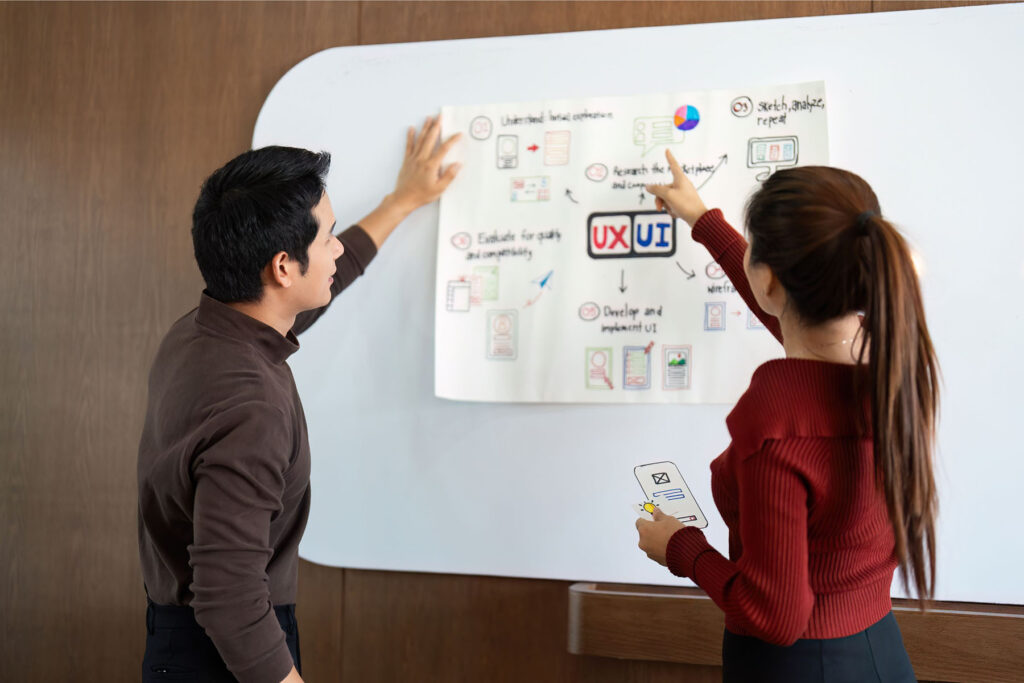
- Information Architecture & Wireframing: Structuring information architecture to ensure users can easily navigate complex Digital products. Creating low- to high-fidelity wireframes and flowcharts to visualize user journeys.
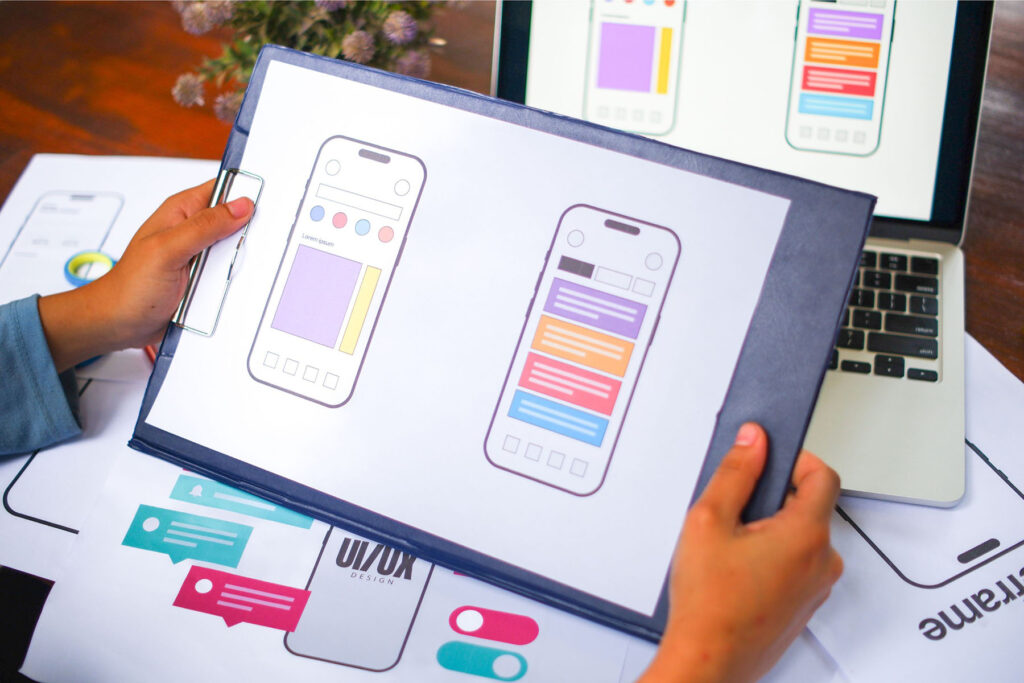
- Prototyping & Testing: Building interactive prototypes for usability testing and focus groups, allowing for feedback collection and iterative design improvements.
- Visual Design: Executing visual design through typography, color theory, iconography, and visual hierarchy.
- Interaction Design: Designing how users interact with the product, ensuring the experience is both efficient and enjoyable.
- Collaboration: Working closely with team members, product managers, graphic designers, and software engineers to align design concepts with business and technical requirements.
- Handoff & Implementation: Preparing design systems, high-fidelity prototypes, and documentation to enable smooth handoff to front-end development teams.
- Continuous Improvement: Engaging in ongoing learning, keeping up with UX/UI industry experts, and evolving best practices for superior user experiences.
Senior designers often extend these tasks by mentoring junior team members and setting the overall design vision.
Essential Skills and Best Practices for UI/UX Designers
To excel in UI UX designer jobs, candidates must demonstrate a mix of essential technical skills and soft skills:
Essential Skills
- Technical Skills: Proficiency in industry-standard tools (Figma, Sketch, Adobe XD), familiarity with information architecture, usability testing methods, and the ability to create wireframes and interactive prototypes. Understanding of front-end development concepts (such as HTML, CSS, and JavaScript) further enhances collaboration.
- Soft Skills: Clear communication skills, empathy, teamwork, and flexibility are equally critical. Designers need to translate user feedback and data into actionable improvements, collaborate with diverse team members, and explain their design decisions to stakeholders.
- UX Research: Conducting effective qualitative and quantitative research to validate design concepts.
- Problem-Solving: Using creativity and analysis to resolve complex design challenges.
Best Practices
- User-Centric Approach: Prioritize users’ needs and ensure every decision aligns with the goal of delivering a good user experience.
- Iterative Design: Embrace feedback loops through continuous usability testing and refinements.
- Data-Driven Design: Leverage metrics and focus groups to inform choices, reduce bias, and optimize results.
- Accessibility: Design for all users, adhering to WCAG guidelines to create more inclusive products.
- Consistency: Establish clear design principles and patterns for a cohesive user experience across screens and devices.
For more on industry standards and trends, visit the Nielsen Norman Group, recognized globally as a leader in user experience research.
Integrating UI/UX Into Software Development Teams
UI/UX design is a critical part of the software development lifecycle. Whether you operate a software company or a digital agency, strategic integration of UX design influences every stage, from idea to deployment.
- Collaboration Is Key: Successful projects usually involve close collaboration between designers, software engineers, product managers, and even graphic designers. This cross-functional teamwork results in smarter design decisions and better-aligned product roadmaps.
- Design-Development Handoff: A good UX designer facilitates a smooth transition from rough draft concepts to high-fidelity prototypes during the product development phase. Attention to design principles and technical requirements helps ensure a user’s needs are met.
- Adaptability for Smaller Companies: In smaller companies, designers may wear multiple hats, tackling both UI and UX responsibilities and even participating in some front-end development.
According to Interaction Design Foundation, robust UI/UX integration not only optimizes development timelines but also significantly increases the chances of successful project delivery.
When and How to Hire E-commerce UX/UI Designers
In today’s digital economy, e-commerce stores, apps, and online platforms define brand success. The role of a UI/UX designer in e-commerce development is pivotal in delivering high-performing online stores with excellent conversion rates and happy customers.
Why UI/UX Is Critical for E-commerce Stores
- Ease of Use: E-commerce solutions must make it simple for users to find products, add them to carts, and complete purchases. User-friendly navigation coupled with built-in features like gift cards, search, and payment integration drive conversions.
- Custom Features & Unique Experiences: A skilled e-commerce website developer adds custom features tailored to your brand and product. Design concepts like high-fidelity product pages, streamlined checkout, and responsive layouts for mobile apps are essential for modern users.
- Ongoing Support & Growth: After launch, continuous improvement—based on analytics and ongoing user feedback, optimizes sales funnels and addresses evolving customer expectations.
Best Practices for Hiring E-commerce Designers
- Assess Technical Skills: Evaluate the candidate’s portfolio for UX design process depth, mobile app experience, and innovative use of information architecture and usability testing.
- Look for Soft Skills: Effective communication skills, collaboration with product managers and developers, and the ability to explain design decisions are vital.
- Consider Experience: Prioritize candidates with years of experience working with e-commerce platforms and delivering proven, high-quality products in various industries.
- Use a Rigorous Vetting Process: Successful agencies and top companies rely on structured interviews and practical assessments to identify the right talent for unique features and user journeys.
According to Wix design team, modern e-commerce websites are no longer optional, they’re imperative for B2B and B2C brands to remain competitive.
Additional Considerations: Evolving Roles and Emerging Trends
The UI UX designer job description is constantly evolving as new technologies and design trends emerge. Today, there is a clear rise in demand for designers who not only possess stellar visual design acumen but who also have technical skills relevant for data analysis, software development, and emerging UX research methodologies.
Industry Standard Salaries and Growth
- Average Salary: The average salary for a UI/UX designer in the United States varies widely based on region, years of experience, and specialization.
- Career Path Advancement: Senior designers often transition to management positions or leadership roles such as Design Director, leading larger teams and working closely with software companies or digital agencies. Check this Google certification.
- Volunteer Work & Community Involvement: Participating in open-source projects, volunteer work, and mentoring up, and coming designers fosters growth and strengthens portfolios.
Future-Proofing Your Team
As UI/UX best practices evolve, continuous learning is paramount. Participating in online courses and engaging with industry experts via communities or conferences can ensure your team remains ahead of the curve in creating memorable user experiences.
Frequently Asked Questions (FAQs)
Why should we hire separate UX and UI designers instead of one generalist?
How does ParallelStaff vet its design candidates?
Can remote UI/UX designers effectively collaborate with our in-house development team?
How can a better UI/UX design directly impact our company's revenue?
How quickly can we onboard a designer through ParallelStaff?
 Verified Author

Paola Araujo
Account Manager
Linkedin Profile